

Florida has been selling a dream for the better part of a century. Warm winters, no state income tax, palm trees visible from the lanai, and an endless supply of golf courses and early-bird dinner specials. For millions of Americans approaching retirement, it remains the default answer to “so where are you moving?” But a growing number of retirees who made the move and quietly moved back out again suggest the gap between the postcard and the reality has never been wider. The complaints are specific, financial, and structural. And they are accelerating.
This is not an argument against Florida retirement for everyone. For some people, in some parts of the state, with the right financial cushion, it still makes sense. But understanding exactly why so many retirees are reversing course, in concrete terms, is the most useful thing any pre-retiree can do before signing on the dotted line. Here are ten reasons retirees are reconsidering, and in many cases reversing, the Florida retirement decision.
Florida’s status as America’s premier retirement destination is under genuine strain. People are still moving to Florida, but it is no longer the hotspot of years past. Between 2021 and 2023, Florida consistently had at least six cities on the top move-to list, but by 2025 only two made it: Ocala and Jacksonville. Two Florida cities actually made the top move-out list that same year, a trend in line with post-peak migration reports. The ten factors below represent the most documented, data-supported reasons behind that shift.
1. Housing Costs Have Surged Beyond Retirement Budgets
The foundation of Florida’s affordability reputation was its housing market. That foundation has broken. In just half a decade, the median price of a single-family home in Florida rose by roughly $150,000, or 60%. In major metropolitan areas like Miami, Tampa, and Orlando, rental rates have surged well beyond historical norms, driven largely by an influx of remote workers who prioritize lifestyle over proximity to a local office.
Tampa Bay and Sarasota are now key factors in Florida’s shift from a primarily inbound state to an outbound one, as the state faces high insurance premiums and increasing natural disasters. Over the ten years ending in 2024, housing costs increased by 132% in Florida, the second-largest spike among all U.S. states. No standard retirement plan was built to absorb that kind of surge, and for retirees on fixed incomes, the margin for error is zero.
2. Home Insurance Has Become a Monthly Financial Emergency
Nothing has blindsided Florida retirees more consistently than the home insurance crisis. According to Insurify’s 2026 Insuring the American Homeowner Report, Florida’s average annual cost of home insurance hit $8,292 in 2025, an 18% increase over 2024. Home insurance costs in the state have risen by more than 14% since 2023.
To put that in context: Insurify ranks Florida as the most expensive state for home insurance nationally, with the next-closest state, Louisiana, averaging just over $5,050 annually. And the burden falls hardest on retirees specifically. Florida retirees spend an estimated 34% of their average retirement income on home insurance alone. Nationally, retirees pay around 8% of their income toward home insurance.
The problem is compounded by policy availability. Premiums have skyrocketed, insurers have withdrawn, and policy non-renewals continue to rise. Retirees who move to Florida are often shocked to discover that hurricane insurance deductibles range from 2% to 5%, and sometimes as much as 10%, of the policy coverage amount, rather than the fixed dollar amounts they were used to in other states. And that’s if coverage can be secured at all.
3. The True Cost of “Comfortable” Retirement Is Much Higher Than Advertised
Florida’s no-income-tax headline has always been its most powerful selling point. But when you run the full numbers, something more complicated emerges. A single retiree can expect to pay an average of $73,646 a year to live comfortably in Florida. Sustaining that over 30 years requires a nest egg of at least $2.2 million.
The income-tax saving gets eroded by other costs that don’t always make the brochure. Florida’s lack of a state income tax should not be confused with having no taxes at all. The combined state and local sales tax averages 6.98%, according to the Tax Foundation, which is higher than the combined rates retirees from states like Michigan, Pennsylvania, Massachusetts, and New Jersey are accustomed to paying.
Beyond mortgage payments, many retirees face homeowners’ association fees, particularly in Florida’s numerous gated communities and retirement developments. HOA fees in 2025 average between $400 and $600 per month in luxury or resort-style communities. Recent changes to Florida HOA laws have added new considerations, too. As of 2024, HOAs are required to maintain more transparent financial reporting and uphold stricter rules around reserve fund management, especially for condominiums, which can affect monthly fees and trigger special assessments.
4. Hurricane Season Is Not Just Inconvenient – It Is a Year-Round Psychological Weight
Hurricanes are a fact of Florida life, but their frequency and financial consequences have escalated significantly. NOAA’s National Centers for Environmental Information recorded 94 confirmed billion-dollar weather and climate disaster events affecting Florida between 1980 and 2024, covering floods, wildfires, winter storms, droughts, severe storms, and hurricanes. The annual average for the five most recent years, 2020 through 2024, jumped to 6.8 events per year, more than three times the long-term average.
In September 2024, Hurricane Helene hammered Florida and the Southeast, killing more than 230 people, making it the deadliest hurricane to strike the U.S. since Hurricane Maria in 2017. Some estimates put the total economic impact of Helene, including property and infrastructure damage, as high as $200 billion.
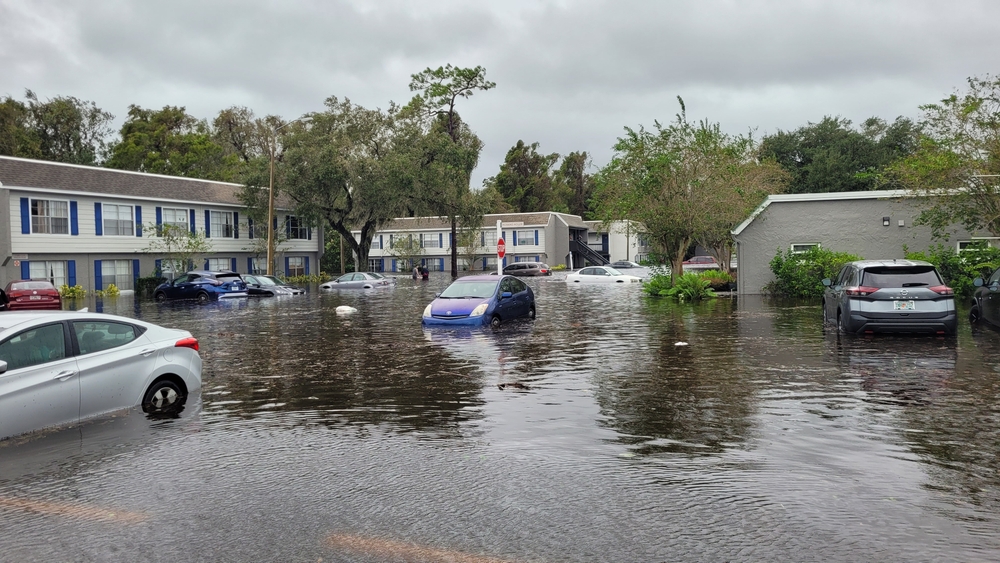
Most Florida homeowners have to keep a go-bag ready for last-minute evacuations and be prepared to leave behind what won’t fit in a car. Just the low-grade stress of anticipating hurricane season is enough to send many retirees packing. For retirees who moved south specifically to lower stress and slow down, living on permanent weather-alert footing is a fundamental contradiction of what retirement is supposed to feel like.
5. The Heat Is Relentless – and It Isolates You Indoors
Florida’s warmth is the reason millions move there. It is also the reason many of them leave. Everyone knows Florida is warm and humid, but people are often still surprised by how oppressive the climate can be. Retreating indoors doesn’t always bring relief, because air conditioning is drying and difficult to regulate. Many retirees don’t realize how much they’ll miss experiencing winter, spring, and fall until they find themselves in an endless summer and decide to move back north.
In South Florida, temperatures can crack 80 degrees even in the dead of winter. While the climate becomes more temperate further north, summers across the state are hot, and northern Florida can see temperatures fall below freezing in winter. The result for many retirees is a frustrating inversion of their expectations: they moved to spend time outdoors and instead find themselves trapped behind air conditioning for five to six months of the year. Average utility costs in Florida are driven primarily by the relentless demand for cooling, with high humidity and summer temperatures regularly exceeding 90 degrees translating into higher monthly electricity bills compared to more temperate states.
6. Florida’s Healthcare Rankings Are a Weak Point That Retirees Can’t Afford to Ignore
Healthcare access is arguably the most consequential factor in retirement location decisions, and it is one of Florida’s genuine vulnerabilities. A senior healthcare report card from SeniorLiving.org found that Florida, one of America’s top retirement destinations, earned only a D+ grade for senior healthcare and outcomes.
The Commonwealth Fund ranked Florida 39th in its state health system performance scorecard. The state has not expanded Medicaid, placing it among ten states that have not done so as of 2025, leaving significant coverage gaps for low-income adults without affordable insurance options.
Overburdened health services have driven away many retirees who depend on regular care. Florida has a reputation for high healthcare costs, and while many retirees rely on Medicare, Medicare expenditures per beneficiary in Florida are among the highest in the country, meaning retirees need to understand carefully what healthcare costs they will ultimately incur. The state does have strong senior-specific hospital infrastructure in certain cities, but access to that infrastructure varies sharply by region. Retirees in smaller communities or rural areas may find themselves far from the facilities that actually deliver specialist care.
7. Traffic Congestion Has Made Everyday Life in Florida’s Cities Genuinely Difficult
The Florida of retirement brochures features quiet mornings and easy access to errands and beach walks. The Florida of 2025 looks rather different on any major arterial road. As the third most populous state, Florida’s population reached 23 million in 2024 and is projected to exceed 24 million by 2027, driving significant pressure on the state’s transportation infrastructure.
In 2024, Tampa drivers lost 34 hours to congestion at a cost to the city of $800 million. Miami fared worse, with drivers wasting 74 hours annually at a personal cost of $1,325 each, totaling $3.4 billion in lost productivity statewide.
Despite advances, Florida’s infrastructure faces mounting strain. Extreme weather, aging assets, and rapid population growth pose persistent challenges. Hurricanes have repeatedly illustrated these vulnerabilities. In 2022, Hurricane Ian destroyed the Sanibel Causeway, severing access to Sanibel and Captiva Islands and underscoring risks to critical evacuation routes. Many systems remain aging, underfunded, and increasingly vulnerable to climate impacts. The state is investing heavily in congestion relief, but the scale of population growth consistently outpaces infrastructure delivery.
8. Overcrowding Has Changed the Character of Florida’s Retirement Communities
Florida’s rapid population growth has brought increased traffic congestion, overdevelopment, and a loss of the quiet environment many retirees were specifically seeking. Strip malls and high-density housing have spread across areas that once had genuine small-town or coastal appeal, and the change is noticeable to anyone who visited a decade ago and returns now.
Remote workers and high-income transplants are reshaping local pricing and culture. The new arrivals often have more spending power and different lifestyle expectations than the retirees who arrived before them. The easygoing, age-friendly character of communities that made Florida’s retirement towns worth moving to has, in many cases, simply been outpaced by the sheer volume of people arriving.
Data from the U.S. Census Bureau shows a steady decline in the number of 65-plus Americans moving to Florida since 2020, reflecting a growing awareness among retirees that conditions on the ground have changed. For those already there, the experience is increasingly one of fighting for space, on roads, in restaurants, at doctors’ offices, in a place where the whole point was not to fight for anything.
9. Geographic Isolation Makes Family Visits Expensive and Exhausting

Retirement is not just about climate and taxes. For most people, proximity to family, including adult children, grandchildren, and aging parents, matters deeply, and this is where Florida’s geography creates a structural problem. Florida is the most isolated, far-flung state in the contiguous United States. While there are plenty of airports to facilitate travel, road trips to visit family in other regions rack up more miles. Those leaving Florida to be closer to family scattered around the country may find a more central state makes travel simpler, with fewer airline connections and better access by car.
The emotional cost of that distance tends to compound over time. A holiday visit that requires a non-stop flight, four hours in the air, and the expense of accommodation is a different proposition at 75 than it was at 65. And when a parent or sibling has a health event in another state, the distance stops being an inconvenience and starts being a genuine barrier.
Some retirees are heading to states like Tennessee, North Carolina, or areas of the Midwest that offer a lower cost of living, more predictable weather, less crowding, and in many cases, closer proximity to where their families actually live.
10. The “No Income Tax” Advantage Is Smaller Than It Looks on Paper
Florida’s zero state income tax is real and genuinely valuable for some retirees. But the advantage is frequently overstated, and for many middle-income retirees, it is largely consumed by other costs that are higher in Florida than in many comparison states.
Florida residents paid the highest home insurance rates in the entire country in 2024. The average annual home insurance premium nationally was $3,259 in 2024, while Florida came in at more than four times that before the 2025 figures pushed it higher still. A hidden cost shift has happened in Florida: the money that once stayed in residents’ pockets due to favorable tax policy is now frequently redirected toward maintaining basic home protections.
For retirees whose income is primarily Social Security and modest investment distributions, which would be taxed minimally in most states anyway, the income-tax saving may amount to a few thousand dollars annually. When that saving is measured against the additional $5,000 to $12,000 in annual insurance premiums and elevated HOA fees, the net financial advantage of Florida can evaporate or reverse entirely.
What to Do With All of This
Florida retirement is not failing for everyone. The state still offers genuine advantages: exceptional senior-specific hospital infrastructure in major cities, a wide array of Medicare Advantage plan options, no tax on Social Security or pension income, warm winters, and a well-developed culture of retirement communities. For retirees with substantial assets, a higher risk tolerance for weather events, and family who either live nearby or don’t need frequent in-person contact, Florida remains a viable choice.
But the conditions that made Florida the obvious default retirement destination have materially changed. The high cost of living is now the number one reason people are leaving. Once seen as an affordable state, Florida is now among the most expensive places to live in the U.S., and many middle-class retirees can no longer afford to stay, especially in cities like Miami, Tampa, and Orlando.
The ten factors here are not isolated concerns. They reinforce one another. High housing prices increase what retirees are insuring. High insurance costs eat into the savings the no-income-tax policy was supposed to preserve. Population growth creates traffic, strains healthcare access, and degrades the lifestyle quality that justified the move. Climate risk drives insurance higher still.
Any retiree doing proper pre-move due diligence should stress-test the full financial picture, not just the headline tax advantage, against their specific income, their healthcare needs, their family geography, and their actual tolerance for hurricane season anxiety. The dream of Florida retirement is still worth evaluating. It just requires a clearer-eyed look than it did twenty years ago.
AI Disclaimer: This article was created with the assistance of AI tools and reviewed by a human editor.