

Pull out a box from under anyone’s bed in America right now, and you’ll probably find at least one thing from the 70s or 80s that they absolutely cannot bring themselves to throw away. Not because they’ve forgotten it’s there. Because they’ve chosen, repeatedly, to keep it. The worn-out t-shirt that hasn’t been washed since Reagan was in office. The crate of records with a cracked sleeve and a perfectly intact A-side. The motorcycle in the garage that hasn’t moved in three years but also isn’t going anywhere.
This is different from hoarding. It’s more specific than nostalgia. The objects people hold onto from that particular era tend to share something: they were built with a seriousness of purpose that made them hard to let go of. A 1979 turntable wasn’t designed to be replaced in two years. Neither was the handmade bowl a mother threw on a pottery wheel in her kitchen studio in 1981. These things were made to last, and the fact that they did – against all odds, against moves and divorces and kids and decades of drift – is part of why they feel almost impossible to discard.
What follows is a look at four of the most common categories of 70s and 80s possessions that people still refuse to let go of, and why, in each case, that stubbornness might just be the right call.
1. Vinyl Records
Ask anyone who grew up with a record player in the house, and they’ll have a version of the same memory: sitting on the floor, reading liner notes while music filled the whole room. Not through earbuds. Not through a phone speaker. Through speakers, the actual physical movement of air. The album as an experience, not a file.
That memory is part of what kept vinyl records alive through the CD era, the MP3 era, and the streaming era. But survival is one thing. What’s happened in the past decade is something else entirely. According to the Recording Industry Association of America, vinyl album sales in the United States increased for the 19th consecutive year in 2025, with 46.8 million EPs and LPs sold – up from under a million in 2006, when the comeback began. That’s not a trend. That’s a structural shift.
What’s striking about that growth is who’s driving it. Older listeners are rediscovering records they bought firsthand in the 70s and 80s, finding them still playable after 40-plus years on a shelf. But younger listeners are buying into vinyl, too, often albums they first encountered on Spotify. Luminate found that only about 50 percent of vinyl buyers actually own a record player – which says something interesting about what the object itself means to people, beyond just listening. For many, the record from the 70s or 80s that they’ve held onto isn’t just music stored on plastic. It’s a physical object with weight and smell and a cover they’ve looked at hundreds of times. Throwing it away would feel like throwing away the memory that goes with it.
The practical case for keeping old records has gotten stronger, too. Original pressings from the 70s and 80s – particularly from artists who were at the height of their commercial power – can command real money on the resale market. But most people who’ve kept their collections this long aren’t interested in selling. They’re interested in putting the needle down on a Saturday morning and remembering who they were when they bought it.
2. Concert and Band T-Shirts
The 1981 Rolling Stones shirt with the peeling iron-on. The Pink Floyd tee so thin and soft from washing that it’s practically translucent. The Fleetwood Mac tour shirt someone’s mother bought at a stadium show in 1979 and never wore again, somehow still folded at the bottom of a drawer. These garments have outlived cars, relationships, and entire careers – and they’re worth more now than the people who bought them could have imagined.
A study analyzing over 84,000 listings of band and music artist t-shirts sold on popular resale marketplace websites found that if you’ve held onto classic concert tees, you could have an investment on your hands. The data, collected between December 2023 and September 2024, covered only sold listings to reflect accurate sale values. The numbers are genuinely striking. Rock comes out as the most valuable genre for t-shirt resale by a considerable margin, with the top ten most valuable tees from rock bands averaging $179.54. Oasis, Pink Floyd, Ozzy Osbourne, Metallica, and AC/DC all feature among rock’s most valuable artists.
The most valuable shirts are almost always from the earliest tours – the ones where production runs were small and the chances of anyone knowing they were holding onto a future collectible were essentially zero. Vintage band shirts aren’t just nostalgic souvenirs; they’re wearable pieces of music history that can be worth thousands if they’re the real deal. Collectors prize authenticity, rarity, and condition, with the biggest paydays often going to shirts from short-lived tours, early-career runs, or iconic albums that defined an era.
Most people who’ve kept their old band shirts, though, aren’t keeping them for the money. They’re keeping them because the shirt is connected to a specific night, a specific version of themselves. The one they stood in line for. The one they wore home on the train at midnight. The market value is interesting. The emotional value is what makes them impossible to donate.
3. Vintage Motorcycles
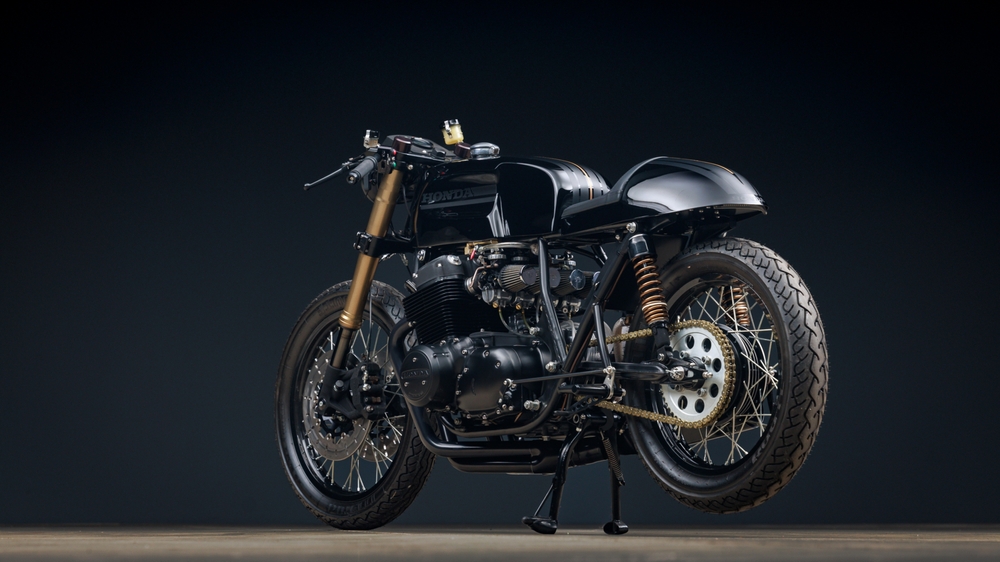
For anyone who came of age riding in the 70s or 80s, there’s a particular quality to the relationship between rider and machine from that era that modern bikes, for all their engineering, don’t quite replicate. The Honda CB750. The Yamaha XS650. The bikes from that period had a mechanical honesty to them – you could take them apart and understand what you were looking at. They weren’t sealed units full of software. They were engines you could learn.
Vintage Hondas, in particular, are widely considered great motorcycles to own for a number of reasons: they have sensual, curvy shapes, produce a notably classic sound, and, most importantly, they’re remarkably reliable. That reliability is a big part of why so many of them are still running. A bike maintained properly through the 80s and 90s doesn’t give up easily. The ones that ended up in garages – stored, waiting, half-restored – often still have most of their original mechanical integrity. Parts are available. Mechanics who know these engines are still out there, though increasingly hard to find.
The collector market for vintage Japanese bikes from the 70s and 80s has become genuinely competitive. Well-preserved examples sell steadily, and interest from younger riders who want something with character rather than complexity has pushed values up. But here again, the people least likely to sell are the ones who’ve had the bike the longest. The bike in the garage isn’t sitting there because it’s worth money. It’s sitting there because getting rid of it would mean admitting something about time passing that the owner isn’t ready to admit.
There’s also a practical argument for holding on. Vintage bikes of this era are, by modern standards, simple to maintain. No traction control to recalibrate, no dealer-only diagnostic software. A mechanically inclined owner can keep one running indefinitely with access to a manual and a parts catalog. That self-sufficiency was the norm in the 70s and 80s, and it turns out it ages well.
4. Handmade Pottery and Ceramics
This one is different from the others. Vinyl records have a market. Concert shirts have a market. Vintage bikes have a market. Handmade pottery from the 70s and 80s – the kind that was made by someone’s mother or bought at a craft fair in 1978 – often has no market at all. No maker’s mark, no provenance, no resale value. And it’s still the thing people say, unequivocally, they’ll never throw away.
According to Antique Trader, younger generations aren’t shunning family keepsakes – they’re just redefining what’s worth keeping. Objects with character, sustainability, and a story to tell are the ones that survive. Vintage pottery and ceramics fit that description well when the piece is distinctive enough. But the pull of handmade ceramics from that era goes well beyond anything a collector’s eye would catch. The 70s were a golden age of craft culture in America: pottery wheels in rec rooms, glaze kits at community centers, studio arts programs at every college. People made things with their hands and gave them to people they loved. The objects that resulted are, in many cases, still on kitchen shelves forty years later.
The mushroom-shaped pottery bowl made around 1980. The asymmetrical mug with the handle that’s slightly too small. The set of dinner plates that don’t quite match because they came from three separate kiln firings. These are objects that carry a person inside them – the specific pressure of hands that shaped them, the particular choice of glaze. You can’t replace them. You can’t even describe exactly what would be lost if they broke. That indefinable quality is precisely why people hold onto them.
As younger generations begin the journey to build their collections, many gravitate toward items that blend nostalgia, cultural significance, and potential financial gain – with popular categories including vintage sports memorabilia, retro video games, and vinyl records. Handmade ceramics from the 70s and 80s tend not to appear on those lists, and yet they survive every decluttering session, every move, every well-meaning friend who says “you can let that go.” They survive because the person holding them knows, even if they can’t quite say it out loud, that letting go of the object means letting go of the person who made it.
The Point Isn’t the Object
Some strains of minimalism argue that objects are just objects, and that a photograph or a memory is a sufficient replacement for a physical thing. That argument holds up fine in the abstract. It works a lot less well when you’re standing in front of the crate of records on a Sunday afternoon, or pulling a concert shirt out of a drawer and putting it on before you’ve even decided to.

The 70s and 80s produced objects that were built to last because the manufacturing philosophy of the era assumed you’d keep things. Planned obsolescence was not yet the dominant logic. A turntable was supposed to work for thirty years. A motorcycle was supposed to be maintained and handed down. Handmade pottery was given as a gift with the assumption it would still be in someone’s kitchen a generation later. The fact that so many of these objects have actually made it this far – against the grain of every consumer trend since – is its own kind of argument for keeping them.
The people who’ve held onto these things aren’t deluded about their value. They know a worn-out concert shirt isn’t practical. They know the bike might never run again. They know the pottery bowl with the chip in the rim isn’t going to appear in any auction catalog. They keep these things because the decision to throw something away is also a decision about what – and who – you’re willing to leave behind. Sometimes the stubbornness is the point. And sometimes what looks like an inability to move on is actually a quiet, deliberate choice to carry something forward.
AI Disclaimer: This article was created with the assistance of AI tools and reviewed by a human editor.