

An 80-year-old woman hadn’t spoken in full sentences for five years. She communicated mostly in single syllables, couldn’t control her bladder, and couldn’t walk without help. Her family had long stopped waiting for anything to change. Then, about 19 hours after receiving a single high dose of a compound derived from psychedelic mushrooms, she woke up and began telling stories about her life.
The woman, a Japanese-American octogenarian with a 10-year history of Alzheimer’s disease, is the subject of a 2026 case report published in Frontiers in Neuroscience. What happened to her over the following days and weeks has reignited a question researchers had largely set aside for patients at her stage of decline: how much of what looks like permanent loss is actually something else entirely?
The case doesn’t come with easy answers. The authors are not claiming they reversed Alzheimer’s disease, and the scientific community has been careful to say so. By its advanced stages, meaningful functional recovery is considered, in the authors’ own words, “generally unlikely.” Current therapies at this stage are largely supportive – they manage symptoms but cannot restore what has been lost. Still, the scale and consistency of what this woman recovered over the weeks that followed was enough to draw serious attention from researchers working on one of medicine’s most intractable problems.
The Scale of the Disease
Before examining what happened in this single case, it helps to understand what Alzheimer’s disease actually looks like at a population level, because the scale of the problem is what gives any potential breakthrough its weight.
An estimated 7.4 million Americans age 65 and older are living with Alzheimer’s in 2026, according to the Alzheimer’s Association. Worldwide, at least 55 million people are believed to be living with Alzheimer’s or other dementias. Health and long-term care costs for people living with dementia are projected to reach $409 billion in 2026 and nearly $1 trillion in 2050.
An estimated 7.4 million Americans age 65 and older live with clinical Alzheimer’s dementia today, and this number could increase to 13.8 million by 2060, absent medical breakthroughs that prevent or cure the disease, according to the 2026 Alzheimer’s Disease Facts and Figures report, published in Alzheimer’s & Dementia. Alzheimer’s disease was officially listed as the sixth-leading cause of death in the United States in 2024. Nearly 12 million Americans, usually family and friends, provide unpaid care for someone with Alzheimer’s disease and related dementias every year. For the families living inside it – managing caregiving schedules, watching someone they love disappear sentence by sentence – these figures aren’t statistics. They’re the shape of daily life.
The Patient and the Trial
The patient at the center of this case report had lived with Alzheimer’s disease for approximately 10 years and experienced severe functional decline over the preceding five years. She had become largely monosyllabic, demonstrated profound cognitive impairment, chronic urinary incontinence, impaired mobility, dysphagia (difficulty swallowing), executive dysfunction, and severe reduction in spontaneous communication and emotional engagement.
After receiving a single 5-gram oral dose of psilocybin-containing mushrooms – specifically the Enigma strain – the patient experienced rapid and sustained functional improvement across multiple domains, according to the report, titled “Transient multidomain functional improvement in advanced Alzheimer’s disease following high-dose psilocybin-containing mushroom administration.” Authors Marcos Lago, Mariana Cerveira, and Joe Xavier Simonet from Brazil’s Associação Cruz de Ankh described the changes as temporary and not indicative of disease reversal.
During the acute phase, the patient entered a prolonged deep sleep-like state accompanied by profuse sweating and clinically suspected hyperthermia. Then, approximately 19 hours after administration, something unexpected happened. She spontaneously awakened and began speaking for hours, engaging in autobiographical conversation and recalling memories that had not been expressed in years. She told caregivers, “It is pleasant to come here.”
Spontaneous autobiographical speech emerged approximately 19 hours post-administration, followed by progressive recovery across motor, executive, continence, memory, and social-affective domains over subsequent days and weeks. One month after the initial session, the patient remained continent and functionally improved compared with baseline. A second supervised psilocybin session using 3 grams was subsequently performed and was associated with greater verbal expressivity, improved facial mimicry, spontaneous humor, emotionally valenced autobiographical imagery, and increased agility while walking, all documented in the case report published in Frontiers in Neuroscience.
The second session matters as much as the first. The fact that a follow-up dose of just 3 grams produced further improvements – humor, expressivity, better walking gait – suggests the initial response wasn’t simply a physiological artifact of the acute drug experience. Something was persisting.
What Psilocybin Does in the Brain

Psilocybin is the naturally occurring compound found in certain species of mushrooms that produces psychedelic effects. In the body, it converts to psilocin, which acts primarily by binding to serotonin receptors – specifically the 5-HT2A receptor, densely expressed in areas of the cortex involved in higher-order thinking and memory. When psilocybin activates that receptor, the downstream effects extend well beyond the acute perceptual experience.
At the cellular level, psychedelics induce structural neural plasticity: drug-driven growth and remodeling of dendritic spines in cortical pyramidal cells. Dendritic spines are the tiny connection points on neurons where synaptic communication happens. Think of them as the sockets in a circuit board – the more intact and numerous they are, the better information can pass between brain regions.
Research published in Nature in 2025 confirmed that a single dose of psilocybin increases the density of dendritic spines in cortical neurons, and that targeted knockout of 5-HT2A receptors abolishes these effects, confirming the receptor is essential, not incidental, to the drug’s action. That 2025 study also documented marked reorganization of large-scale brain networks following psilocybin administration, including increased global integration and transient desegregation of canonical cortical systems. These findings support the hypothesis that psilocybin may transiently facilitate functional reintegration of residual neural systems in neurodegenerative disease.
That last point is where this case report becomes scientifically interesting. If some of what presents as devastation in advanced Alzheimer’s is actually a connectivity failure rather than complete tissue death, then a drug that temporarily rewires those connections could theoretically allow dormant functions to resurface.
The “Network Problem” Hypothesis
If advanced Alzheimer’s is typically understood as late-stage silence and dependency being the direct readout of dead tissue, and if a single dose can restore speech and continence for weeks, then some of what looks like irreversible decline may be a network problem rather than a tissue problem – at least in some patients. Dead neurons cannot be recovered. But neurons that are alive, connected poorly, and functionally isolated may be a different matter.
The standard clinical picture of advanced dementia is one of irreversibility – and for the neurodegeneration itself, that remains true. The cell death, the amyloid plaques, the tau tangles, are real and ongoing. But the relationship between that structural damage and what a person can or cannot do may be less fixed than assumed. Naming that possibility isn’t the same as claiming a treatment. It is, however, exactly what makes this case worth investigating.
The acute phase in this case involved significant physiological stress: high body temperature, profuse sweating, and prolonged altered consciousness. In a more frail patient, those effects could be dangerous. Long-term safety and efficacy of psilocybin are not established in this population. The authors, in their own assessment, are not proposing that patients like this woman should be given psychedelic mushrooms as standard care. What they are proposing is that the question deserves controlled investigation.
Clinical Trials and the Road Ahead
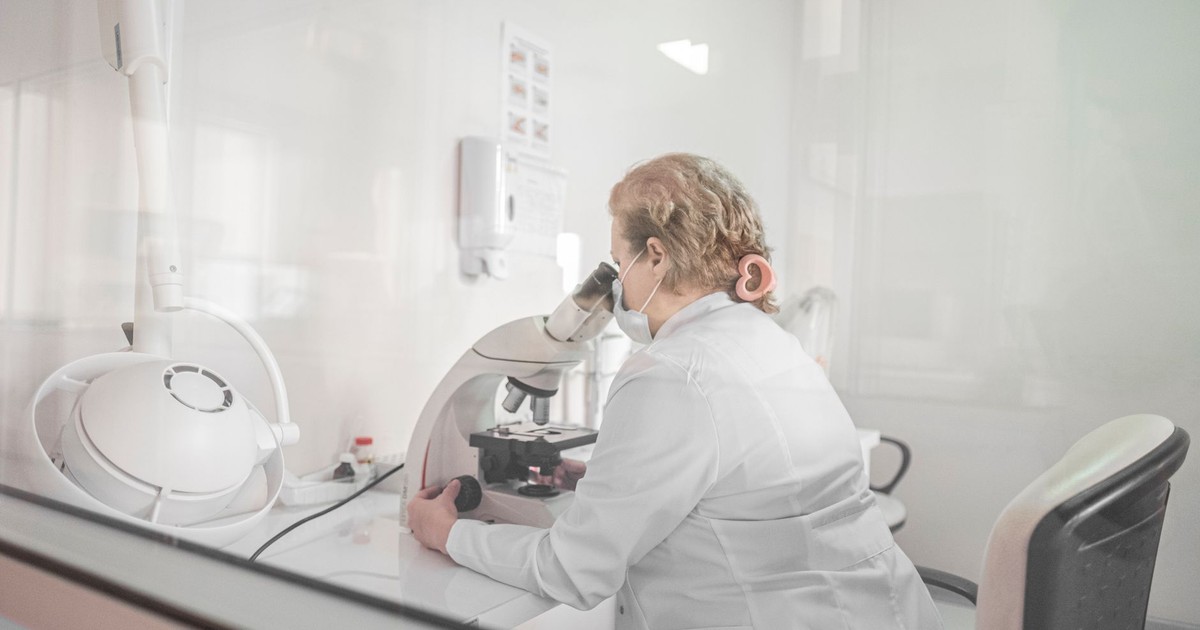
Researchers at Johns Hopkins University are already studying psilocybin to see whether it can help people with depression and Alzheimer’s disease when administered in a safe and supportive setting. The open-label pilot study examines whether psilocybin, given under supportive conditions, is safe and effective for depression in people with Mild Cognitive Impairment or early Alzheimer’s Disease. This is a meaningful distinction from the Brazilian case: the Johns Hopkins study targets early-stage disease and depression specifically, not the kind of advanced decline the 80-year-old woman was experiencing.
There are no large-scale randomized trials in Alzheimer’s patients yet, though they are now being planned. The gap between a compelling single case report and a Phase III clinical trial is enormous – and deliberately so. The scientific and regulatory infrastructure exists precisely to prevent promising anecdotes from becoming premature therapies. The history of Alzheimer’s drug development is littered with compounds that looked extraordinary in preliminary work and failed spectacularly in large trials.
What makes psilocybin pharmacologically interesting for this condition specifically is the correlation between the 5-HT2A receptor and cognitive decline. In Alzheimer’s disease and related disorders, 5-HT2A receptor density is significantly reduced, and that loss tracks with worsening cognition. A drug that works through that receptor and simultaneously promotes cortical neuron growth, increases neuroplasticity, and modulates the immune system is doing something biologically specific – not simply producing altered perception and hoping for a downstream effect. That biological grounding is part of why this alzheimer’s drug trial question is being asked seriously, rather than dismissed. There’s a plausible, testable biological basis for why it might help.
Read More: Microplastics May Be Damaging Your Brain — Here’s How to Reduce Exposure at Home and While Traveling
Limitations the Authors Themselves Name

Reporting on this case requires confronting what it cannot tell us. The present report has important limitations, including the single-case design, absence of formal polysomnographic monitoring, quantitative electrophysiology, neuroimaging biomarkers, and standardized cognitive scales. There is no control group. There is no way to rule out the possibility that the woman’s improvements were coincidental, caused by something else in her environment, or the result of natural variation in Alzheimer’s symptom presentation. No formal biomarker confirmation or advanced neuroimaging was available.
None of that means the case is uninformative. Single-patient case reports have historically played a role in identifying directions worth pursuing – they can’t establish causation, but they can change what questions get asked. The authors argue the case warrants systematic controlled investigation into psilocybin’s role in late-stage neurodegeneration. That is a measurably different claim than “we found a cure,” and it’s the right one to make given the evidence available.
While findings support psychedelics’ potential in modifying disease pathology, their role in treating neurodegenerative disorders remains speculative without robust preclinical models. What this case does is add a human data point to a field that has been building its biological case in labs and animal studies for years. It doesn’t resolve the question. It sharpens it.
What This Means – and What It Doesn’t
The families of people with advanced Alzheimer’s will read this with a complicated mix of hope and caution, and both reactions are justified. The improvements described – a woman who had been reduced to single syllables suddenly narrating her own life history, cracking jokes, walking with greater ease – represent a dramatic and unexpected change. That should be taken seriously as a scientific observation. It should not be taken as a treatment recommendation.
Psilocybin at high doses in elderly, medically fragile patients carries real physiological risks. The acute phase this woman went through – suspected hyperthermia, profuse sweating, prolonged unconsciousness – was serious. The conditions under which she received the dose were supervised, but even so, the authors flag explicitly that these effects could be dangerous in a more vulnerable patient. Any effort to replicate this outside of a controlled research setting would be both scientifically meaningless and potentially harmful.
What the case does offer is a genuine hypothesis, grounded in known pharmacology, with one striking data point behind it: that some of what presents as permanent loss in advanced Alzheimer’s may involve networks that are disrupted but not entirely destroyed. The silence families interpret as the end of their person may be, in at least some patients, something more like disconnection than erasure. If controlled trials bear that out, it changes not just how the disease might be treated, but how it’s understood at its furthest edges. That question is now live in a way it wasn’t before this case report. Testing it carefully, in properly designed clinical trials, is where the science has to go next.
Disclaimer: This information is not intended to be a substitute for professional medical advice, diagnosis, or treatment and is for information only. Always seek the advice of your physician or another qualified health provider with any questions about your medical condition and/or current medication. Do not disregard professional medical advice or delay seeking advice or treatment because of something you have read here.
AI Disclaimer: This article was created with the assistance of AI tools and reviewed by a human editor.