

If you had to guess which states are most stressful to live in, you’d probably think of New York or Los Angeles, somewhere with gridlock traffic and sky-high rent. The actual answer looks quite different. The states where residents report the highest stress levels tend to be quieter, slower, and largely out of the national conversation – which might be part of why the conditions driving that stress have gone unaddressed for so long.
The reasons aren’t mysterious either. Poverty rates, healthcare access, crime, unemployment, and whether you can get a decent night’s sleep all have a measurable relationship to how stressed a population is. What the 2026 data makes clear is that those pressures cluster geographically, and the gap between the most and least stressed parts of the country is not small.
The American Psychological Association’s annual survey found that the future of the country, the economy, and work rank among Americans’ biggest stressors, and that widespread loneliness is making all of it worse. That national anxiety, though, doesn’t land evenly. Some states are absorbing it on top of already-difficult conditions. Here are the ten where residents are feeling it most.
1. Louisiana
Louisiana ranks as the most stressed state in the country, and the data behind that ranking is hard to look away from. It has the highest poverty rate in the nation, which sends shockwaves into every other stress category. When money is perpetually short, healthcare becomes optional, mental health support feels out of reach, and job security starts to look like someone else’s problem.
About 16% of Louisiana residents skipped medical care in the past year due to cost. The state ranks among the 10 worst for both the share of adults reporting poor mental health and the share diagnosed with depression, and Louisiana has fewer psychologists per capita than most other states, meaning that even when residents recognize they’re struggling, the support often isn’t there. The state had the eighth-highest average unemployment rate in the country last year and has the lowest job security of all 50 states. In this 2026 ranking, Louisiana’s overall stress score was 62.86 out of 100, the highest in the nation and several points clear of the next state on the list.
2. Kentucky
Kentucky’s stress story is written in financial language. The state has the third-highest unemployment rate, the sixth-highest bankruptcy rate, and one of the lowest median credit scores in the country, at 689. Those aren’t abstract figures. They translate to households that can’t absorb a car repair, can’t qualify for a reasonable mortgage, and carry a low-grade financial dread that doesn’t switch off at night.
Family stress runs high as well, with elevated rates of separation, divorce, and parental strain. Health indicators compound the picture: roughly 23% of residents describe their own health as “fair” or “poor,” the fourth-highest share nationally, and Kentucky ranks among the worst for poor mental health and diagnosed depression. Financial stress rarely exists in isolation. Households under persistent money pressure face higher risks of mental health problems, relationship breakdown, and physical illness, meaning Kentucky’s numbers in each category are, in a sense, producing each other. Kentucky’s stress score was 58.18.
3. New Mexico
New Mexico tends not to show up in conversations about American stress because it doesn’t fit the usual template. It’s not a high-cost coastal city. It doesn’t have the traffic or the pace that people associate with burnout. But the data paints a different picture.
New Mexico placed third. It has the second-highest violent crime rate per capita and the highest property crime rate in the country, fueling constant anxiety about personal security. The state also leads the nation in separation and divorce and has one of the highest shares of single-parent households. Financial pressures run deep too, with the second-highest poverty rate in the country and a low median credit score of 692. The picture that emerges is one of overlapping instability: families fractured by economic strain and divorce, communities navigating high crime, and limited resources to manage any of it. New Mexico’s stress score was 57.65.
4. West Virginia
West Virginia’s position in the top five is less a surprise than a continuation. The state has appeared near the top of stress rankings for years, and the conditions driving that haven’t meaningfully changed. West Virginia has more residents in poor health than any other state, and access to mental health care, rates of substance misuse, and preventable hospitalizations are all poor by national measures.
Sleep data is also telling. West Virginia has the worst average hours of sleep per night of any state. That matters more than it sounds. Poor sleep worsens the stress response, increases cortisol (the body’s primary stress hormone), and chips away at the emotional bandwidth people need to manage hard circumstances. When residents are already dealing with limited healthcare access and economic strain, poor sleep on top of it starts a cycle that’s very difficult to break. West Virginia’s stress score was 56.20.
5. Arkansas
Arkansas ranks worst in the country for health and safety-related stress, with one of the highest percentages of adults in fair to poor health and one of the highest crime rates per capita. The health burden in Arkansas isn’t just a quality-of-life issue. Chronic poor health is itself a stressor, generating medical costs people can’t afford, limiting employment options, and draining the physical and social energy people need to deal with everything else.
Arkansas also ranks among the states with the fewest average hours of sleep per night, joining West Virginia and Alabama at the lower end of the national sleep average. Sleep deprivation and chronic illness together are a particularly punishing combination. Arkansas’s stress score was 55.60.
6. Nevada
Nevada presents one face to the world and lives quite another. The Strip looks like abundance. The data behind it tells a different story for the people who actually live and work there. Nevada ranks near the top for financial stress nationally, with the highest unemployment rate in the country, high bankruptcy filings, and one of the lowest median credit scores. Nevada experiences high unemployment and bankruptcy rates, contributing to significant financial stress among residents.
Family stress is elevated too, with high rates of divorce and single-parent households. About 21% of Nevada residents rate their health as “fair” or “poor,” and many lack access to healthcare and insurance. The hospitality and service industries that dominate the state’s economy tend to offer irregular hours, limited benefits, and wages that don’t stretch far when housing costs have climbed sharply. Nevada’s stress score was 53.82.
7. Oklahoma
Oklahoma is tied for one of the lowest credit scores in the country. Low credit scores reflect deep financial problems and make borrowing for large purchases significantly harder, locking residents out of homeownership and savings in ways that generate long-term instability. The state also scores poorly on health and safety measures, including access to mental health care, rates of substance misuse, and preventable hospitalizations.
Oklahoma ranks among the five worst states for poor mental health share, with a gap between best and worst states of 29 times. Substance misuse and mental health access are deeply connected: when professional support isn’t available or affordable, people find other ways to manage unrelenting pressure, and those coping methods often create new problems. Oklahoma’s stress score was 53.47.
8. Oregon
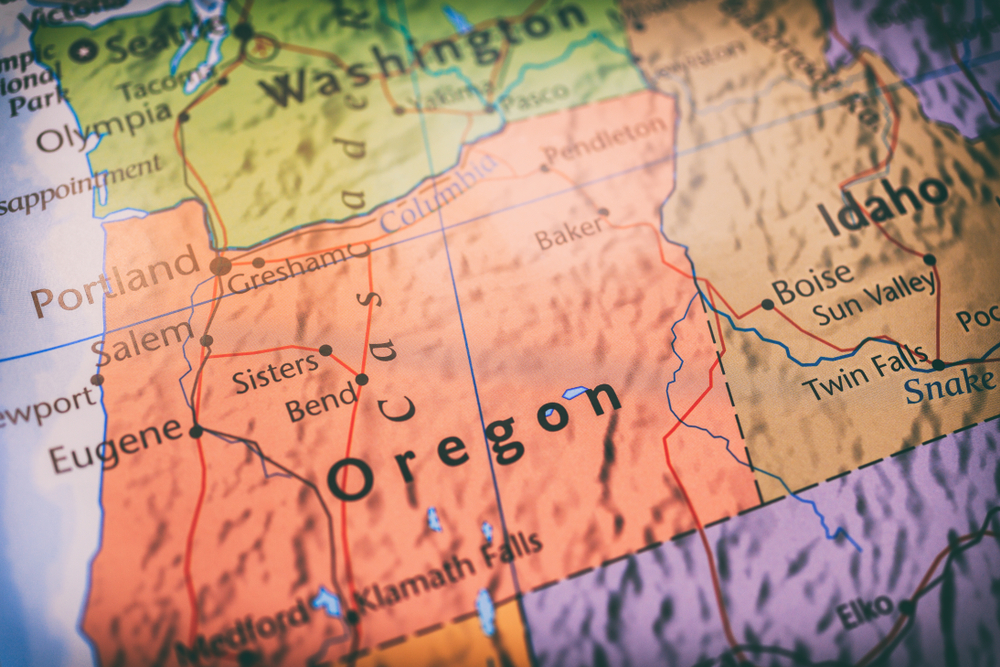
Oregon’s appearance might be the most counterintuitive on this list. For a state often associated with outdoor access and quality of life, landing in the top ten most stressed states feels jarring. But the data reflects real conditions. Oregon ranked 9th nationally for money-related stress and 6th for family-related stress, two categories that speak directly to what it costs to live and raise children in one of the country’s more expensive states.
Oregon tied for among the fewest average hours worked per week, which sounds like a win until you realize it reflects a weak labor market, not a leisure boom. Fewer hours worked means less income, and in a high-cost state, that gap between earnings and expenses is exactly where stress builds. Housing costs in Oregon’s major metro areas have put enormous pressure on household budgets, and the state has seen significant increases in homelessness and cost-of-living strain in recent years. Oregon’s stress score was 52.39.
9. Mississippi
High unemployment and poverty rates, elevated infant mortality, low wages, and limited healthcare access are among the factors that put Mississippi in the top ten. Infant mortality is one of those statistics that carries real weight beyond the number: it reflects healthcare access, socioeconomic stability, and the basic safety net available to families. When that number is high, it signals that the structural conditions of daily life are genuinely difficult.
Mississippi and Louisiana were tied for the highest percentage of the population living in poverty in the 2026 data, which means Mississippi’s financial stress mirrors Louisiana’s even if its overall score is slightly lower. The ranking is a composite index, not a clinical or academic study, and it carries real limitations: the 40 indicators used cannot capture every dimension of stress, with social isolation, discrimination, environmental hazards, and political instability among the factors not directly measured. Mississippi’s overall stress score was 52.16.
10. Alabama
Alabama rounds out the top ten with a profile that echoes many of the states above it. Alabama is tied for the second-fewest average hours of sleep per night in the country, alongside Louisiana. Chronic sleep deprivation doesn’t just make people tired. It raises cortisol levels, impairs decision-making, and increases emotional reactivity, meaning residents are literally less equipped to handle the stressors they’re already facing.
Alabama’s affordability metrics remain among the strongest in the nation, yet the state performs poorly in education and health, where indicators like access to health care and chronic health conditions factor into broader outcomes. Low cost of living softens some financial pressure, but healthcare access gaps and poor health outcomes mean those savings don’t translate into lower stress. Alabama’s stress score was 50.99.
What the Map Is Actually Telling Us
Look at those ten states together and a clear pattern holds. Southern and midwestern states dominate the list, while western and northeastern residents generally fare better, with Oregon as the notable exception driven by housing costs and a weak labor market. The stress isn’t random. It follows poverty rates, healthcare access gaps, crime, and job market weakness with remarkable consistency.
Conversations about stress tend to focus on individual habits: exercise, sleep hygiene, mindfulness. Those matter. But the data makes a different argument. State-level averages also mask significant variation within states; rural and urban residents in Louisiana or Kentucky can face very different conditions. Someone in New Mexico who is told to breathe through their anxiety while navigating the highest property crime rate in the country isn’t getting advice proportionate to the problem. They’re trying to manage structural conditions with personal tools, and those rarely balance out.
Stressors are compounded by isolation; nearly seven in 10 adults reported they did not receive the emotional support they needed over the past year. That number sits behind every state on this list. It’s not just that people in these states are dealing with poverty or crime or healthcare gaps. They’re dealing with those things while feeling like no one is paying attention, or that the support they need isn’t coming.
None of that means personal resilience doesn’t count. It means the conversation about stress in America needs to be honest about scale. If you live in one of these ten states, your stress levels aren’t a personal failing. They’re a reasonable response to genuinely hard conditions.
AI Disclaimer: This article was created with the assistance of AI tools and reviewed by a human editor.