

Moving to a new country and actually feeling welcomed are two entirely different things. Places will process your visa, rent you an apartment, and let you spend money in their restaurants for years without anyone ever really making room for you. The difference between those places and the ones on this list isn’t climate or cost of living. It’s whether real people, in real neighborhoods, treat you like you belong.
The eight countries below consistently appear at the top of the most comprehensive expat integration surveys run in 2024 and 2025. What separates them isn’t proximity to a beach or a favorable exchange rate. It’s a cultural posture toward outsiders: a community infrastructure that absorbs newcomers, a local warmth so widely reported it shows up across thousands of survey respondents, year after year. These are the expats-friendly countries that do more than open their doors.
1. Costa Rica
Costa Rica has led meaningful expat integration rankings for years running. In the 2024 InterNations Expat Insider survey, Costa Rica topped the Ease of Settling In Index, with 88 percent of respondents agreeing the country felt welcoming, 25 percent higher than the global average.
Over a third of expats, 35 percent, said it was easy to adapt to the local culture, compared to the global average of 21 percent. That ease matters enormously in the first year abroad, which is when most people either put down roots or start quietly planning their return flight home.
The friendliness category made Costa Rica stand out most sharply, with 90 percent of respondents saying locals were friendly both in general and toward foreign residents specifically. The local concept of pura vida, used simultaneously as a greeting, a response, and a worldview, is often cited by expats as more than a tourism slogan. It shapes the actual pace and quality of daily interaction.
Costa Rica’s expat community is also large enough to provide a social safety net without being so dominant that newcomers only ever talk to other newcomers. The Central Valley, in particular, draws long-term residents who appreciate the cooler elevation, reliable infrastructure, and a healthcare system accessible at reasonable cost.
2. Mexico
Mexico’s reputation for warmth toward foreigners is one of the most consistently documented findings in expat research. In the 2025 Expat Insider survey, Mexico ranked first out of 46 countries for ease of settling in, with expats highlighting the friendliness of locals, ease of building social connections, and a strong sense of belonging.
More than four in five expats feel welcome in the country and agree that locals are friendly toward foreign residents. Mexico also ranked as the easiest country worldwide to integrate into the local culture, with 73 percent of respondents saying they are happy with their social life there.
Part of what makes Mexico work is geographic and cultural proximity to the United States, but that only explains so much. InterNations Chief Marketing Officer Kathrin Chudoba noted that the biggest takeaway from the 2025 ranking is that “people looking to live and work abroad are having positive experiences in Asian and Latin American countries.”
Cities like Oaxaca, San Miguel de Allende, and Mérida have developed communities where long-term expats are woven into local life rather than clustered in separate enclaves. Street life is participatory, neighbors are chatty, and the cultural expectation is that people show up, eat together, and help each other out.
3. Panama

In the 2025 Ease of Settling In Index, Panama placed second, and it shines most on the social side of daily life, ranking first specifically for Finding Friends, with more than four in five expats reporting they are happy with their social life there.
Panama’s broader 2025 results were strong across the board, with the country ranking first overall in the survey.
Panama City has one of the most internationally integrated urban populations in Latin America, partly due to its role as a global transit hub and business center. Expats don’t arrive into a monoculture. They arrive into a city that has been absorbing people from elsewhere for over a century, and the ease with which locals receive newcomers is a product of that long history.
The Pensionado visa program, one of the most generous retirement residency schemes in the world, has also created a well-established expat infrastructure. Long-standing communities in places like Boquete mean that new arrivals almost immediately have social access to people who made the same move five or ten years ago and are willing to share what they know.
4. Colombia

Colombia’s rise in expat rankings over the past decade has been dramatic, and the social warmth of Colombians is the reason cited most often by those who stay. Expat surveys consistently describe Colombia as a country where residents appreciate the friendliness of the population and feel welcome.
In the 2025 Ease of Settling In Index, Colombia placed eighth, making it one of five Latin American countries in the top eight of that ranking.
Medellín in particular has transformed its international reputation, attracting a growing community of remote workers, retirees, and long-term expats who describe the local population as genuinely curious about and welcoming of outsiders. Colombians tend to be sociable in a way that extends to strangers: conversations start easily, invitations to family gatherings happen faster than in most places, and entertaining at home is taken seriously enough that a new neighbor becomes a guest within weeks.
The country’s youthful demographic profile helps too. A large proportion of Colombia’s urban population is internationally oriented, which means many of the people expats encounter day-to-day are already culturally fluent in mixing with people from different backgrounds.
5. Indonesia
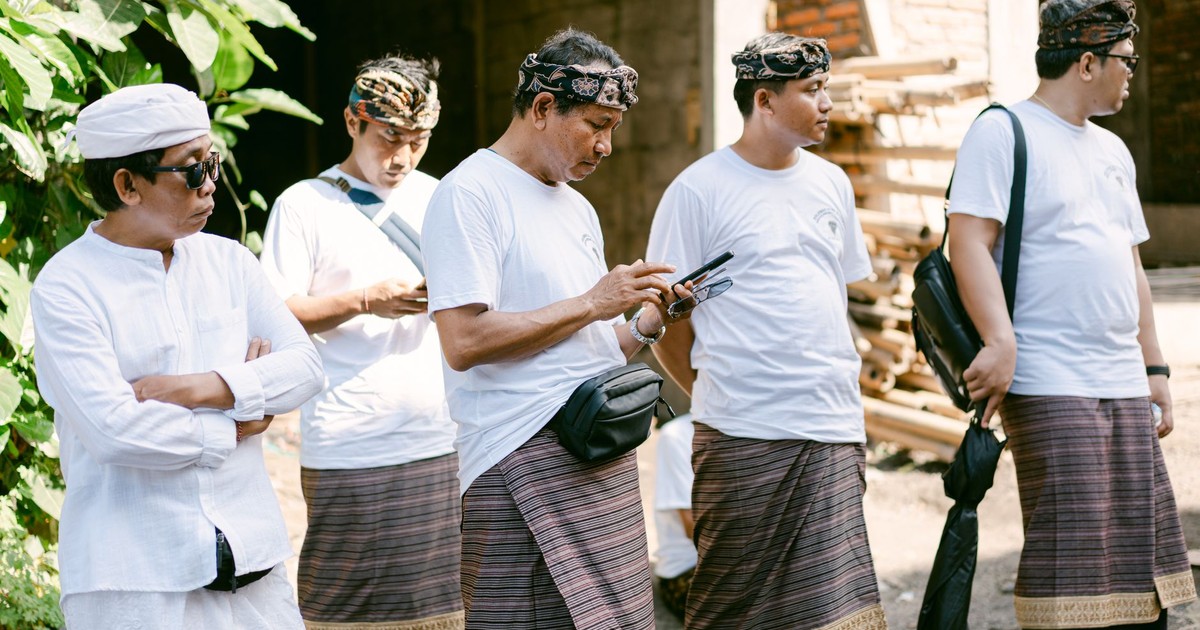
Indonesia’s performance on local friendliness keeps appearing in survey after survey. In the 2025 Ease of Settling In Index, Indonesia placed fourth, making it one of three Southeast Asian countries in the top ten.
The warmth isn’t concentrated in one city or region. It’s a cultural baseline. Balinese hospitality is famous, but expats in Jakarta, Yogyakarta, and Lombok report similar experiences of locals going out of their way to help, include, and check in on newcomers. The Indonesian concept of gotong royong, which roughly translates to communal cooperation and mutual assistance, shapes how communities actually function on a daily basis.
The country pairs that social warmth with very low costs, which helps explain why some expats settle into the rhythm relatively quickly. Bali remains the focal point for the digital nomad crowd, but long-term expats who move beyond the tourist zones consistently report that the friendliness scales with genuine integration. The more you engage with Indonesian life rather than hovering above it, the more the community gives back.
6. Iceland

Iceland’s inclusion on a warmth list might surprise anyone who has spent a January afternoon in Reykjavík, but the data on expat integration is unambiguous. According to a 2026 study by William Russell, Iceland ranked first among the world’s most welcoming countries for expats. High foreign-born employment rates, reaching 84.2 percent in Iceland, are a defining feature of top-performing destinations.
Iceland’s overall score of 8.94 out of 10 was attributed to its high foreign-born employment rate, employment opportunities, straightforward administrative processes, and high levels of social trust.
Economic inclusion is one of the most reliable predictors of social inclusion. When you’re working alongside locals, contributing to the same projects and participating in the same professional communities, you stop being an outsider by default.
Icelanders have a reputation for reserve on first contact, but expats who’ve lived there long enough consistently report that the reserve gives way to genuine loyalty once trust is established. Social networks in a country of 370,000 people overlap constantly. One good friendship opens several others, and the depth of connection that eventually develops tends to be lasting.
7. Luxembourg
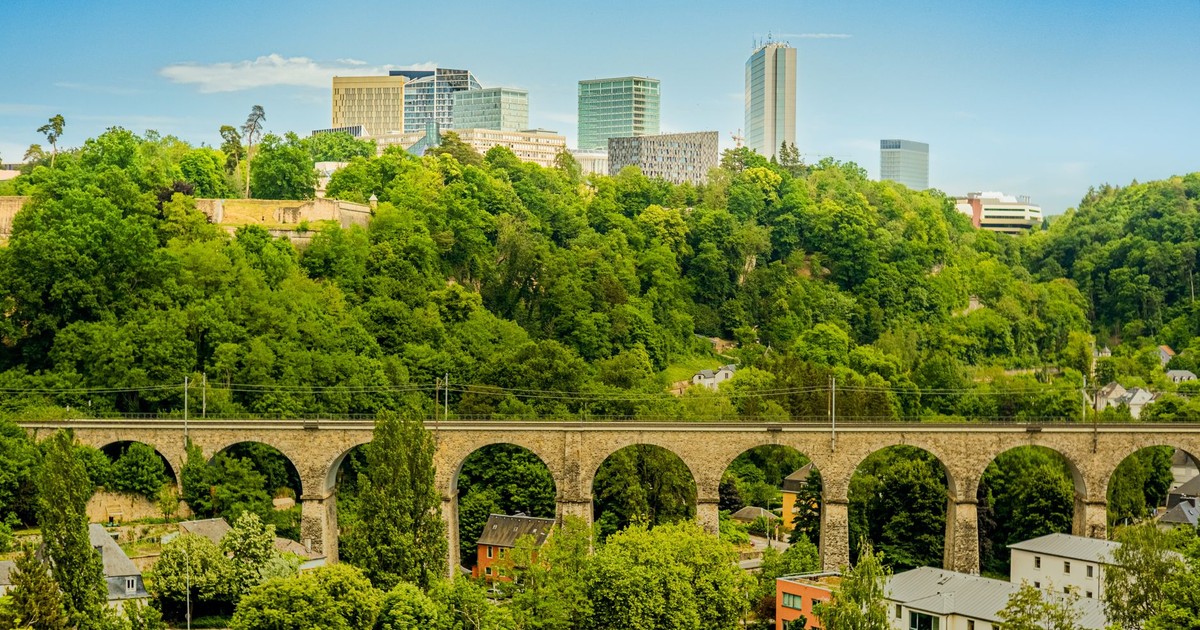
Luxembourg is an unusual case: a country where the majority of residents were actually born somewhere else. International residents form 51.2 percent of Luxembourg’s society, which means that being from somewhere else is simply normal.
In the William Russell 2026 study, Luxembourg ranked second overall for expat welcome, with a score of 8.69 out of 10. The country’s professional environment is heavily international, centered on European Union institutions and a financial sector that draws talent from across the continent and beyond. That professional cosmopolitanism creates a social culture that is well-practiced at integrating newcomers quickly.
The practical scaffolding matters too. Luxembourg offers one of the highest standards of living in the world, a well-resourced public healthcare system, and a small enough geography that the transition from stranger to familiar face in a community happens faster than in a sprawling city. Expats frequently mention that the effort required to feel at home is lower than they expected, not because Luxembourg is flashy about its welcome, but because the social architecture for integration is already in place.
8. The Philippines
The Philippines is consistently ranked as one of the most expat-friendly countries in the world. In the 2024 Expat Insider survey, the Philippines ranked third in the Ease of Settling In Index, the same position it held the year before.
English is widely spoken as a first or second language, which removes one of the most common barriers to genuine connection abroad. Expats report being invited into family events quickly, treated with genuine curiosity rather than tourist-grade politeness, and finding it easier to build local friendships there than almost anywhere else in Asia.
The country’s strong diaspora culture, millions of Filipinos live and work abroad, creates a reciprocal openness at home. A culture that sends so many of its own people to other countries develops a genuine empathy for people arriving somewhere unfamiliar. That empathy is palpable in day-to-day life in Manila, Cebu, and Davao.
What the Rankings Are Really Telling You
The countries that top visa-accessibility charts aren’t always the same ones where people actually feel at home. Visa openness, as William Russell’s 2026 research specifically noted, does not guarantee a welcoming environment. Some countries score highly on access without a visa but lower on social or employment integration. What these rankings capture is something more human: the day-to-day experience of being received by a community rather than simply permitted by one.
The distance between a country that is legally open to foreigners and one where the locals will genuinely pull you into their world turns out to be enormous. It’s the difference between knowing your neighbors’ names and being remembered by the woman at the corner market after your third visit. It’s the difference between an adventure that eventually feels manageable and one that stays lonely regardless of how beautiful the backdrop is.
Most of these countries share a trait that doesn’t show up in any index: a cultural norm around social hospitality that extends beyond the immediate social circle. Whether it’s Mexico’s expectation that strangers eat together, Indonesia’s communal cooperation ethic, or the Philippines’ diaspora-forged empathy for the newly arrived, the warmth is structural, not accidental. The eight countries on this list have track records of closing the distance between arrival and belonging, which, as any expat will tell you, is what actually makes a move worth making.
Disclaimer: This information is not intended to be a substitute for professional medical advice, diagnosis, or treatment and is for information only. Always seek the advice of your physician or another qualified health provider with any questions about your medical condition and/or current medication. Do not disregard professional medical advice or delay seeking advice or treatment because of something you have read here.
AI Disclaimer: This article was created with the assistance of AI tools and reviewed by a human editor.