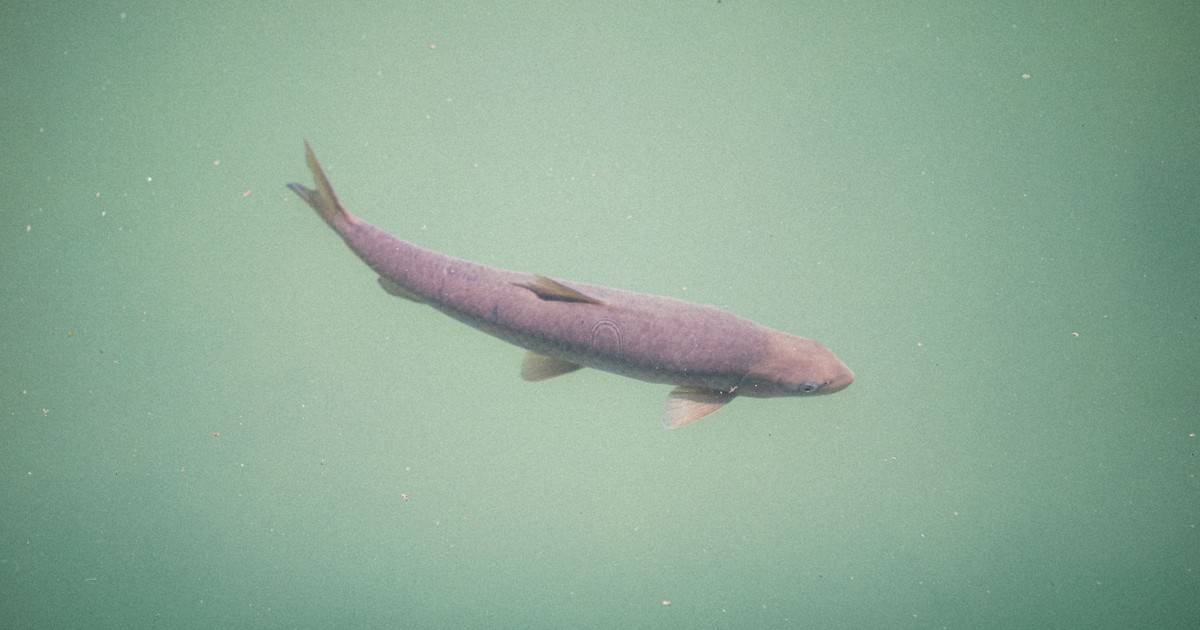

Most fish species are lucky to live a decade. Salmon run their rivers and die young. Bass and perch measure their lives in years, not centuries. Lake sturgeon measure theirs in something closer to geological time. The oldest individual documented in a 2026 study was estimated at 427 years old, which puts its birth year somewhere around 1599, before the Mayflower, before the United States, before anyone had drawn a reliable map of the Great Lakes. A fish with that longevity isn’t just old. It’s operating on a completely different biological clock than nearly anything else swimming in freshwater.
That number wasn’t available to researchers until recently because the previous method for aging these fish was fundamentally broken for the very oldest specimens. Scientists had been undercounting by centuries. The correction, published in the Journal of Fish Biology in April 2026, doesn’t just update a number in a database. It changes the conservation math around a species that was already in deep trouble and raises urgent questions about whether the protections in place are anywhere near adequate.
The Study: 44 Years of Data, a New Method, a Staggering Result
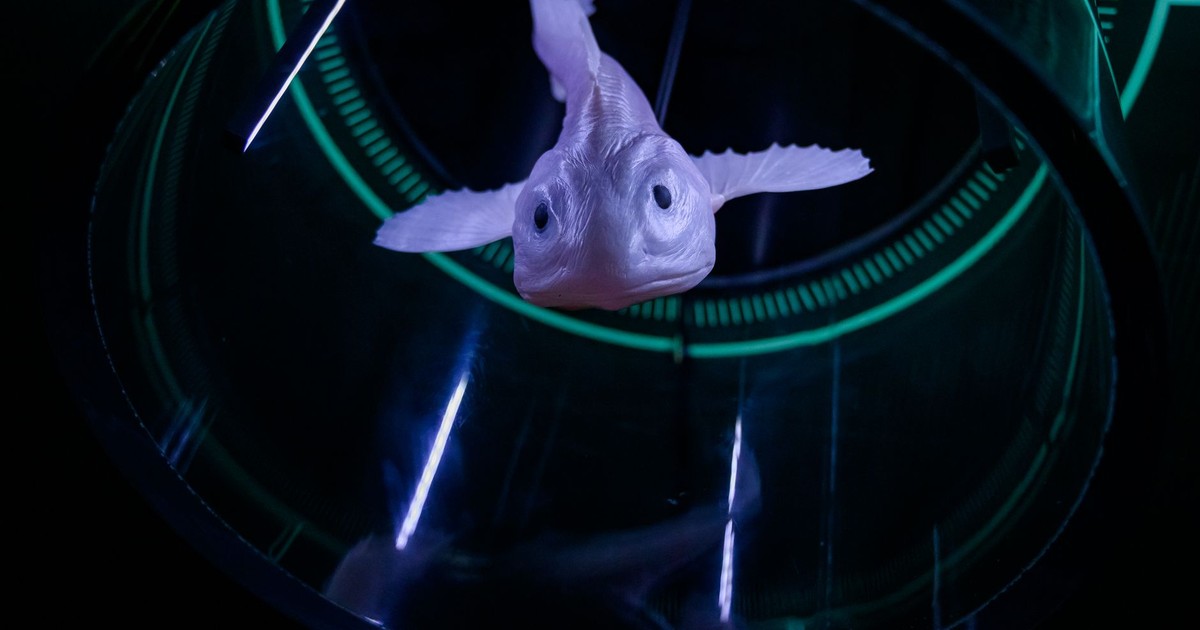
Published in April 2026 in the Journal of Fish Biology, the collaborative study from researchers at the Michigan Department of Natural Resources, Michigan State University, and Michigan Technological University involved capturing, measuring, tagging, and releasing five different Great Lakes lake sturgeon populations over a period of 44 years. That span of time is itself worth pausing on. Four decades of patient, methodical fieldwork, tracking individual fish across their lifetimes to build a picture no short-term study could produce.
The data was then used to estimate the species’ longevity by comparing how much each fish grew between the first and subsequent recaptures. While previous research had found that lake sturgeon have a lifespan of up to 150 years, data from the latest study found its longevity ranged from 90 to 279 years for males and from 99 to 427 years for females, a lifespan nearly as long as the longest-lived vertebrate on Earth, the Greenland shark, which researchers estimate can live up to 512 years old.
The sex difference in that range is striking. Female lake sturgeon, on the upper end, may outlive their male counterparts by nearly 150 years. That kind of longevity gap between males and females is rare in the vertebrate world, and it has direct consequences for how reproduction and population recovery actually function.
Why the Old Method Fell Short
The previous approach to aging lake sturgeon relied on sampling part of the fish’s fin, examining growth rings in a section of bone, much like counting rings in a tree trunk. The technique worked reasonably well for younger fish with more robust annual growth, but it ran into a fundamental problem with very old specimens.
“Some of the fish we have were growing two millimeters a year,” said study researcher Baker. “That’s hard to measure if you’re catching fish three or four years apart. We really needed that 10, 20 or 30-year difference between initial marking and recapture to have measurable change in length and be able to estimate the growth rates that are that slow.”
A fish growing at two millimeters per year produces growth rings so compressed they become nearly impossible to count accurately. The new methodology sidesteps that problem entirely by using real longitudinal data, the same fish, measured repeatedly across decades, to build a growth rate equation that can project maximum lifespan without relying on microscopic ring counts. More rigorous than the old approach, and considerably more alarming in what it reveals about how badly scientists had been underestimating these animals.
The Survival Rate That Makes It Possible
One biological prerequisite makes a lifespan of 400-plus years physically achievable: the fish has to survive almost every year of its life. In order for fish to live that long, they have to have a high annual survival probability. Estimates run from 96% to 98% for lake sturgeon, meaning the vast majority of the population live from one year to the next.
Considered the oldest and largest native fish species in the Great Lakes, lake sturgeon have an annual survival probability of 97%, a significantly higher figure than most freshwater fish, which can be closer to 50%, according to the Michigan Department of Natural Resources. The gap between 97% and 50% annual survival compounds dramatically over centuries. At 97% annual survival, a fish that makes it through its first year has a reasonable statistical chance of reaching its second century. At 50%, the odds of reaching even 20 years are remote. Lake sturgeon, under natural conditions, are built to persist.
The challenge is that human activity has repeatedly disrupted those natural conditions.
A Species Built to Last, and Nearly Destroyed
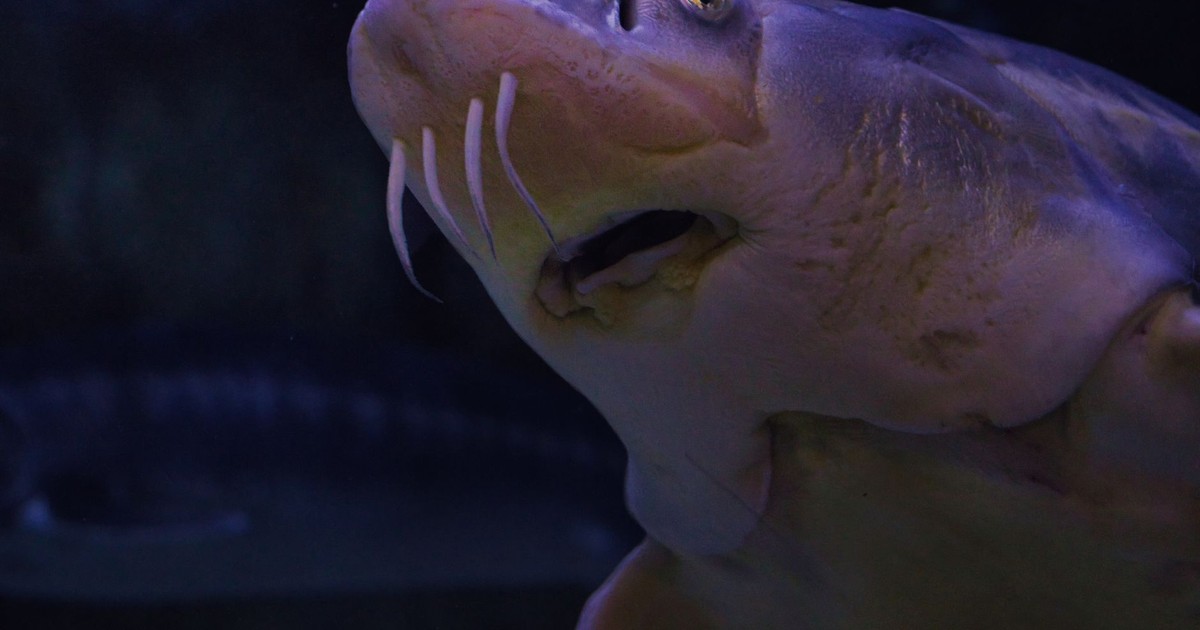
Lake sturgeon, sometimes called “living dinosaurs,” have been around since before the Great Lakes even formed. The Great Lakes themselves are roughly 10,000 to 14,000 years old, carved by glaciers retreating at the end of the last ice age. Lake sturgeon predate them by tens of millions of years. They are the only sturgeon species endemic to the Great Lakes basin and are the largest freshwater fish indigenous to that system. Historically they reached lengths of up to 9 feet and could weigh several hundred pounds.
European settlers initially considered sturgeon a nuisance. Their bulk and armor-plated bodies could damage fishing nets set for other species, and they were sometimes discarded or burned as fuel. According to Great Lakes Now, that attitude reversed sharply once the commercial value of their caviar and meat became apparent, and the reversal proved catastrophic. Overharvesting, along with the construction of dams that blocked spawning habitat, sent populations that had taken millions of years to develop into freefall within decades.
The National Wildlife Federation reports that lake sturgeon were designated as a threatened species in Michigan in 1994, marking the beginning of recovery programs to attempt to revive the population. But the species has reproductive traits that make rehabilitation exceptionally difficult: delayed maturation (males take roughly 15 years to reach reproductive age, females 20 or more), and spawning cycles that are interrupted for years at a time. The species now also faces pollution, the destruction of food sources, and invasive aquatic species, with climate change expected to deepen all of these pressures.
The regulatory response to overfishing has been conservative by design. Because lake sturgeon produce very few offspring per year, harvest regulations in Michigan are famously strict to avoid overfishing. During this year’s brief Black Lake sturgeon fishing season, regulators set the harvest limit at six sturgeon total, which anglers hit within 48 minutes. Six fish. Gone in under an hour. That is the margin of tolerance built around a species that needs centuries to reproduce and recover at scale.
The Population Crisis: Less Than 1% Remains
The Center for Biological Diversity reports that these ancient freshwater fish are struggling to recover from centuries of human harm, and today their numbers sit at less than 1% of historic levels. Dams block access to critical spawning habitat. Many populations remain small, fragmented, or completely reliant on hatchery stocking rather than natural reproduction.
In April 2026, the Center for Biological Diversity notified the U.S. Fish and Wildlife Service that it intends to sue the agency for illegally denying Endangered Species Act protections to America’s lake sturgeon populations. The federal decision not to list the species under the Endangered Species Act has drawn sharp criticism from conservation groups who argue the science clearly supports a higher level of protection. “Lake sturgeon have survived ice ages and mass extinctions, so it would be a tragic failure of modern conservation if they disappear on our watch because federal officials refused to do their job and follow the science and the law,” said Meg Townsend, a freshwater attorney at the Center.
The slow reproductive biology of lake sturgeon is what makes the population math so unforgiving. Baker noted that lake sturgeon don’t reproduce quickly and don’t recruit new members to the population well or fast. “All of that means that we just simply cannot kill a bunch of sturgeon in a population and expect that population to persist.” A species that may take over a century to reach reproductive maturity, and that reproduces only sporadically even then, cannot absorb significant losses and bounce back within a generation or two.
What Recovery Looks Like
The change in conservation status for lake sturgeon does not reflect a sudden, recent downturn in population. Rather, it is based on a refined assessment of the data, meaning the previous listing of “least concern” was too optimistic. Sturgeon have actually been at risk for longer than previously understood. And in some places, they are starting to come back.
Habitat restoration efforts in the Detroit River have led to sturgeon reappearing in areas where they had been absent for generations, and the Great Lakes Now report notes that numbers are increasing again in certain tributaries after a long history of decline. In 2012, the state of Michigan launched a restoration plan with the goal of restoring habitat and reintroducing fish to build self-sustaining populations within 20 years.
The recovery, where it is happening, is real but fragile. Self-sustaining populations require not just enough individual fish, but enough fish of the right age and size to reproduce consistently. Given the new findings on Great Lakes fish lifespan, a truly healthy population may include individuals that have been alive and growing for two, three, or even four centuries.
What 400 Years Means for Conservation Science
If the previous maximum lifespan estimate of 152 years was used to build population models, those models were working with a fundamentally wrong assumption about the species’ biological ceiling. Population dynamics (the mathematical framework scientists use to calculate how populations grow, shrink, and recover over time) depend entirely on accurate life-history data. A fish that can live 427 years and maintains a 97% annual survival rate under healthy conditions is a fish whose loss from a population cannot be replaced on a human-timescale planning horizon. The conservation math changes completely when the oldest animals alive in a population may have hatched before the American Revolution.
The gender gap in longevity adds another layer of complexity. Female lake sturgeon outliving males by such a wide margin suggests that the oldest, largest females in any population carry disproportionate reproductive importance. Losing a single very old female is not equivalent to losing a younger one. In population genetics and reproductive output, those ancient fish may represent an irreplaceable contribution to the gene pool and to the sheer number of eggs produced each spawning season.
Centuries to Grow, Decades to Disappear

The discovery that lake sturgeon can live upward of 427 years reframes this species in ways that have direct consequences for conservation policy. These are not just long-lived fish. They are among the longest-lived vertebrates on the planet, approaching the estimated lifespan range of the Greenland shark. Every individual in the water represents decades or centuries of growth that cannot be replaced quickly. The harvest limit of six fish per season at Black Lake is not excessive caution; given the new data, it may not even be sufficient.
The population numbers drive the urgency home. Less than 1% of the Great Lakes’ historic lake sturgeon population remains. The species survived meteor impacts, ice ages, and mass extinctions. What it has not been able to outpace is two centuries of industrial-scale human pressure on its habitat, food supply, and spawning access. The new longevity data sharpens what conservationists have long argued: this is a species that cannot be managed like an ordinary fish. It requires protections calibrated to its extraordinary biology, protections that, as of 2026, remain the subject of active federal litigation. The fish may have centuries ahead of them. The window for getting the policy right is considerably shorter.
Disclaimer: This information is not intended to be a substitute for professional medical advice, diagnosis, or treatment and is for information only. Always seek the advice of your physician or another qualified health provider with any questions about your medical condition and/or current medication. Do not disregard professional medical advice or delay seeking advice or treatment because of something you have read here.
AI Disclaimer: This article was created with the assistance of AI tools and reviewed by a human editor.