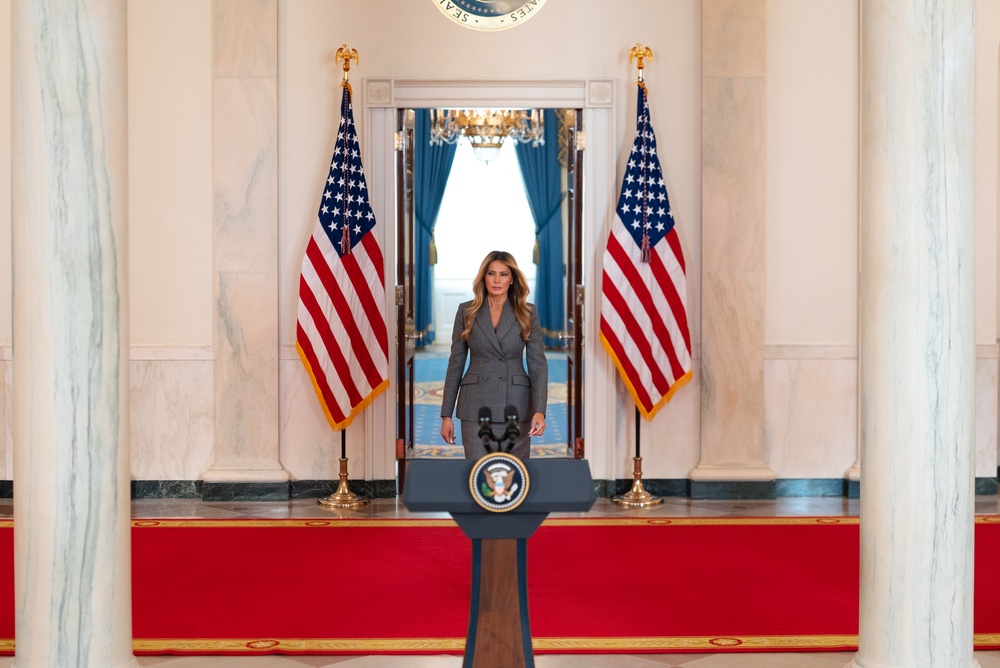

Most of us have been in a relationship where the age gap was just a number until it suddenly wasn’t. You’re doing the grocery run on a Tuesday morning and something shifts in your chest, a quiet, uninvited thought: what if I’m the one left behind? For millions of women watching the current White House, that question has taken on a strangely public shape. Melania Trump is 55 years old, accomplished in her own right, and married to a 79-year-old man who holds the most scrutinized job on earth. The age gap between them is 24 years. And whether you admire her, feel indifferent to her, or think about her mostly as a cultural footnote, the question rattling around in the back of many women’s minds right now is the same: if the worst happened, what would her life actually look like?
That impulse is a deeply human one. Women with older partners have always carried this particular math quietly, doing the arithmetic on life expectancy with one part of their brain while the rest of them gets on with living. Watching it unfold on a public stage, with all the constitutional machinery and financial questions made unusually visible, has a way of dragging the private version of the question into sharp relief.
The law has answers. About the money. About what the Constitution has to say on all of it.
The Oldest President in History
At his 2025 inauguration, Donald Trump set the record as the oldest person to start a term as president, five months older than Joe Biden was at his 2021 inauguration. Should he complete his second term in full, he will be 82 years old by its conclusion. That is not a smear or a partisan observation. It is simply a fact written into the historical record, and it is part of why the question of succession has been more present in public discourse during this administration than at almost any point in recent memory.
Some Americans have expressed concern that his age and health will impair his presidency. Between August 26 and September 2 of 2025, rumors spread online that Trump was ill, prompted by bruises on his hand and his lack of a public appearance for a week. The White House has consistently pushed back on health concerns, but the questions keep resurfacing. Trump himself raised alarm in October 2025 when he told reporters he had undergone a magnetic resonance imaging scan, a procedure commonly used to diagnose and monitor serious conditions such as cancer and heart disease. His team later clarified it was a CT scan, not an MRI.
None of this amounts to a diagnosis. Presidents have surprised us in both directions. But it does explain why the succession question has moved from theoretical to genuinely discussable.
What the Constitution Actually Says

When people ask “what happens if the president dies in office,” the answer is both simpler and more constitutionally layered than most people expect. The short version: the Vice President becomes President, immediately and automatically. The longer version involves a constitutional journey that took over a century and an assassination to properly resolve.
For most of American history, the Constitution did not provide a clear succession plan for the president if they died, became disabled, resigned, or Congress removed them from office. It was following President John F. Kennedy’s assassination that the states ratified the 25th Amendment, which provided a specific succession plan and the transfer of the president’s powers and duties. Before that moment in 1963, the process was assumed rather than codified. In response to the sudden death of President William Henry Harrison in 1841, John Tyler became the first Vice President in U.S. history to fill a vacant presidency. Rather than only taking up the “powers and duties” of the vacant presidency, Tyler insisted that he was now the President of the United States. Congress disputed it at the time. It took more than 120 years to make it unambiguous.
The 25th Amendment to the U.S. Constitution was ratified by the states on June 10, 1967. Section 1 of the amendment clarifies that the Vice President is the successor of the President, and becomes President if the incumbent dies, resigns, or is removed from office. What this means in practice, right now, is that if Donald Trump were to die in office, JD Vance would become President of the United States at that exact moment. No election, no waiting period, no debate. Once the Vice President becomes President, a new Vice President must be appointed. Traditionally, when the Vice President succeeded to the presidency, the office of Vice President remained vacant until the next election. The new President now nominates a candidate for Vice President, who must then be confirmed by a majority vote in both houses of Congress.
That confirmation process for a new VP is the piece that often gets forgotten. The new President does not simply arrive with their own number two already in place. They have to build that position from scratch, subject to Congressional approval. The whole succession architecture is designed around one principle: that the machinery of government keeps turning without a gap.
What It Means for Melania
This is where the constitutional gets personal. The moment JD Vance takes the oath of office, his wife Usha Vance becomes First Lady. Melania Trump, in that same instant, would go from First Lady to former First Lady. The title, the East Wing staff, the ceremonial role, the White House residence, all of it transfers in a breath.
What she would be left with is more interesting than most people think, and considerably more than the official widow’s pension suggests. That pension, codified in the Former Presidents Act, is $20,000 a year. The law states that the widow of each former President is entitled to receive from the United States a monetary allowance at a rate of $20,000 per annum, paid monthly by the Secretary of the Treasury, provided she waives the right to any other annuity or pension to which she is entitled under any other Act of Congress. The monetary allowance commences on the day after the former President dies.
Twenty thousand dollars a year. For context, that is less than the annual cost of a one-bedroom apartment in most major American cities. The widow of a former President is eligible for that $20,000 annual pension, but it is optional. Betty Ford and Nancy Reagan both waived the benefit entirely. They waived it because it was essentially irrelevant to their financial lives, and the same logic applies orders of magnitude more strongly to Melania.
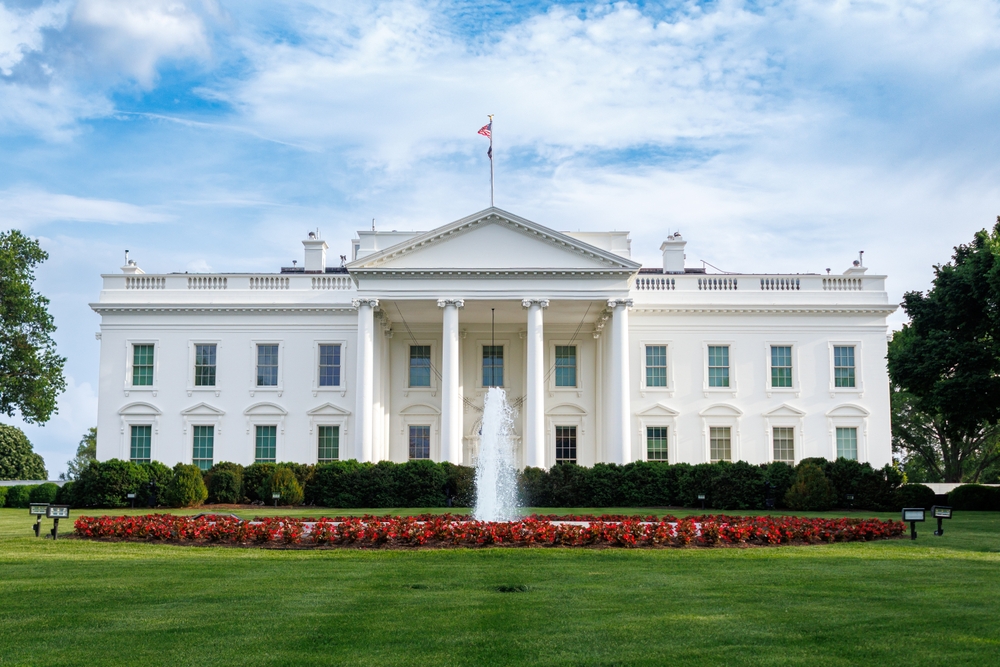
Here is why: the pension is a formality that was designed for a different era. Pensions for former presidents were established by the Former Presidents Act in 1958. Before the act was enacted, former presidents did not receive pensions or other retirement benefits after they left office. The law was written to protect a former president who might otherwise be financially exposed. In practice, the people it covers have almost never needed it.
The Financial Reality Behind the Formality
Set the $20,000 aside for a moment and look at what Melania actually has. Her current net worth is estimated between $50 million and $70 million, derived from modeling contracts, jewelry royalties, book deals, and media projects. In October 2025, Melania announced Muse Films, her own production company. The company’s first project, a documentary about Melania herself titled “Melania,” was directed by filmmaker Brett Ratner) and released on January 30, 2026. She was reportedly paid $28 million for it, 70% of the film’s $40 million production budget.
This is not someone whose financial stability depends on a federal pension. What she would lose is something harder to price: a platform, a title, a particular kind of institutional power that belongs entirely to the role and not to the person. The Secret Service protection is a different matter. In 1994, Congress reduced protection for future former presidents and their spouses to ten years after leaving office, as a cost-saving measure. The Former Presidents Protection Act of 2012 reversed that limit entirely, reinstating lifetime Secret Service protection. Former first spouses will lose this protection if they divorce from the former president, but widows can continue to receive lifetime protection unless they remarry. That protection would remain with her.
The prenuptial agreement the Trumps are widely reported to have is another layer to the picture, though the terms are private. What the financial picture tells us, taken together, is that Melania Trump would emerge from such a scenario with her own considerable wealth intact, her own production company, her own public profile, and the kind of financial independence that most people spend a lifetime trying to build. The $20,000 pension is almost beside the point.
Read More: Why More Women Are Marrying Down
What This Really Means
The Melania question has become a kind of mirror. Women who are years or decades younger than their partners, women who moved countries for a relationship, women who built their professional identity alongside rather than separately from a partner’s public life, they look at this situation and they see something familiar in the shape of it, even when the scale is completely different.
What the constitutional mechanics make plain is that none of this is undefined. The law has clear answers to the questions of power and procedure. What the financial picture makes plain is that Melania’s security was built before the White House, and it would survive it. The $20,000 widow’s pension that sounds so formal and so small is almost irrelevant in this particular story. The more interesting question, the one that does not have a legal answer, is what a woman does with the rest of her life when the role she occupied disappears overnight.
That question lives inside a lot of partnerships, in modest apartments and country houses and unremarkable suburbs, and not just in the White House. Most women navigating a significant age gap with a partner are carrying some version of that math. You do not need to be First Lady for the question to feel urgent. You just need to be honest enough to sit with it. The law, at least, has done its part. The rest is figuring out who you are when the role ends and the person remains.
AI Disclaimer: This article was created with the assistance of AI tools and reviewed by a human editor.