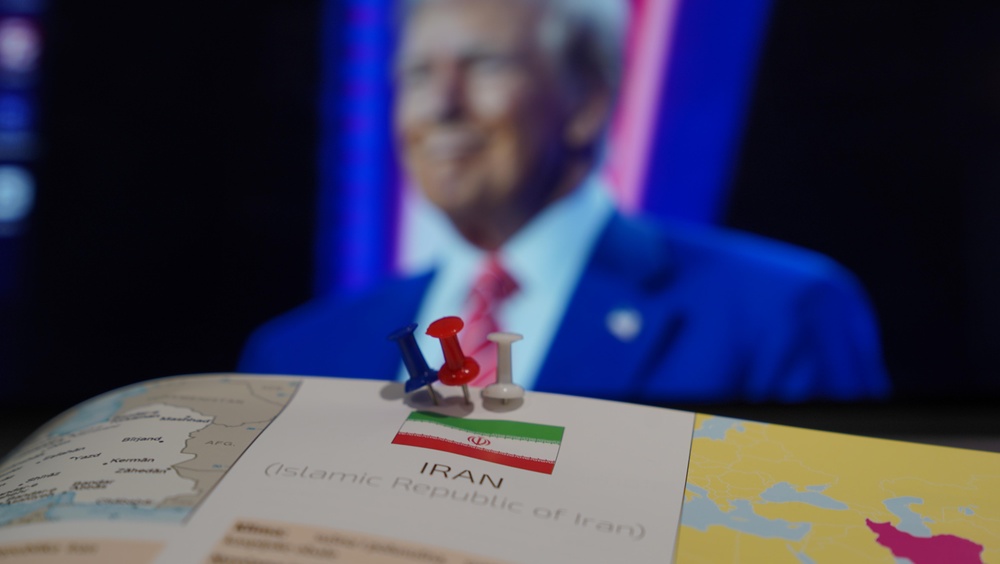

On the morning of June 9, 2026, Donald Trump stepped away from the NBA Finals in New York and told reporters a deal to end the war with Iran was “two or three days” away. The Strait of Hormuz, he promised, would reopen “immediately” after signing. Forty-eight hours earlier, Iran had fired ballistic missiles at northern Israel, and Israel had struck back across Iranian cities. The ceasefire that was supposed to have ended this more than two months ago had, once again, nearly collapsed.
That tension between Trump’s confident timelines and what is actually happening on the ground has defined this entire conflict. He said the fighting would last four to six weeks. It crossed the 100-day mark on Sunday. The pattern has become familiar: a presidential announcement, a flicker of optimism, then another exchange of strikes that resets the clock. But something has shifted over the past two weeks. For the first time, negotiators on both sides appear to have agreed on a concrete framework, and the question is no longer whether a deal exists but whether anyone will sign it.
The Iran nuclear deal taking shape is not just an agreement to stop shooting. It touches the global oil supply, Tehran’s nuclear stockpile, the future of Israeli military operations in Lebanon, and frozen Iranian assets worth tens of billions of dollars. Each of those issues has its own set of red lines, and the red lines don’t all point in the same direction.
How the War Began
On February 28, 2026, Israel and the United States launched a series of strikes against Iran, aiming to target its nuclear and ballistic missile program. Iran’s Supreme Leader, Ali Khamenei, was killed in the strikes. Iran responded by striking U.S. and Israeli targets across the region and, most consequentially for the global economy, closing the Strait of Hormuz, a major global trade route for goods including fuel and gas.
The Strait of Hormuz, through which an average of 20 million barrels per day of crude oil and oil products were shipped in 2025, is one of the world’s most critical oil transit chokepoints. With around 25% of the world’s seaborne oil trade transiting the Strait, and options to bypass it being limited, any disruption to flows would have enormous consequences for world oil markets. When Iran effectively shut it down, those consequences arrived fast. Tanker traffic dropped first by about 70%, with over 150 ships anchoring outside the strait to avoid risks. Traffic then dropped to about zero.
The economic fallout from the Hormuz closure has been staggering. Global oil supply declined by a further 1.8 million barrels per day in April to 95.1 mb/d, taking total losses since February to 12.8 mb/d. Output from Gulf countries affected by the closure was 14.4 mb/d below pre-war levels. North Sea Dated oil traded in an unparalleled wide range of almost $50 a barrel in April, with disruption to Middle East flows triggering a surge in prices of about $16.50 a barrel month-on-month to an average of $120.36 a barrel. The war’s economic impact includes the largest ever supply disruption of the global oil market, along with disruptions to the natural gas, fertilizer, aviation, and tourism industries.
The Ceasefire That Wasn’t
On April 7, Trump announced that he had agreed to a two-week ceasefire with Iran, stating that Iran would immediately open the Strait of Hormuz and work on finalizing a peace agreement. Later that day, Iranian Foreign Minister Abbas Araghchi confirmed Iran had agreed to the conditions. The announcement was greeted with relief across oil markets and diplomatic circles alike. It also, almost immediately, started to come apart.
Israel and the U.S. asserted that the ceasefire did not include Lebanon, contradicting the Pakistani mediators and Iran. Hezbollah said it had halted attacks on Israel and on Israeli soldiers in Lebanon, but despite the ceasefire, Israel launched “Operation Eternal Darkness,” targeting all Hezbollah command and control centers in southern Lebanon, Beirut, and the Beqaa Valley. These were the largest attacks since the start of the war, killing at least 357 people and injuring more than 1,200.
Iran’s response to Israel’s continued Lebanon operations has been the defining sticking point ever since. Tehran has consistently argued that no deal on nuclear matters can proceed while Israeli bombs are falling on Beirut. Tehran has long sought to separate immediate peace talks from negotiations over its nuclear capacity. Israel, for its part, has refused to treat Lebanon as part of the Iran ceasefire at all. That disagreement has not been resolved. It fractured the April ceasefire and it very nearly fractured whatever remained of it last weekend.
What Happened Over the Weekend
On Sunday, Israel struck Beirut’s southern suburbs, killing at least two people and wounding 20, despite a U.S.-led ceasefire announced jointly by Israel and Lebanon on June 4. Hours after those attacks, Iran launched missiles towards northern Israel in retaliation, largely intercepted, with debris falling as far away as Jordan and the West Bank. Israel launched attacks overnight across Iran, with explosions reported in Tehran, Tabriz, Karaj, and Isfahan, marking the most serious escalation between the two countries since the April ceasefire took hold.
The exchanges of fire sent Brent crude, the international oil benchmark, jumping back above $97 a barrel. Trump posted on Truth Social demanding that both sides stop “shooting.” Despite a reported request from Trump urging restraint, Israel retaliated anyway, with its air force completing what it called “an extensive strike against strategic defence systems” in Iran, including facilities at the petrochemical complex in Mahshahr. According to Israeli media reports, Netanyahu eventually accepted Trump’s demand to refrain from striking Iran again.
By Monday, both sides had pulled back. Israel halted attacks on Iran, while Iran suspended its operations against Israel but warned it would resume them if Israeli strikes in southern Lebanon continue. Iranian parliamentary official Ebrahim Azizi told CNN that Tehran has “no problem” pushing forward with peace talks, so long as Iran is confident the U.S. side is being honest and sincere. Trump, in a phone interview with the Financial Times, was characteristically blunt about who is actually calling the shots. “I call the shots. I call all the shots. He doesn’t call the shots,” Trump said, referring to Netanyahu.
What the Deal Actually Contains
Despite the weekend’s violence, negotiators had been making real progress on the actual text of an agreement in the days before the flare-up. U.S. and Iranian negotiators had reached an agreement on a 60-day memorandum of understanding to extend the ceasefire and launch negotiations on Iran’s nuclear program, but President Trump had yet to give his final approval, according to two U.S. officials and a regional source involved in the mediation efforts.
The structure of the proposed Iran nuclear deal runs in two phases, with the MOU serving as a bridge. The agreement involves a 60-day ceasefire extension during which the Strait of Hormuz would be reopened, Iran would be able to freely sell oil, and negotiations would be held on curbing Iran’s nuclear program, according to a U.S. official. The MOU states that shipping through the Strait of Hormuz will be “unrestricted,” meaning no tolls and no harassment, with Iran required to remove all mines from the strait within 30 days. The U.S. naval blockade would also be lifted in proportion to the restoration of commercial shipping, and the U.S. would issue some sanctions waivers allowing Iran to sell oil freely.
On the nuclear side, the MOU includes an Iranian commitment not to pursue a nuclear weapon. But that commitment is general. The hard specifics, particularly what happens to Iran’s existing stockpile of enriched uranium, remain unresolved. According to a February 2026 report by the IAEA, Iran holds 440.9 kilograms of uranium enriched up to 60% purity – a short technical step from the 90% associated with weapons-grade material. Nuclear analysts have said that Iran might consider China or Russia to be an acceptable third party to take possession of the enriched uranium. But Trump said he “wouldn’t be comfortable” with such a plan.
According to two sources with knowledge of the negotiations, Iran gave the U.S. verbal commitments through the mediators about the scope of concessions it’s willing to make on suspending enrichment and giving up nuclear material. The U.S., in turn, would agree to negotiate over lifting sanctions and unfreezing Iranian funds during the 60-day period, though those steps would only be implemented as part of a final agreement that is verifiably implemented.
The Sticking Points
Iran’s state-affiliated Fars News has pushed back directly on Trump’s characterizations, saying his claims about the strait reopening are “not true” and “inconsistent with reality.” While Iran has agreed to allow shipping to return to pre-war levels, Fars News stated this “in no way means ‘free passage’ as it existed before the war.”
Tehran has also drawn a clear line on the nuclear sequencing. Iran has sought to put off nuclear talks until after a formal cessation in hostilities. A senior Iranian official told Reuters that Tehran has not agreed to hand over its highly enriched uranium stockpile, and that the nuclear issue was not part of the preliminary agreement with the U.S. The Trump administration’s position has been the opposite: it wants nuclear concessions locked in before any major sanctions relief flows.
Israel’s concerns run parallel but separate. Israel’s main concern is that there will be a narrow interim agreement that extends the ceasefire, opens the Strait of Hormuz, and gradually eases sanctions on Iran, while not addressing the most critical points for Israel: Tehran’s nuclear program and enriched uranium. The draft MOU also makes clear that the war between Israel and Hezbollah in Lebanon would end – a condition that Israeli Prime Minister Benjamin Netanyahu expressed concern about during a phone call with Trump, according to an Israeli official.
Both sides are pushing the ceasefire to its limits while seeking greater leverage before any final agreement is signed. Every time the ceasefire frays, public pressure on both governments to walk away from the table grows. Iran’s parliament speaker Mohammad Bagher Ghalibaf has been openly skeptical, framing diplomacy and military pressure not as alternatives but as tools to be deployed simultaneously depending on the moment.
Iran’s Internal Fractures
Inside Iran, the negotiations have exposed a rift among several factions. The Islamic Republic is simultaneously negotiating its own economic survival and managing a leadership transition after Khamenei’s death. Iran has appointed Khamenei’s son as his successor and launched a series of counter-strikes against Israel, U.S. military bases in the region, and military and civilian locations in Arab states. The new supreme leader, Mojtaba Khamenei, is regarded as a hardliner with a limited independent power base, making the IRGC’s role in any final decision more influential than it might otherwise be.
The U.S. believes Iran’s economic crunch provides an incentive to reach a full deal to remove sanctions and unfreeze its cash. In June 2026, the United States was considering redirecting Iranian frozen assets to Gulf states for reconstruction and repair costs linked to damage attributed to Iran. The proposal came amid indirect negotiations, while a peace deal was described as hinging on the release of $24 billion in Iranian assets frozen by the United States. Iran’s government assessed the total damage to its own economy at at least $300 billion, and possibly as much as $1 trillion by mid-April.
The economic logic for a deal is real. The question is whether the political logic inside Tehran’s ruling factions points the same direction.
What the House of Commons Briefing Lays Out
There are five major issues being negotiated in the talks, many echoing those in previous rounds, most notably those leading to the 2015 nuclear agreement. In the February 2026 talks, divisions between the two sides included the U.S. demand that Iran end all nuclear enrichment activity, the future of Iran’s ballistic missile program, and the timing of sanctions relief.
The U.S. position throughout 2025 and 2026 has been that Iran must conduct “zero enrichment.” This was rejected by Iran on earlier occasions. Vice President JD Vance framed the conflict’s goals in more measured terms than Trump: “Though Trump and his team said from the start of the conflict that one of their prime objectives was to ensure Iran can never have a nuclear weapon, Vance framed the war’s accomplishments as something far less definitive. ‘We’re in a position where we could substantially set back their nuclear program, not just during the term of this president but over the long term,’ Vance said.
The space between “never have a nuclear weapon” and “substantially set back their program” is significant. It may be where an agreement actually lives.
Read More: The Countries That Benefit From the Iran War
What This Means for the Deal Ahead
Trump has previously promised an imminent resolution to the conflict, only for hostilities to resume later. He initially said fighting would last four to six weeks. It crossed the 100-day mark on Sunday. That history makes his “two or three days” pledge easy to dismiss, and some observers are doing exactly that.
But the current moment is different from earlier optimism, at least structurally. This time, negotiators on both sides have reportedly agreed on language. Vice President JD Vance confirmed there was a tentative agreement, but said it was unclear if President Trump would approve it. The U.S. negotiators briefed Trump on the details of the final deal, but he did not immediately sign off. “The president relayed to the mediators that he wants a couple of days to think about it,” a U.S. official said. A deal without a signed document is just a conversation, and this one has collapsed before. Trump and his advisers thought they were close to a deal several times at earlier stages in the war, but talks repeatedly stalled.
What’s also different now is the sheer economic pressure on all parties. Oil at $93 a barrel after a brief ceasefire. Benchmark oil prices have posted wild swings in response to conflicting signals on whether the United States and Iran will soon reach a deal to end the conflict, with North Sea Dated plunging from a high of $144 per barrel to below $100 before rebounding again. The petrochemical sector, the aviation industry, Asian economies dependent on Gulf oil, and American consumers paying elevated prices at every pump and checkout counter are all waiting for the same thing: a number on a signed page.
The ceasefire with Iran, announced on April 7, was initially supposed to last two weeks while the two sides finished a deal to end the war. It did not. The 60-day MOU being discussed now is, in that sense, another extension of the same logic: buy time, negotiate the hard things later. The difference is that the hard things are becoming undeniable. Iran’s enriched uranium isn’t going anywhere on its own. The Strait of Hormuz doesn’t reopen without an agreement that both governments can defend at home. And Israel’s operations in Lebanon, which have remained nearly daily since early March, will continue to hand Tehran a pretext for breaking any deal it finds inconvenient.
The Real Question
Whether an Iran nuclear deal gets signed in the next few days or the next few months, the underlying calculus hasn’t changed for either side. Iran needs sanctions relief and the return of its frozen assets to prevent a complete economic collapse. The U.S. needs Iran to make verifiable, specific commitments on its nuclear program, not verbal assurances delivered through Pakistani and Omani intermediaries. And Israel needs something the current framework doesn’t yet provide: confidence that whatever Iran agrees to on paper will be enforced when the cameras are gone and the attention shifts elsewhere.
Trump’s habit of announcing deals before they are deals has complicated every stage of this process. His negotiators have something real to show him. Whether he signs it, whether Netanyahu accepts Lebanon’s inclusion in the terms, and whether Iran’s hardliners ultimately override the pragmatists who’ve been at the table – those three questions are the actual story. The “days away” framing makes for a clean headline. The conflict, now past 100 days and still producing strikes that nearly triggered full-scale war on Sunday, has consistently refused to fit inside one.
AI Disclaimer: This article was created with the assistance of AI tools and reviewed by a human editor.