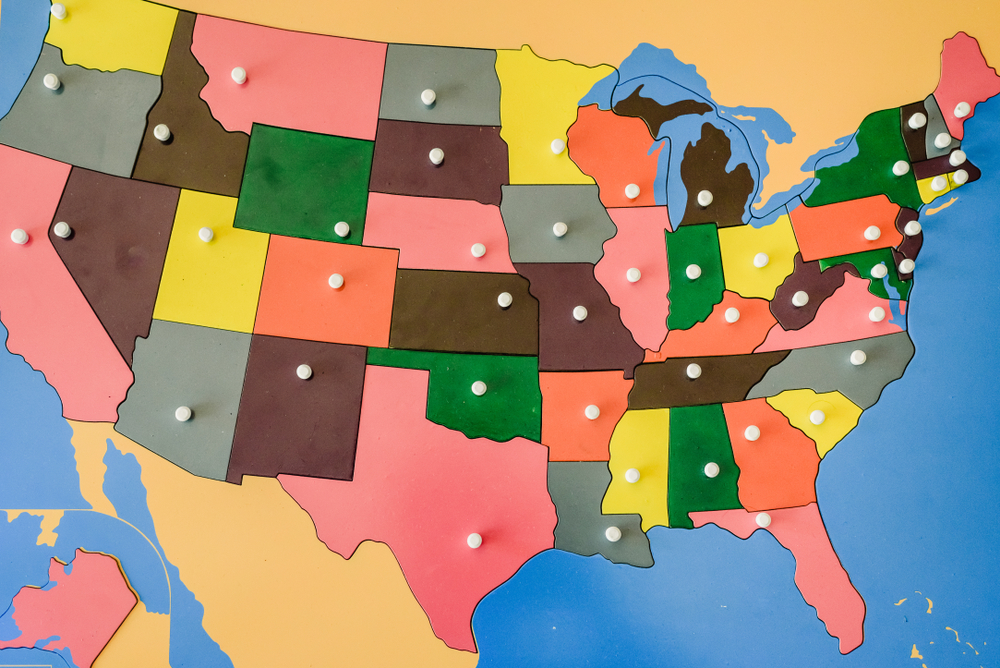

Where you live in America can shape your access to education in ways that are easy to overlook until you look at the data. A new analysis published in early 2026 ranked all 50 states by the educational achievement of their residents, and the gaps between the top and the bottom are genuinely striking. The most and least educated states in America aren’t just separated by degrees on a diploma, they reflect decades of policy decisions, economic investment, and the strength of both K-12 and higher education systems.
With people who have college degrees earning around $600 to $1,400 more per week than people with just a high school diploma, understanding where education is thriving, and where it’s struggling, matters well beyond academic curiosity. Whether you’re considering a move, raising children, or just want to understand how your home state stacks up, these rankings offer a useful snapshot.
So which states lead the country, and which are falling behind? Read on.
How the WalletHub Education Rankings Work
To build the rankings, WalletHub evaluated all 50 states using 18 metrics that capture the key components of a well-educated population, including educational attainment, school quality, and disparities in achievement across gender and race. Data for the 2026 edition was collected as of January 29, 2026 from sources including the U.S. Census Bureau, the National Center for Education Statistics, U.S. News & World Report, the U.S. Department of Education, The College Board, and several other national education databases.
Each state received a score on a 100-point scale, with 100 representing the highest possible educational attainment and quality. The analysis examined educational attainment, school quality, and achievement gaps between genders and races, meaning a state had to perform well on multiple fronts, not just produce college graduates, but also deliver strong K-12 outcomes and close historical divides. The result is one of the most comprehensive state-level education rankings available.
The 5 Most Educated States in America
1. Massachusetts
Massachusetts, home to top colleges like MIT and Harvard, ranks as the most educated state in America, with the highest percentage of adults ages 25 and older who hold at least a bachelor’s degree, at over 47%, and the highest share with a graduate or professional degree, at nearly 22%.
But it’s not just the universities carrying the state’s reputation. Massachusetts has the second-best public school system in the country, and students post the highest math and reading test scores on the National Assessment of Educational Progress. Massachusetts is also one of the states that provide state-sponsored free college tuition programs, though eligibility is limited by factors such as income, merit, location, or field of study.
For anyone thinking about where to raise a family with strong educational infrastructure from preschool through graduate school, Massachusetts currently has no peer in the U.S.
2. Vermont
Vermont’s ranking may surprise people who associate elite education with large coastal cities. The Green Mountain State is the second-most educated in America, with nearly 44% of residents ages 25 and older holding at least a bachelor’s degree, 19% holding a graduate or professional degree, and 95% of people ages 25+ holding at least a high school diploma, the highest percentage in the country.
Vermont also has the eighth-highest share of adults aged 25 and older who have some college education or an associate’s degree, and its universities collectively rank 12th-best in the nation. Small class sizes contribute, too. Vermont has the lowest pupil-to-teacher ratio in the country, at 10.5-to-1, compared to the U.S. average of 16-to-1. That level of individual attention shows up clearly in outcomes.
3. Maryland
The third-most educated state is Maryland, which stands out for enacting a free statewide community college program that allows anyone who wants to pursue higher education to have the opportunity. That policy is partially responsible for why Maryland has the fifth-highest share of residents ages 25+ with at least a bachelor’s degree and the second-highest share with a graduate or professional degree.
Maryland also performs strongly at the high school level, ranking among the top states for students who scored at least a 3 out of 5 on an AP exam, and its public school systems rank as the fifth-best in the nation. Proximity to Washington, D.C. and the demand from federal government employers for highly educated workers helps sustain a culture of degree attainment across the state.
4. Connecticut
Connecticut is the fourth-most educated state, ranking fifth for the highest percentage of bachelor’s degree holders at 38.9% and third for the highest percentage of graduate or professional degree holders at 17.0%.
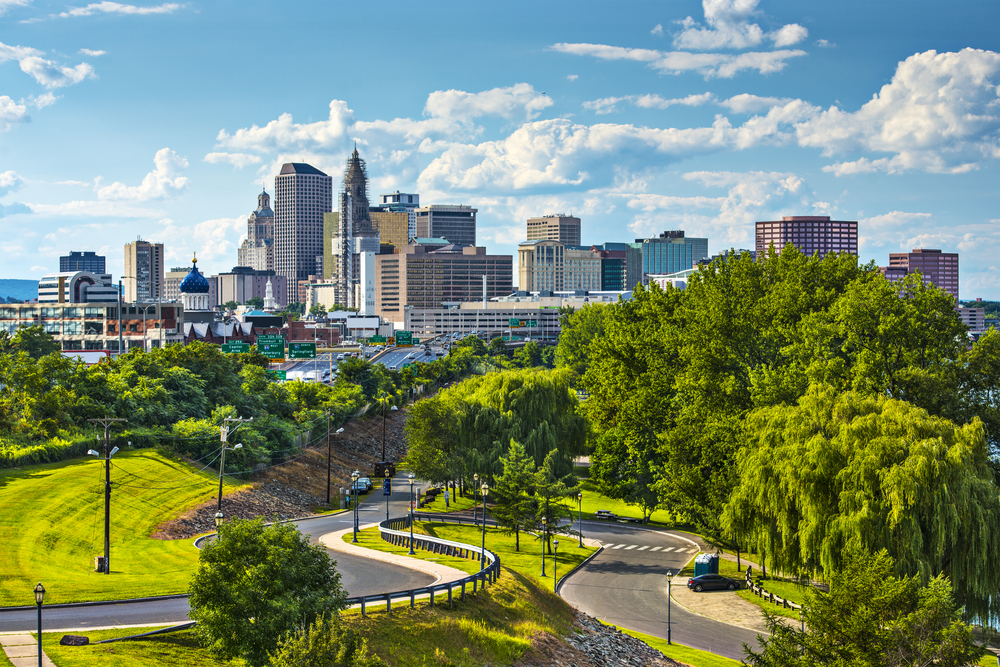
Connecticut ranks second for public schools, with students posting the highest median ACT score in the country at 25.5, and third-highest reading test scores. The state spends about $18,958 per pupil, one of the highest in the country. Institutions like Yale University and the University of Connecticut anchor a culture of advanced learning. For adults weighing the connection between education and long-term financial outcomes, Connecticut consistently offers both strong academic pathways and above-average economic returns.
5. Colorado
Colorado ranks fourth in educational attainment, with the highest percentage of associate’s degree holders or college-experienced adults in the country and the second-highest percentage of bachelor’s degree holders, at 39.4%.
Colorado’s story is a useful reminder that educational attainment and institutional quality don’t always move in tandem. Colorado ranks 32nd for Quality of Education overall and has the third-lowest average university quality in the country, yet the state consistently produces one of the most credentialed adult populations anywhere. A strong tech and outdoor recreation economy continues to attract degree-holders from other states, boosting the overall educational profile of the population.
The 5 Least Educated States in America
1. West Virginia
West Virginia is the least educated state in the country, with an overall score of 23.15 out of 100, ranking last for educational attainment. The state has the lowest shares of people with associate’s degrees or some college experience and those with bachelor’s degrees, at just 20.6%, and also has the fourth-lowest average university quality.
A long-term reliance on coal mining and manufacturing, combined with rural isolation and population decline, limits access to universities and job opportunities requiring higher education, and poverty affects nearly 17% of residents, reinforcing the state’s low college attainment. Massachusetts has the highest share of bachelor’s degree holders aged 25 and older, which is two times higher than in West Virginia. That two-to-one gap between the top and bottom of the country speaks to just how wide the educational divide has grown.
2. Mississippi
Mississippi scores 25.35 out of 100, ranking 49th for educational attainment and 47th for quality of education. The state has the third-lowest share of high school diploma holders at 84.5% and the second-lowest share of bachelor’s degree holders.
Mississippi also ranks among the worst states for school quality. WalletHub’s school systems analysis places Mississippi among the bottom five states in the country for education quality. Persistent poverty, limited access to quality higher education institutions, and underfunded school districts continue to make it difficult to break the cycle. The gap between Mississippi and the top-performing states represents one of the starkest regional education divides in America.
3. Louisiana
Louisiana holds the third-lowest spot overall, scoring 25.75 and ranking 48th for educational attainment and 45th for quality of education. The state has the fourth-lowest share of high school diploma holders and bachelor’s degree holders, and the second-lowest share of associate’s degree holders.
Louisiana faces persistent economic inequality and the long-term effects of infrastructure loss. High child poverty and limited access to quality higher education institutions continue to hinder improvement in college graduation rates. Louisiana is one of multiple Southern states that appears repeatedly near the bottom of national education rankings, reflecting deep-rooted structural challenges that go well beyond any single policy decision.
4. Arkansas
Arkansas scores 31.00 out of 100, ranking 47th for educational attainment. The state has the third-lowest share of associate’s, bachelor’s, and graduate degree holders in the country.
Arkansas has a high school completion rate of around 87.2%, and 27.1% of adults hold bachelor’s degrees or higher. Rural poverty in areas like the Arkansas Delta, combined with limited university access and underfunded school systems, restricts academic progress, and fourteen counties remain in “persistent poverty,” where intergenerational barriers to higher education are strongest. Closing that gap will require more than school funding; it will require sustained investment in the communities surrounding those schools.
5. Nevada
Nevada scores 34.6 and has an 86.9% high school completion rate, with just 28.5% of adults holding a bachelor’s degree or higher. Despite strong job growth, much of the state’s economy relies on hospitality and service industries that don’t require college degrees. Rapid population changes, overcrowded schools in Clark County, and rural education gaps make it one of the lowest-educated states in the West.
In 2023, Nevada spent only about $11,673 per student, ranking 46th in K-12 spending nationwide. That funding shortfall feeds directly into outcomes. Nevada has one of the lowest high school attainment rates in the country, with only around 87.4% of adults holding a diploma, and roughly 27% of Nevadans hold a bachelor’s degree, far below the 36% U.S. average. For a state with one of the fastest-growing populations in the country, the educational infrastructure has not kept pace.
What This Means for You
The rankings for 2026 confirm what many researchers have documented for years: geography still shapes educational opportunity in profound ways. Analyst Chip Lupo noted that “there’s a strong correlation between being more educated and receiving higher compensation,” and that “the most educated states provide high-quality educational experiences from elementary school all the way to graduate programs, which helps parents raise children in an environment that gives them as many opportunities as possible.”
The most educated states, clustered heavily in the Northeast, benefit from a combination of well-funded public schools, strong university networks, and labor markets that reward higher credentials. The least educated states face a different reality: underfunded systems, limited access to four-year institutions, and economic structures that historically haven’t demanded degrees. Top states also tend to provide equitable schooling conditions, with lower racial and gender gaps in educational attainment, which means the advantages compound over generations.
If you live in a high-ranking state, these rankings are worth paying attention to at the local level, since state averages can mask significant variation between counties. If you live in a lower-ranked state, the data points to specific levers: community college access, K-12 funding, and university quality are all measurable, changeable factors. Knowing where your state stands is the first step toward demanding better.
A.I. Disclaimer: This article was created with AI assistance and edited by a human for accuracy and clarity.