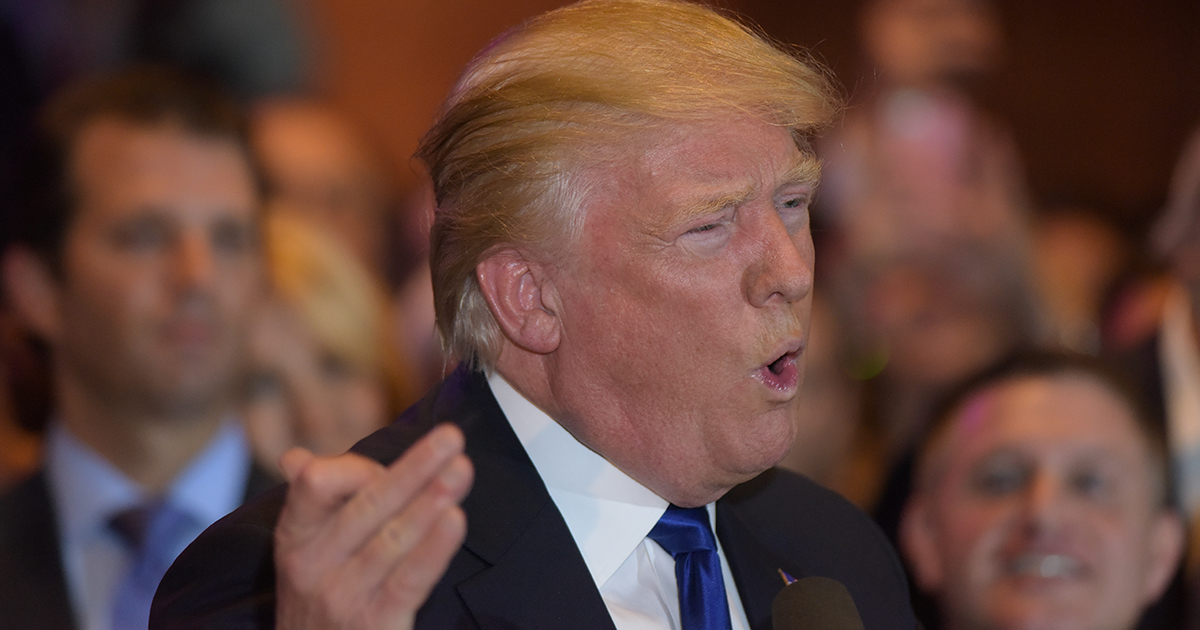

The argument that happens most often in coverage of Trump’s rhetoric isn’t about grand ideology. It’s about a single word used on a single afternoon in Marietta, Georgia, and what that word says about the man who chose it.
On July 22, 2026, Trump attended the dignified transfer of four U.S. service members at Dover Air Force Base. President Trump attended the dignified transfer of the remains of four service members killed in Iranian attacks in Jordan and Iraq after hostilities ramped up following the collapse of the ceasefire. The four were 1st Lt. Tyler James Feehan, Sgt. Michael Emmanuel Swinton, Sgt. Angel Rampersad, and Pvt. Isabella Gonzales. That evening, at a campaign-style rally in Marietta, Trump referred to the same conflict as a “skirmish.”
That word – one syllable, casual, the kind of thing you might say about a scuffle in a parking lot – triggered a sharp rebuke from Senator Gary Peters of Michigan. Peters, a Democrat on the Senate Armed Services Committee, went after Trump directly for using that language just hours after the Dover ceremony. His critique wasn’t primarily strategic or partisan. It was something blunter than that.
“When you have people coming back as casualties and families that are grieving, this is a president that’s disconnected from the kind of humanity that we expect in the leader of our country,” Peters said. A single word had done enough political and moral work that a sitting senator felt compelled to name what it revealed about the man using it.
The Word That Started It All
Newsweek reports that Trump courted controversy when he appeared to dismiss the conflict, referring to it as a “skirmish.” “This skirmish we have going on. I call it a skirmish with the Islamic Republic of Iran,” Trump said. The remark landed particularly hard given what had happened earlier in the day.
Trump attended the dignified transfer of U.S. service members killed in the Middle East amid an escalation in the war with Iran. Their deaths brought the total number of U.S. service member casualties in the Iran war to 18. Trump recognized the family of one of the four soldiers killed that month by Iranian attacks during his speech in Marietta. The president said that while speaking to the family of 1st Lt. Tyler James Feehan at the dignified transfer at Dover Air Force Base earlier that day, he offered them a ride back to Georgia on Air Force One – and the family members were then at the rally in Marietta.
Peters went further, noting that Trump had also referred to his congressionally unauthorized war as a “short excursion” and a “little excursion,” and accused the president of “deceiving” Americans by “downplaying the implications” of the deadly conflict. The pattern Peters was describing wasn’t a single verbal stumble. It was a consistent rhetorical strategy of shrinkage: making a war that was killing American soldiers sound like a minor inconvenience in the business of geopolitics.
Former supporter Marjorie Taylor Greene said Trump was “bragging about killing 18 US soldiers.” California Governor Gavin Newsom called the president a “disgusting Little Man.” Bill Kristol, editor at large of The Bulwark, wrote that it was “disgusting for the commander-in-chief to call the war he initiated in which these service members died a skirmish.”
“A Failure of Leadership”
Peters, who went after Defense Secretary Pete Hegseth during a Senate Appropriations Committee hearing the day before, stressed that the country was being led by those who had no idea about the strategic objectives of the war, and pointed to the Pentagon reportedly withholding information on troops’ injuries.
The senator’s phrase – “disconnected from humanity” – deserves more than a passing read. He wasn’t accusing the president of poor communication skills or bad optics management. He was making a specific charge: that the language a leader chooses in the face of grief and loss is not incidental. It is revealing. When a president stands at Dover in the morning and calls the same war a skirmish before dinner, the word choice is not a political miscalculation. It tells you something about what he believes the cost is worth.
Peters said plainly: “Well, certainly this is not a skirmish. That’s really a mischaracterization of what’s happening,” noting that he is a minority member of the Senate’s Armed Services Committee. He followed that with something more direct: “This is a war. People die. It impacts people in a major way.”
The bluntness of that formulation is worth sitting with. “People die.” In the context of a president who used the words “short excursion” and “little excursion” and “skirmish” to describe an 18-death military conflict, Peters was doing something very specific – insisting on the full weight of what those words were meant to obscure.
A Pattern Longer Than One War
The “skirmish” controversy doesn’t exist in isolation. It’s the latest installment in a long-running debate about what Trump’s language choices actually say about his relationship to human cost, human dignity, and the people on the receiving end of his policies.
Over the years, Trump has referred to immigrants as “vermin,” accused critics of being “poison” to America, and described political opponents as “enemies from within.” Analysts across the political spectrum agree that his reliance on inflammatory and often dehumanizing language is not an unfortunate quirk – it is a deliberate tactic.
Trump has repeatedly used dehumanizing language to describe immigrants, including calling them “animals,” “vermin,” and accusing them of “poisoning the blood” of the country. Research in social psychology shows that when people are exposed to animal or disease metaphors about immigrants, they become more likely to support exclusionary or punitive policies – dehumanizing framing doesn’t just change the language, it changes what policies people are willing to accept.
The word “skirmish” differs in that it minimizes rather than vilifies. But the rhetorical logic is identical. Strip a situation of its human weight – whether by reducing people to animals or reducing a war to a scuffle – and the audience finds it easier to look away. Eighteen dead soldiers becomes acceptable background noise. A grieving family becomes a footnote to a rally.
What the International Community Has Said
The Hill reports that the U.N. Committee on the Elimination of Racial Discrimination warned that hate speech from political leaders, including Trump, combined with intensified immigration crackdowns near schools, hospitals, and faith-based institutions, has sparked “grave human rights violations.” Leaders have shared harmful stereotypes about migrants, refugees, and asylum-seekers, “portraying them as criminals or as a burden.” The panel found that derogatory and dehumanizing language fosters intolerance and may incite racial discrimination, hate crimes, and hate speech, particularly on the internet and social media.
The decision, made under the committee’s early warning protocol, is not legally binding but seeks to hold the U.S. to its own international commitments. Its specificity, however, was notable. It pointed directly at the presidency.
The panel also expressed deep concern about the sharp increase in the number of detainees held in immigration detention facilities, noting that the number rose from nearly 40,000 in late 2024 to around 73,000 refugees, asylum-seekers, and migrants without permanent legal status in early 2026. That number is itself a downstream consequence of language – of years of describing migration as invasion, migrants as animals, and enforcement as a purification exercise.
Language as Policy Architecture

There is a structural relationship between the words political leaders use and the policies those words eventually authorize. Words repeated until they become common sense are how a population gets primed to accept policies it would otherwise reject. Once a group has been described as criminal, as animals, as an invasion force, the policies that follow require less justification – because the public has already been told what kind of people are being acted upon.
The same “narcoterrorist” label that justifies killing people on boats in the Caribbean justifies invoking wartime emergency powers to deport Venezuelan immigrants without hearings or lawyers. The same “invasion” framing that provides rhetorical cover for military action in Venezuela treats migration itself as an act of war.
The word “skirmish” operates on a slightly different axis. It isn’t about vilifying a group; it’s about minimizing American sacrifice. But the underlying pattern is the same. Language does the work of reducing what is real and heavy and painful to something abstract and weightless. A skirmish is something you walk away from. A war with 18 dead service members and thousands of casualties across the Middle East is something else entirely.
The persistence of this kind of language is not accidental. Scholars warn that framing people as less than human serves a political function: it makes punitive policies seem not only acceptable but necessary. In the context of the Iran war, framing the conflict as a skirmish serves a parallel function – it makes the ongoing cost seem not only acceptable but trivial.
Read More: Tucker Carlson says he’s walking away from the Republican Party: “I’m out”
The Families in the Room

There is a detail from the Marietta rally that cuts through all the political analysis. During the rally, Trump returned to his talk of the war being a “skirmish,” arguing that he uses the term because Iran is “getting hit so hard and they want to make a deal” – and one of the four fallen soldiers’ families was in that crowd.
A family who had watched their child’s transfer case arrive at Dover hours earlier sat there while the president called that child’s death part of a skirmish. Peters’ phrase – “disconnected from the kind of humanity we expect” – finds its most concrete expression not in an abstract political critique but in that specific moment. A word, a family, a flag-draped case, and a rally in Georgia.
Peters said bluntly: “What we’re seeing here is a failure of leadership.” That framing is different from calling it a communication failure or a political gaffe. Leadership, in Peters’ construction, requires the ability to hold the full weight of what you have ordered – the soldiers sent, the families grieving, the bodies coming home – without linguistically reducing it to something easier to live with.
The Weight of a Single Word
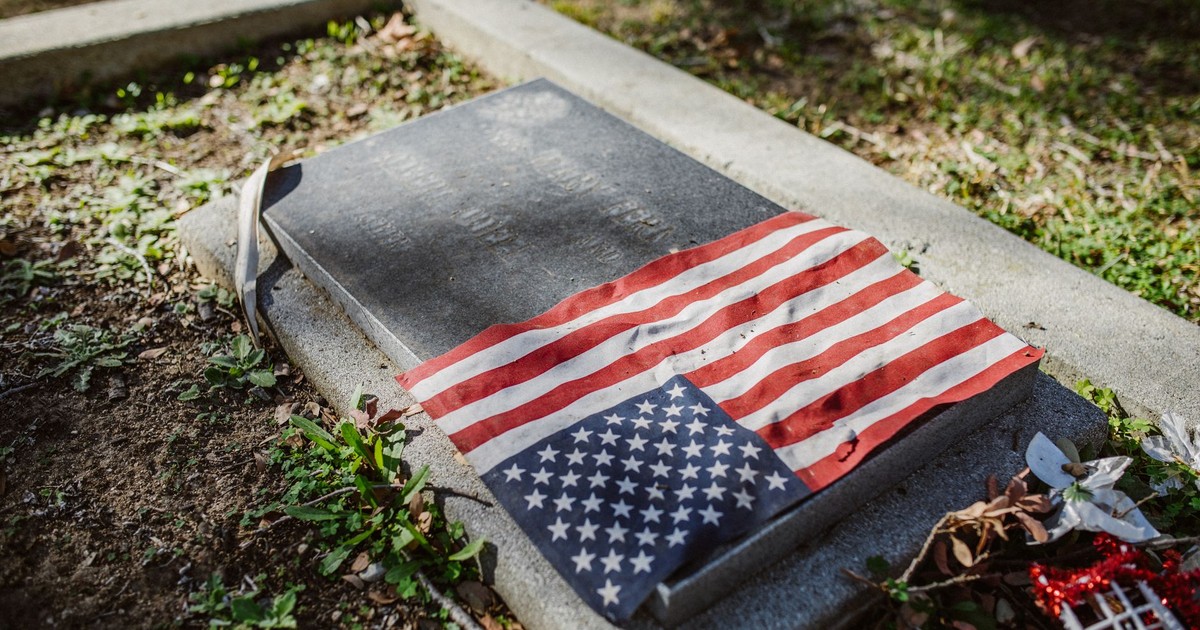
Words like “skirmish” don’t emerge from carelessness. They emerge from a particular relationship to consequence – one in which the distance between the person making decisions and the people bearing their cost is wide enough that minimizing language feels natural rather than grotesque.
Peters’ critique was ultimately about that distance. Not about policy, not about strategy, not even entirely about politics. It was about what it means to lead a country through a conflict that is killing its young people, and whether the language a leader uses in that moment tells you something real about what they believe those lives are worth. When a president calls a war a skirmish hours after standing at Dover, the word doesn’t just mischaracterize the conflict. It answers that question.
Some things are simply too large to be made small by a single word. The argument Peters was making – and the reason it cut through – is that a leader who doesn’t understand that probably never will.
Disclaimer: This information is not intended to be a substitute for professional medical advice, diagnosis, or treatment and is for information only. Always seek the advice of your physician or another qualified health provider with any questions about your medical condition and/or current medication. Do not disregard professional medical advice or delay seeking advice or treatment because of something you have read here.
AI Disclaimer: This article was created with the assistance of AI tools and reviewed by a human editor.