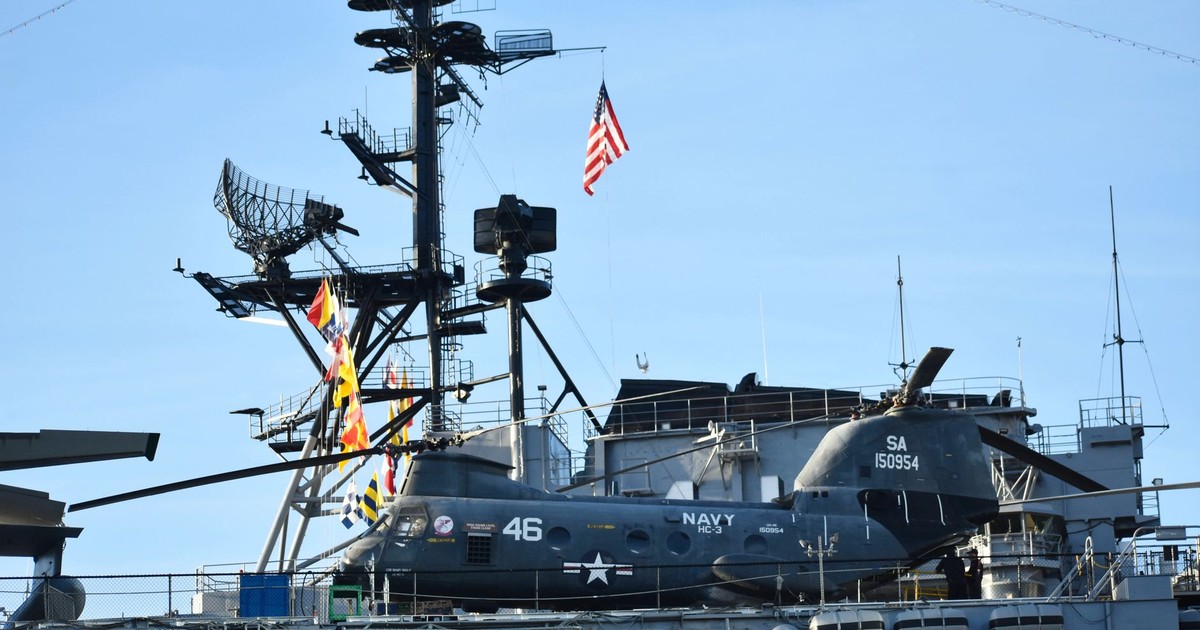

The White House is weighing whether to add Mali to a list of seven countries the administration has struck since January 2025. Trump Mali military strikes would span three continents within a single presidential term. The war with Iran continues.
The administration is considering military action against an al-Qaeda-affiliated group known as JNIM, operating from a landlocked West African nation roughly the size of Texas and California combined. If approved, Mali would become the eighth country where Trump has ordered strikes since the start of his second term.
Trump’s administration labels him “the peace president” with a “peace through strength” platform as he openly seeks international peace prizes. He is reportedly mulling whether to take action in Mali while mired in a months-long war with Iran.
Who Is JNIM, and Why Is Mali at the Breaking Point?
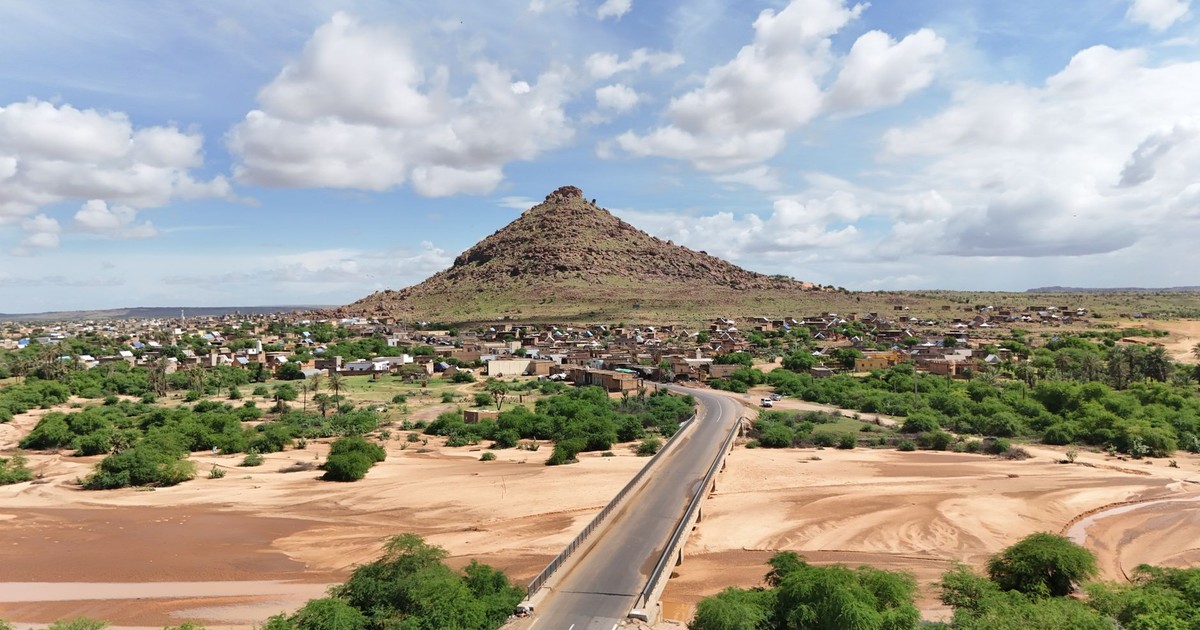
JNIM, or Jama’at Nusrat al-Islam wal-Muslimin, has claimed responsibility for a series of deadly attacks and kidnappings since announcing its formation in 2017. The name translates roughly as “Group for the Support of Islam and Muslims.”
JNIM has emerged as one of al-Qaeda’s most powerful African affiliates since its formation, consolidating multiple jihadist groups under a unified command structure. This merger significantly enhanced coordination, recruitment across diverse communities, and the group’s overall operational capacity in the Sahel. The group’s operational tempo and lethality increased sharply between 2021 and 2024, with attacks and casualties rising each year.
On April 25, 2026, JNIM launched a major offensive against the Malian government alongside the Azawad Liberation Front (FLA), a separatist Tuareg group. In the most recent fighting, JNIM ambushed a Mali military convoy, reportedly killing or capturing at least 50 soldiers. The government’s defense minister was killed in April in a joint attack by JNIM and the FLA, in a vehicle-borne suicide bombing.
The two groups joined forces battling Mali’s military even though they do not share long-term goals. The FLA wants an independent land in north Mali, while JNIM wants to implement religious rule across the country. According to the Combating Terrorism Center at West Point, the two groups formalized this alliance through a 2025 agreement that required the FLA to accept sharia governance in exchange for JNIM military support against the Bamako junta.
In a statement dating to September 2025, JNIM imposed an economic and transport blockade around all of Mali’s main cities, including the capital Bamako. Despite the declared intention of the military junta to break the siege by force, almost no fuel tanker managed to reach the capital over the following two months. JNIM has also increasingly attacked nearby West African nations, including a lethal attack at an airport in Niger’s capital last month, while terrorizing Mali’s interior with fuel blockades and sieges.
JNIM is expanding from the Sahel into the Gulf of Guinea, turning border areas in countries like Benin, Togo, and Côte d’Ivoire into active jihadist frontlines, taking advantage of porous borders and weak government presence.
Russia’s Failed Experiment and the U.S. Opening
Mali’s military government, which came to power through a series of coups in 2020 and 2021, made a choice that now defines the country’s strategic situation: it expelled French forces and United Nations peacekeepers and brought in Russian fighters instead. An administration official told The Hill that “the blame for the deteriorating security situation falls upon Russia, which has proven to be an ineffective security partner for Mali.” Mali is one of Africa’s largest gold-producing nations, and it is among the alliance of military-controlled governments that cut ties with Western nations and turned to Russian forces for security help after military coups toppled its former leadership.
The White House sees Russia’s failure as an opening. The White House did not directly comment on possible strikes, but a spokesperson said the U.S. has been pressuring governments in North and West Africa to purchase U.S. equipment and services to support their war efforts against the terrorists.
Tuareg rebels meanwhile announced an agreement allowing Russian forces backing Mali’s army to withdraw from the northern city of Kidal, which they claimed was “totally” under their control. The Africa Corps, successor to the Wagner Group mercenaries, has taken serious losses. The Malian government itself is under existential pressure.
The Man Pushing Hardest for Strikes
Sebastian Gorka, a deputy assistant to the president and senior director for counterterrorism at the National Security Council, is among the figures reportedly pushing for military strikes against JNIM in Mali. Gorka has been a prominent architect of U.S. counterterrorism policy under the second Trump administration, long pushed for the U.S. to get involved in countering Islamist extremism, and has been highly critical of those who have questioned the administration’s current war with Iran.
The proposal has sparked internal debate among senior officials. Gorka is pushing hard for military action, while others within the administration urge caution. The White House did not confirm whether the president is weighing military action. Neither Gorka nor the Pentagon offered comment when asked.
The administration has not historically been reluctant to act. According to data from ACLED, in just the first year of his second term, the U.S. conducted 573 air and drone strikes abroad, more than the 494 carried out during Joe Biden’s entire four-year presidency.
Seven Countries Before Mali: The Full Record
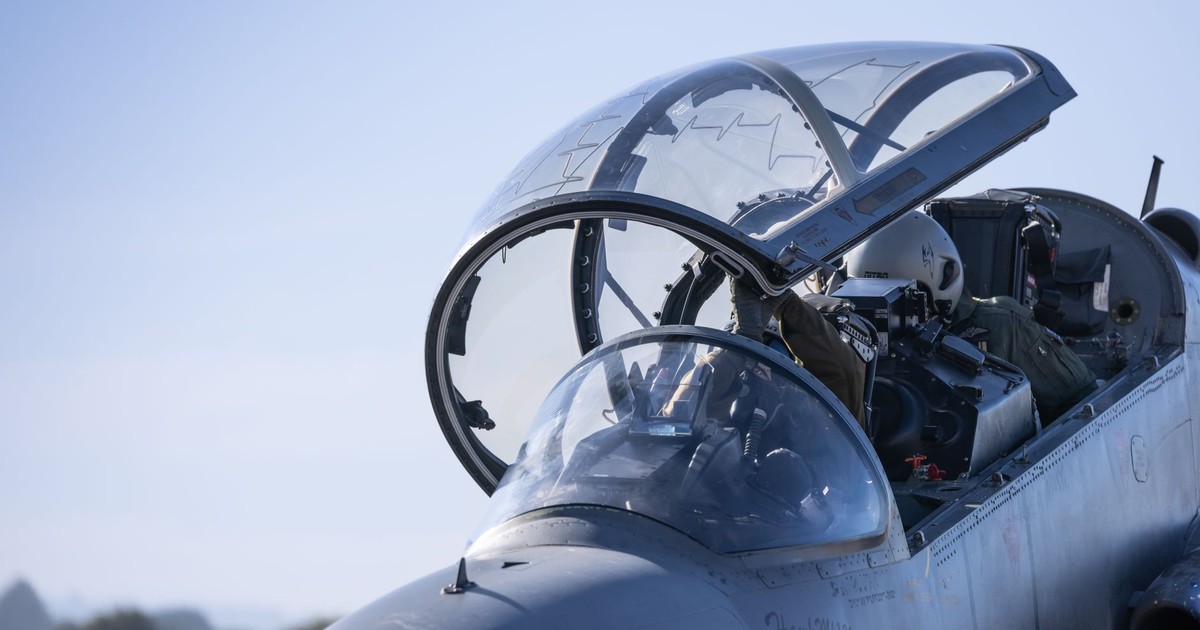
The other countries where Trump has already ordered strikes in his second term are Yemen, Somalia, Syria, Iran, Iraq, Nigeria, and Venezuela. Each of those had its own stated rationale.
In March 2025, the U.S. military launched “Operation Rough Rider,” a series of naval and air strikes targeting Houthi rebels in Yemen to deter attacks on commercial shipping and warships in the Red Sea. The strikes were intended to reduce the Houthis’ ability to target international maritime lanes, and the U.S. signed a ceasefire with the Houthis in May 2025.
Trump’s first military target was Somalia in February 2025, where he launched a still-ongoing campaign against Islamic State operatives. More than 130 strikes have been deployed on Somali soil since Trump re-took office, more than Bush, Obama, and Biden combined, killing between 115 and 292 people, mostly militants.
In March 2025, the U.S. launched air strikes in Iraq in cooperation with Iraqi Intelligence and Security Forces, killing the second-highest ranking leader of ISIS.
On June 22, 2025, the United States struck three major Iranian nuclear facilities. The operation took place amid a brief but intense conflict between Iran and Israel, with Trump stating the strikes were intended to curb the nuclear threat. That conflict has not cleanly resolved.
The administration wrapped up its year of strikes on the African continent with Christmas Day attacks on Nigeria, with the military hitting ISIS terrorists targeting Christians in Western Africa.
Trump has also ordered 66 strikes against small watercraft in the Caribbean and eastern Pacific in an attempt to interrupt drug smuggling into the U.S., killing at least 221 people in the process. Those attacks triggered a heated debate over their legality. Critics accused U.S. forces of war crimes during the campaign, including killing targets who had already been disabled by an earlier strike. Congress also questioned the statutory basis for the campaign.
What the Experts Are Saying

The people who study this region for a living are not enthusiastic about the Mali option. Wassim Nasr, a senior research fellow at the Soufan Center, which focuses on the Sahel, said that America’s influence would be better used in “conflict resolution” by forcing Mali’s military government into talks with JNIM. His view: “Opting for the military solution one more time won’t get things resolved. The French tried that for 10 years. The Russians have been trying for five years. The situation has only gotten worse and worse.”
France’s decade-long Sahel intervention, Operation Barkhane, ended in 2022 with a forced withdrawal and no meaningful reduction in JNIM’s power. Russia’s Africa Corps arrived to replace them and has presided over the worst territorial losses Mali’s government has ever experienced.
JNIM fighters are heading for Mali’s mining areas and may control the country’s natural resources soon. According to analysts at the Soufan Center, the emergence of a terrorist-run state in West Africa should keep all governments awake at night, because Mali may serve as a focal point from which more terrorism spreads.
What to Make of Country Number Eight

The countries Trump has struck since January 2025 span three continents. Some of those actions had meaningful strategic logic. Some had domestic political logic. Some, like the Caribbean drug boat campaign, have struggled to offer either. Trump has long presented himself as an advocate for ending endless wars and criticized past interventions in Iraq and Afghanistan, promising an “America First” foreign policy. Yet his second term demonstrates a willingness to employ military force selectively while framing these actions as defensive or counterterrorism operations.
Mali is different from the previous seven in one specific way: the U.S. has no existing military infrastructure there, no treaty relationship with its government, and would be operating in a country whose junta has formally aligned itself with Russia. Striking JNIM without Malian government cooperation, or with it given that Russia is also operating there, creates complications that don’t have obvious answers.
The administration’s argument, such as it is, seems to be that JNIM is an al-Qaeda affiliate and therefore falls under existing counterterrorism authority. JNIM was designated a terrorist organization by the U.S. in 2018. The group’s long-term plan includes unifying jihadist groups, removing foreign military forces, weakening state authority, and ultimately creating an Islamic proto-state centered in Mali with growth toward the wider Sahel and Gulf of Guinea coast.
The French spent a decade there and left. Russia arrived and is now retreating from cities it claimed to hold. A U.S. air campaign could degrade JNIM’s capacity temporarily, or it could hand the group a recruitment windfall, a cause, and a new enemy. Every external power that has entered Mali with force has eventually left with less influence than it arrived with. France tried for a decade with far more ground presence than a U.S. air campaign would involve. Russia deployed a private army and is now consolidating around the capital rather than holding territory.
JNIM has survived and grown precisely because the conditions that sustain it can’t be bombed away: fractured governance, economic marginalization, a population with limited trust in the state. If the eighth country ends up being Mali, the question isn’t whether JNIM deserves to be hit. It’s whether hitting them brings the U.S. any closer to a Mali that doesn’t need to be hit again in five years.
Disclaimer: This information is not intended to be a substitute for professional medical advice, diagnosis, or treatment and is for information only. Always seek the advice of your physician or another qualified health provider with any questions about your medical condition and/or current medication. Do not disregard professional medical advice or delay seeking advice or treatment because of something you have read here.
AI Disclaimer: This article was created with the assistance of AI tools and reviewed by a human editor.