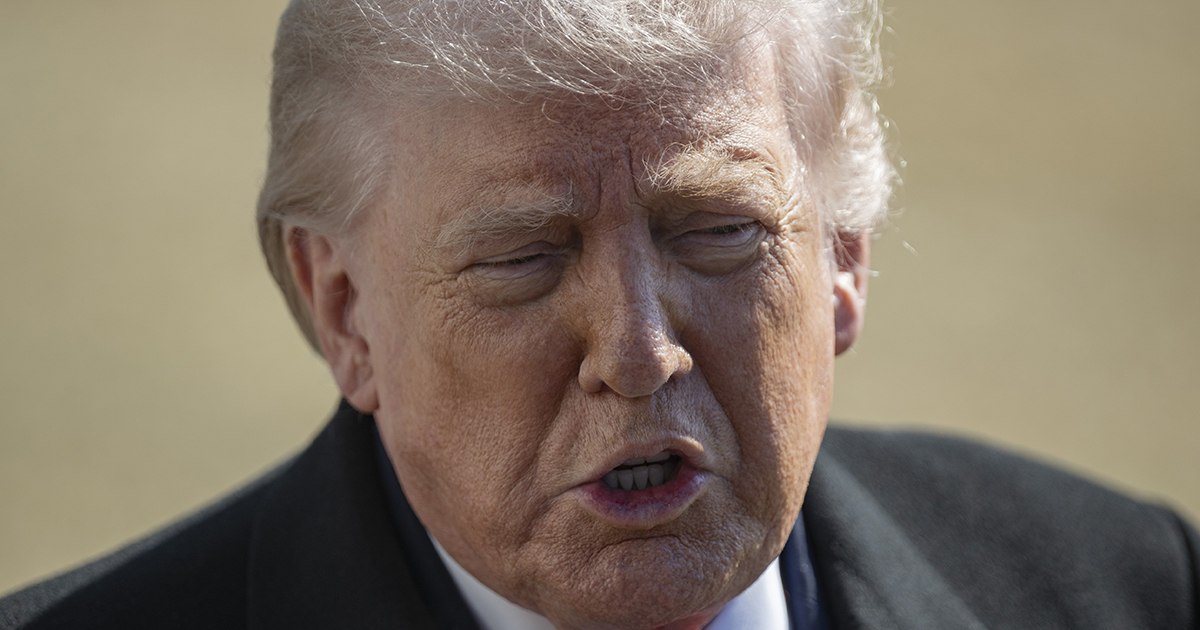

At a joint press conference in Ankara, Turkey, on July 8, 2026, President Trump turned to NATO Secretary General Mark Rutte and said: “Cut off all trade with Spain, please, including visits.” Then he added: “Don’t even talk to them. They’re hopeless, bad people.”
Spanish bonds sold off after Trump’s comments. The yield on Spain’s benchmark 10-year bond traded almost 10 basis points higher at 3.5682%. The Spanish IBEX 35 equity index fell more than 2.8%. Markets took the threat seriously even if Madrid’s prime minister did not.
The dispute has been building for months, fed by two grievances: Spain’s refusal to commit to NATO’s new defense spending target, and its refusal to allow US military operations to use Spanish bases during the ongoing war with Iran.
What Trump Actually Said and Did
Speaking during the NATO summit, CNBC reports Trump called Spain “a wasted cause” and urged an end to trade with the country. “We don’t want to do any trade business with Spain anymore,” he said.
Trump directly instructed Treasury Secretary Scott Bessent, who was present at the press conference, to halt commerce with Spain on the spot. “I don’t want to do any trade with them, alright?” Trump said. Bessent replied: “Yes, sir.” Trump then added: “Take care of it immediately. Don’t even talk to them. They’re hopeless.”
The White House had not immediately provided details on whether the administration is considering trade restrictions targeting Spain. This was the second time Trump has instructed Bessent to halt commerce with Spain over the NATO dispute. After the first order in March, trade between the two countries continued normally.
Trump also accused Madrid of treating Rutte “terribly,” telling the NATO chief he “shouldn’t carry” Spain. Rutte cut in: “You got Spain to pay 2%. They spent, they made a huge step in last year.” The NATO secretary general, who has spent considerable effort keeping Trump engaged with the alliance, was publicly defending a member the US president had just called “hopeless.”
Spain’s Defense Spending and the NATO Target
At last year’s NATO summit at The Hague, allies agreed at Trump’s prompting to target defense spending equal to 5% of each NATO member country’s GDP, up from the previous 2%. Spain was alone among the 32 member states in saying it wouldn’t commit to the target.
That refusal has roots in domestic Spanish politics. According to the Atlantic Council, Prime Minister Pedro Sánchez leads a fragile minority coalition dependent on left-wing and regional nationalist parties that are skeptical of increased military spending. His Socialist Party governs in partnership with the far-left parties Unidas Podemos and Sumar, and relies on small Basque and Catalan nationalist parties to maintain a parliamentary majority.
In a letter to Rutte, Sánchez described the 5% goal as “unreasonable” and “counterproductive,” warning that a sudden reallocation of public funds could affect Spain’s welfare state and EU defense autonomy. He said the target should be voluntary, or that Spain be granted an exception.
Spain’s defense spending grew substantially in 2025, reaching above 2.0% of GDP for the first time and satisfying the alliance’s longstanding 2% benchmark. That is a shift from a country that spent below 1.3% of GDP on defense as recently as 2024. The problem, from Washington’s perspective, is that 2.1% is still a long way from 5%, and Spain remains the only NATO member that has publicly refused to commit to the new target.
Spain’s unwillingness to reach the new target costs it standing abroad. Eastern European NATO members such as Poland and the Baltic states, which are investing heavily in defense, interpret Spain’s position as a lack of solidarity. For Trump, Spain’s carve-out is a political symbol of what he has spent two terms arguing: that Europe has been freeloading on American security guarantees while running trade surpluses and keeping its own defense spending low.
The Iran Factor
The Trump Spain trade confrontation isn’t purely about NATO spending percentages. Earlier in 2026, Spanish Prime Minister Sánchez condemned the US-Israeli military campaign against Iran as an “extraordinary mistake” and called for de-escalation, while Spain refused to allow the US to use the jointly operated Rota Naval Base and Morón Air Base to support offensive operations against Iran under Operation Epic Fury.
Spanish officials argued the strikes lacked international legal backing and said the bases could not be used for unilateral military action. Rota and Morón are two of the most strategically significant US military installations in Europe, used for everything from naval operations to logistics support across the Mediterranean and the Atlantic. Spain’s decision to bar their use for Iran operations was a direct blow to US operational planning.
An internal Pentagon email, first reported by Reuters, outlined options for the United States to punish NATO allies it believed failed to support US operations in the war with Iran, including suspending Spain from the alliance. That memo circulated in April. By July, the conversation had moved from internal Pentagon planning to the president of the United States, sitting next to the NATO secretary general, calling Spain “hopeless” on camera.
NATO tensions also rose after Trump expressed frustration over allies refusing to join America’s military action against Iran. Spain was the most vocal in that refusal, but it was far from alone. Trump said at the summit that “nobody,” aside from the “small countries,” wanted to help the US in its war with Iran. “There were calls made a few weeks ago,” he said, claiming he spoke with the United Kingdom, Germany, and France, among others. “Nobody wanted to help.”
What Cutting Off Trade Would Actually Mean
Any attempt by Trump to target trade with one EU country faces legal complications. Euronews reports that since the single market was established in 1993, tariffs, trade agreements, and other commercial policy measures have been negotiated collectively by the EU through the European Commission. Any action targeting one of the bloc’s 27 member states would have implications for the entire single market and could trigger a coordinated response from Brussels. Spain is part of the European Union’s single market, meaning trade policy is negotiated at the EU level.
Supply chains add another complication. Oranges grown in Valencia can be processed in another European country before being shipped to the US. Section 122 of the Trade Act also places limits on Trump’s presidential powers: a cap of 15% and a maximum duration of 150 days for any tariff measure, after which he would need Congress’s approval to extend it.
BEA data ranks Spain as the US’s 23rd top trading partner: in 2025, the two countries traded $74.5 billion in goods and services. The US has had a trade surplus with Spain every year from 2022 through 2025. The 2025 surplus was $3.96 billion, an increase from 2024’s surplus of $1.88 billion. That means the US currently exports more to Spain than it imports, and any trade cutoff would hurt American exporters alongside Spanish ones. Petroleum products, pharmaceuticals, and industrial machinery are among the top US exports to Spain.
Spain’s overall economic dependence on trade with the United States is limited. About three-quarters of Spain’s total exports in 2025 were directed to European markets, with EU countries alone accounting for 62%. Only an estimated 4.9% of Spain’s goods exports go to the US, worth around €18 billion. The US, by contrast, exports around €23 billion to Spain, meaning Washington actually runs the trade surplus.
Madrid’s Response
After Trump’s comments, sources at Moncloa Palace, the Spanish prime minister’s office, dismissed the remarks as “business as usual,” saying Spain had no intention of changing its “excellent” relationship with Washington. Officials also stressed that, as part of the EU customs union, individual member states cannot be singled out in trade policy.
Asked about Trump’s remarks, a NATO diplomat said: “The answer to every question POTUS raises is clear: build a more European NATO. That’s what we’re doing in Ankara.”
The Bigger Picture at Ankara
NATO Secretary-General Rutte had demanded on Monday that members put forward “clear, concrete and credible plans” to reach the organization’s defense spending targets. He spoke ahead of the two-day summit at a crucial time for the alliance, with the United States scaling back its security role in Europe and Washington pressing allies to shoulder more of the spending burden.
NATO leaders gathered in Ankara as the alliance faced a test of its credibility and future viability, with new European defense spending targets under unprecedented scrutiny from the White House. The summit came one year after allies committed to more than double defense spending. Spain had secured a carve-out agreement as the only member refusing to commit to the hiked targets.
Rutte praised Trump for making European countries raise their game on defense spending. “It’s really important when it comes to NATO, what you have achieved, and this is a huge win,” he said. The president also repeated his critique of the defense alliance, saying he was “very unhappy with NATO,” even if Rutte was “a great leader.”
The summit also saw Trump renew his push for US control of Greenland, irritating Denmark by reiterating that the US should control the autonomous Danish territory. Denmark promised to defend every inch of its territory.
Where the Threat Goes From Here
Neither side has much incentive to blink quickly. Trump can use the threat of trade restrictions as political leverage without formally executing it, maintaining pressure while avoiding the legal and economic complications that actual sanctions would create. Spain, whose EU membership means any trade action would draw Brussels into the fight, can afford to project calm publicly while watching how the EU responds collectively.
Spain’s dual refusals on NATO’s 5% spending target and on base access for the Iran war have put it in an isolated position within the alliance, and that isolation has now become a public spectacle. The Atlantic Council noted in a December 2025 analysis that diplomatically, Spain has found itself sidelined in some high-profile discussions on European security.
Spain’s domestic political constraints are real. Sánchez cannot dramatically increase defense spending without breaking his coalition. But the cost of holding that position keeps rising, and not just in terms of American goodwill. Other NATO members watching Madrid’s carve-out are forming their own conclusions about what burden-sharing actually means, and what happens to the countries that opt out of it.
The Spanish bond market recovered somewhat after the initial shock of Trump’s comments. Whether the broader relationship does the same depends on whether Wednesday’s remarks were a pressure tactic or the opening move of something harder to reverse.
Trump’s trade threat lands in a space where the US lacks a clean enforcement path, Spain lacks the political room to concede, and the EU has made clear it will treat any punitive trade measure as an attack on the bloc as a whole. The result is a standoff where everyone can claim a position without anyone having to test it against reality.
But the reputational damage is real even when the formal sanctions aren’t. Spain has now been publicly humiliated at an alliance summit by the leader of its most powerful partner, on camera, in front of 31 other member states. That changes how other allies read Madrid’s reliability. And it changes the domestic calculus for Sánchez, who has to weigh the political cost of capitulating on defense spending against the growing cost of being seen as NATO’s problem child.
The Ankara summit didn’t settle anything. But it made the price of Spain’s current position considerably more visible.
AI Disclaimer: This article was created with the assistance of AI tools and reviewed by a human editor.