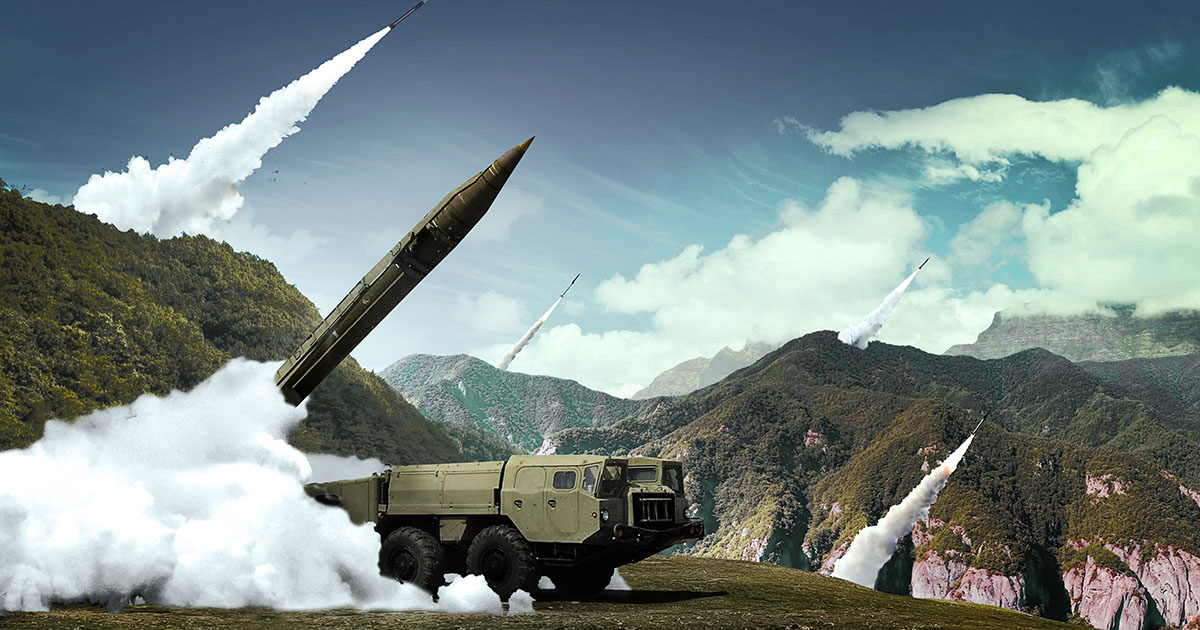

Nine countries currently possess nuclear weapons, and the gap between their arsenals has never been wider. Two nations hold roughly 86 percent of the total global inventory between them. The remaining seven share less than 15 percent. That concentration matters not just as a statistic but as a political reality: decisions made in Moscow and Washington have always shaped the nuclear order more than decisions made anywhere else on earth.
What has changed, fundamentally, is that those decisions are now made without the guardrails that once constrained them. For decades, the U.S. and Russia operated under a series of treaties that capped arsenal sizes, mandated data exchanges, and required each side to notify the other when nuclear weapons moved. That verification framework created a kind of shared accounting, a mutual acknowledgment of the actual scale of both countries’ forces. All of it is now gone.
The last treaty standing was New START, signed in 2010. It expired in February 2026, leaving no binding cap on strategic nuclear arsenals for the first time in more than 50 years. With it went a transparency regime that had survived the Cold War, the Soviet collapse, and every period of elevated U.S.-Russia tension in between. The world’s nine nuclear nations now operate their forces with fewer external checks than at any point in living memory.
Russia: The Largest Arsenal on Earth
Russia maintains the largest nuclear arsenal of any country, with approximately 4,400 warheads in its military stockpile, plus an estimated 1,020 retired warheads awaiting dismantlement, according to the Federation of American Scientists (FAS). Around 1,710 of the active warheads are deployed on strategic delivery systems, including intercontinental ballistic missiles (ICBMs), submarine-launched ballistic missiles (SLBMs), and heavy bombers. “Deployed” means ready to fire; the rest are held in storage or reserve, but the command infrastructure to launch them remains fully intact.
Russia is also in the final stages of the most significant nuclear modernization effort any country has pursued since the Cold War ended. On May 12, 2026, Russia announced the successful test launch of the Sarmat ICBM, firing it from a test silo at the Plesetsk Cosmodrome in northern Russia, with the missile hitting its target at the Kura test range approximately 5,700 kilometers away. Known in the West as “Satan II,” the Sarmat is designed to replace approximately 40 Soviet-built Voyevoda missiles, and before this test had only one previously known successful launch, reportedly following a massive explosion during an abortive test in 2024.
Putin called it “the most powerful missile in the world,” claiming the combined yield of its individually targeted warheads is more than four times that of any Western counterpart. Western analysts treat those figures with skepticism, but the Sarmat’s technical profile is genuinely formidable. The missile can follow a variety of flight paths, including over the South Pole, enabling it to sidestep missile defense systems focused primarily on northern trajectories. Russia’s military announced after the test that the first Sarmat-armed regiment would be stationed at its Uzhur unit in the Krasnoyarsk region by the end of 2026.
Russia also maintains an estimated 1,912 tactical nuclear warheads. Some have been deployed to Belarus, marking the first placement of Russian nuclear weapons outside Russia since the Soviet Union collapsed.
The United States: Modernizing at Scale

FAS independently estimates the U.S. military stockpile at 3,700 warheads, with an additional 1,342 retired warheads awaiting dismantlement, for a total of approximately 5,042 warheads as of early 2026. Combined, the United States and Russia possess approximately 86 percent of the world’s total inventory of nuclear weapons, and 83 percent of the warheads held in active military stockpiles.
America’s nuclear posture rests on the classic triad: land-based ICBMs, submarine-launched ballistic missiles, and nuclear-capable bombers. Of the roughly 1,770 deployed warheads, approximately 400 sit on land-based ICBMs, around 970 on submarine-launched ballistic missiles, 300 at bomber bases in the United States, and roughly 100 tactical bombs at European bases.
The expiry of New START left no caps on either country’s arsenal for the first time in more than half a century. Alongside the nuclear modernization bill, the Trump administration’s proposed “Golden Dome” missile defense system carries a price tag that would dwarf even those costs. According to the Congressional Budget Office, the Golden Dome program would cost approximately $1.2 trillion to develop, deploy, and operate over 20 years, far exceeding the White House’s initial $175 billion estimate.
China: The Fastest-Growing Arsenal
China occupies a distinct position among nuclear nations power players: smaller than the U.S. or Russia in raw numbers, but expanding at a rate that has unsettled arms control analysts more than anything else in the current environment. The SIPRI Yearbook 2026 estimates China now has around 620 nuclear warheads, with approximately 370 assigned to strategic launchers. China is expanding its nuclear arsenal faster than any other country, adding roughly 100 new warheads per year since 2023.
If China continues on its current path, it may have up to 1,000 deliverable warheads by 2030. That would represent a near-tripling of the arsenal within a decade. SIPRI notes that even at 1,000 warheads, China would still hold only about a quarter of Russia’s or America’s current stockpile, but the pace of growth is what drives concern. By January 2026, China had loaded hundreds of missiles into three large silo fields in northern China, while working to complete 30 additional silos in the east. Russia has said it would be willing to abide by the limits of the expired New START pact if Washington agrees, but the U.S. insists any new treaty must include China, and Beijing has publicly rejected that condition.
The United Kingdom and France: Europe’s Independent Deterrents
The United Kingdom is estimated to hold a total nuclear stockpile of 225 warheads, with 120 operationally available and 105 kept in reserve. The UK’s deterrent is entirely sea-based, carried by four Vanguard-class submarines armed with Trident ballistic missiles, with no land-based or aircraft-delivered nuclear capability whatsoever. In 2021, the UK announced it would no longer publicly disclose figures for its operational stockpile, deployed warhead counts, or deployed missile numbers.
France runs a comparable system, with some recent developments worth noting. France maintains 290 operational warheads available for deployment across 48 submarine-launched ballistic missiles and 50 air-launched cruise missiles on dual-capable fighter aircraft. In March 2026, President Emmanuel Macron announced he had ordered an increase in the number of warheads in France’s arsenal, and that the government would no longer communicate the size of its stockpile publicly. Among nuclear nations power holders in Europe, the direction is consistently away from transparency, not toward it. You can explore what that shifting risk picture means for where people choose to live in this guide to safer locations.
India and Pakistan: Rivals With Their Fingers on the Trigger
India and Pakistan are the only two nuclear-armed states that share a land border and have fought multiple wars against each other. India first tested a nuclear device in 1974 and Pakistan demonstrated its own capability with tests in May 1998. Neither has ever signed the Nuclear Non-Proliferation Treaty.
SIPRI estimates India had approximately 190 warheads as of January 2026, having modestly expanded its arsenal through 2025. India maintains a declarative “no first use” policy, one of only two states to make that commitment without qualification, meaning it pledges not to use nuclear weapons except in response to a nuclear strike. Pakistan’s posture is considerably more ambiguous, with SIPRI placing its stockpile at around 170 warheads. Pakistan continued to accumulate fissile material in 2025, suggesting further expansion is possible in the coming years. The tensions between the two countries have never fully cooled, and in early 2025 they briefly spilled into armed conflict before de-escalating, a reminder of how close the nuclear dimension of that rivalry can come to the surface.
Israel: The World’s Only Undeclared Nuclear Power
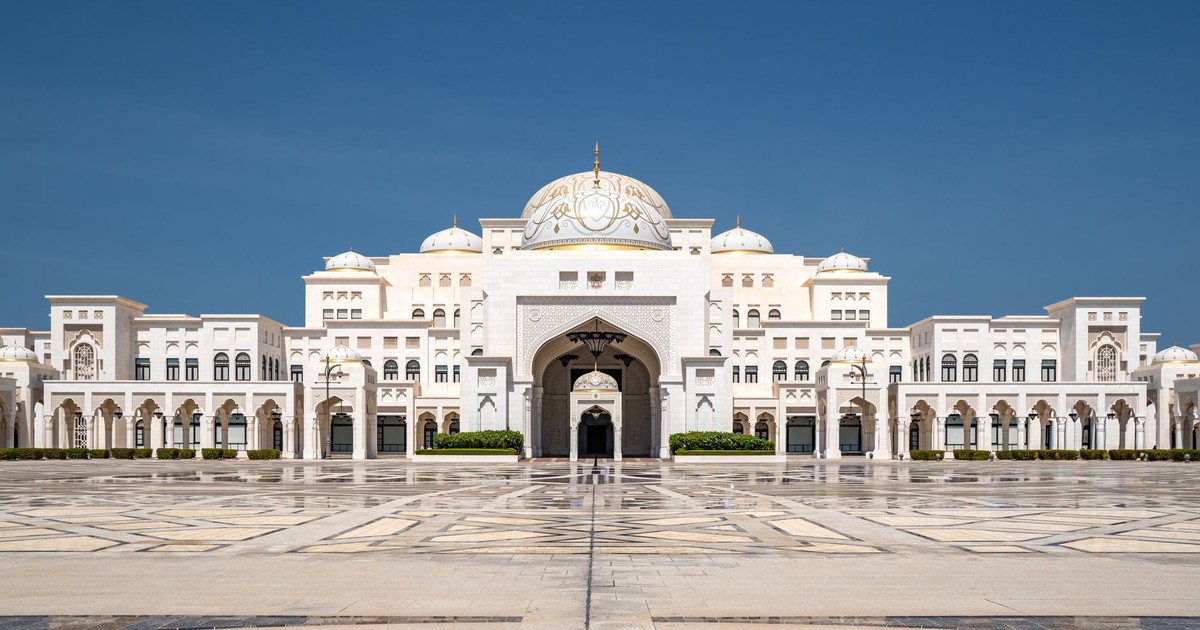
Israel is widely believed to have acquired nuclear weapons capability around 1967 but has never openly tested or formally acknowledged possessing them. This policy of “nuclear ambiguity,” neither confirming nor denying possession, has been maintained for nearly six decades. It is, by some measures, the most durable strategic communication exercise in modern military history.
Estimates of Israel’s stockpile vary precisely because of that opacity. The country is not a signatory to the NPT and provides no official data. SIPRI places the number at approximately 90 warheads, with fissile material stockpiles sufficient for around 200 weapons. Increased construction activity at the Negev Nuclear Research Center near Dimona in 2025 may signal longer-term infrastructure upgrades, though the Israeli government has not commented.
North Korea: Small, Growing, and Actively Expanding
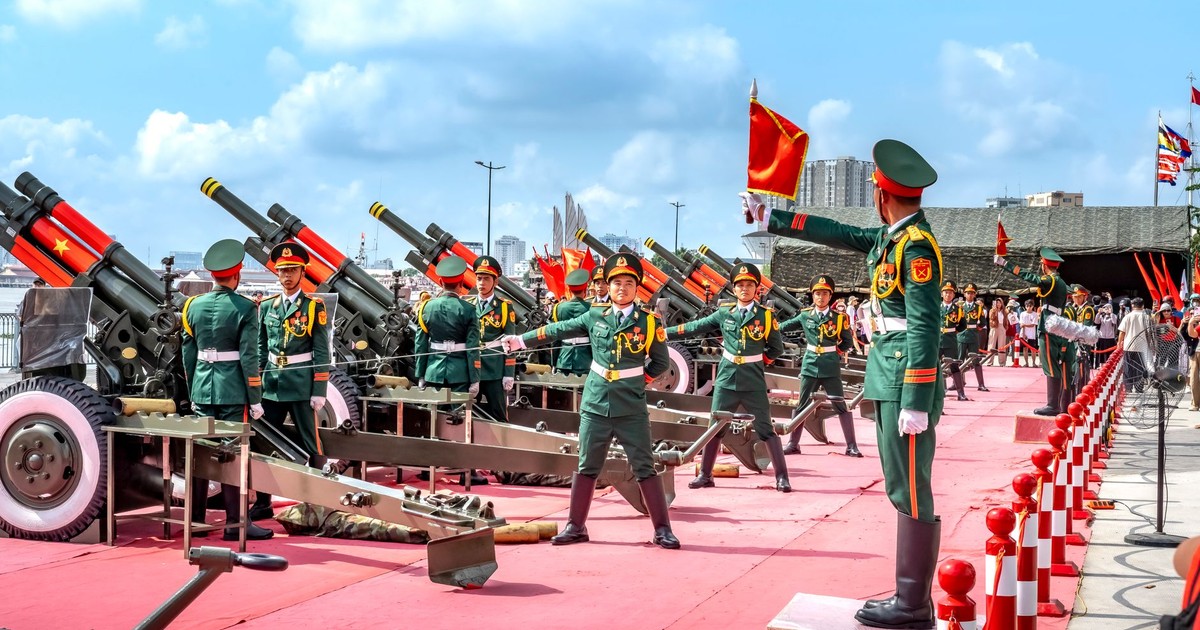
North Korea presents a different kind of challenge from every other country on this list. Its arsenal is the smallest, its capabilities remain partially unverified, and its leader has shown no interest in trading any part of it away. According to the Office of the Director of National Intelligence’s 2026 Annual Threat Assessment, Pyongyang continues to develop and expand its strategic weapons programs, including missiles designed to evade U.S. and regional missile defenses, while working to increase its nuclear warhead stockpile.
North Korea is believed to have assembled around 50 to 60 warheads, though estimates vary. The more pressing development is what Kim is building right now. On June 3, 2026, Kim Jong Un inspected a new plant producing weapons-grade nuclear material and announced that North Korea plans to expand its nuclear forces at an “exponential rate,” claiming the country has more than doubled its capacity to produce weapons-grade material over the past five years. North Korea’s ICBMs can already reach U.S. soil, and Kim has made clear he views the weapons program as non-negotiable, describing nuclear weapons as a guarantor of regime security. In early 2026, the IAEA reported ongoing operation of enrichment facilities at both the Kangson and Yongbyon sites, with U.S. intelligence assessments indicating a probable additional enrichment facility under construction at Yongbyon.
Read More: 10 Misconceptions About the Vietnam War That Spread Across Generations
The Count That Actually Matters

The raw warhead numbers are striking enough on their own. Nine countries, roughly 12,187 warheads, with about 9,745 of those in active military stockpiles and approximately 4,012 deployed on missiles and aircraft right now. But the number that tells you more about the actual risk is a different one: 2026 marks the first year since 1972 with no treaty-bound cap on strategic nuclear arsenals anywhere in the world.
Every nuclear power is currently running a modernization program. Most are also expanding. China is adding roughly 100 warheads a year. France ordered a stockpile increase in March 2026. North Korea is building new enrichment plants and has doubled its weapons-grade material production capacity. Russia just successfully tested the largest ICBM ever built. The U.S. is spending more than $51 billion a year on its nuclear forces and considering a missile defense system that could cost over a trillion dollars. None of these moves happen in isolation. Each one shapes how every other country calculates its own requirements.
What changed in February 2026 wasn’t just the expiration of a treaty. It was the end of a shared counting system, the end of mandatory notification when weapons move, and the end of any formal structure that required both major nuclear powers to acknowledge the scale of what they hold. Arsenals existed before New START. They’ll continue without it. But the combination of growing stockpiles, lapsed agreements, a Chinese arsenal no current treaty covers, and a North Korean program that adds capacity year over year adds up to a nuclear order that is genuinely less legible than it was a decade ago. The warhead counts tell part of the story. The absence of any agreed framework to verify or constrain them tells the rest.
AI Disclaimer: This article was created with the assistance of AI tools and reviewed by a human editor.