
“Another Vietnam.” The phrase gets dusted off whenever a foreign conflict starts to look unwinnable, the casualty count climbs, and the news coverage turns hostile. It has been applied to Iraq, Afghanistan, and half a dozen smaller engagements since 1975, which means the war Americans think they understand is actually doing active work in how they see every military commitment that comes after it. The problem is that what most Americans think they know about Vietnam is wrong, or at least badly distorted by five decades of Hollywood rewrites, political shorthand, and stories that got told so often they solidified into fact.
Some misconceptions began with a single broadcast, a single photograph, or a single song lyric that hit with enough force to rewrite the record. Others were politically useful to someone, either the right or the left, and got repeated until they felt like history. A few just filled the vacuum left by a war that the country, exhausted and ashamed, largely stopped examining carefully the moment it ended. The myths that resulted shape how veterans are perceived, how policymakers justify future wars, and how Americans understand their own government’s capacity for honesty.
Here are ten Vietnam War misconceptions that have survived long enough to pass between generations, and what the actual record says.
1. Most Men Who Served Were Drafted
The draft is probably the single image most people carry of the Vietnam-era soldier: a reluctant teenager, hauled from a small town, shipped off against his will. Films like The Deer Hunter and Forrest Gump built their emotional architecture around that image. It isn’t accurate.
Two-thirds of U.S. military personnel who served in Vietnam were volunteers. Two-thirds of the men who served in World War II, by contrast, were drafted. The other one-third of Vietnam veterans were drafted, primarily into the Army. Approximately 70% of those killed in Vietnam were volunteers.
The confusion is partly cultural. Many people perceived the deferment process as advantaging white males with financial privilege or political connections, which was often true, and that injustice became the story people remembered. The draft was genuinely unfair in its administration. But the men who went to Vietnam were, as a group, largely there because they chose to go.
2. The Average Soldier Was 19 Years Old
This one has a precise origin. The widely accepted belief that the average soldier was 19 probably owes its life to the popular song “Nineteen,” released in England during the 1980s. The song was emotionally compelling and widely played, and the number lodged in the public memory with a tenacity that actual data has never dislodged.
According to the Combat Area Casualty File as of November 1993, the average age of the 58,148 killed in Vietnam was 23.11 years. Given that this group represents a substantial statistical sample, 23.11 is probably quite close to the average age of all who served. The idea that the average infantryman fighting in Vietnam was 19 is a myth; based on casualty data, the actual figure is closer to 22. For context, the average man who fought in World War II was 26.
That still describes a force of people at the youngest edges of adulthood. But there is a difference between “young” and “teenagers,” and that difference matters when thinking about who these men were, what they had already experienced, and how they processed what happened to them.
3. The Tet Offensive Was an American Defeat
In late January 1968, North Vietnamese and Viet Cong forces launched coordinated attacks on more than 100 cities and outposts across South Vietnam. The American public watched it unfold on their television sets. Walter Cronkite flew to Vietnam and came back to tell the country the war was a stalemate. Lyndon Johnson is said to have remarked that if he’d lost Cronkite, he’d lost middle America. The popular reading of Tet has been, ever since, that it was the moment America lost the war.
On the ground, the reality ran in almost the opposite direction. Although the Tet Offensive shocked the American public and shifted opinion on the war, it was a military failure for the North Vietnamese. They suffered massive casualties and failed to hold a single piece of territory. The Viet Cong’s organizational structure in the South never recovered from the losses.
Tet succeeded on exactly one front: the news media and the political arena. It is one of the more striking examples in modern history of a military catastrophe being converted, through perception, into a strategic win. The gap between what happened on the ground and how it was reported has been studied ever since as a case study in how war coverage shapes political outcomes.
4. The Gulf of Tonkin Attack Justified U.S. Escalation

On the night of August 4, 1964, two U.S. destroyers reported they were under attack by North Vietnamese vessels. That report was the event that drove Congressional authorization for full-scale American entry into the war. Declassified National Security Agency documents released in 2005 reveal that there was not a second attack on U.S. Navy ships in the Tonkin Gulf in early August 1964, and that the evidence suggests a deliberate attempt by Secretary of Defense McNamara to distort the evidence and mislead Congress.
The August 2 incident was real: there was a genuine exchange of fire in the Gulf. But the USS Maddox was conducting electronic eavesdropping on North Vietnam to assist South Vietnamese commando raids, which wasn’t publicly known at the time. Johnson portrayed the confrontations as unprovoked aggression when he addressed Congress. The covert U.S.-backed raids in the area were never disclosed.
On August 7, 1964, Congress passed the Gulf of Tonkin Resolution, authorizing President Johnson to take any measures he believed were necessary to retaliate and to promote peace and security in Southeast Asia. This resolution became the legal basis for the Johnson and Nixon administrations’ prosecution of the Vietnam War. The entire legal foundation for America’s full-scale entry into the conflict rested on an event that, in its decisive form, almost certainly never occurred.
5. Vietnam Veterans Were Poorly Educated
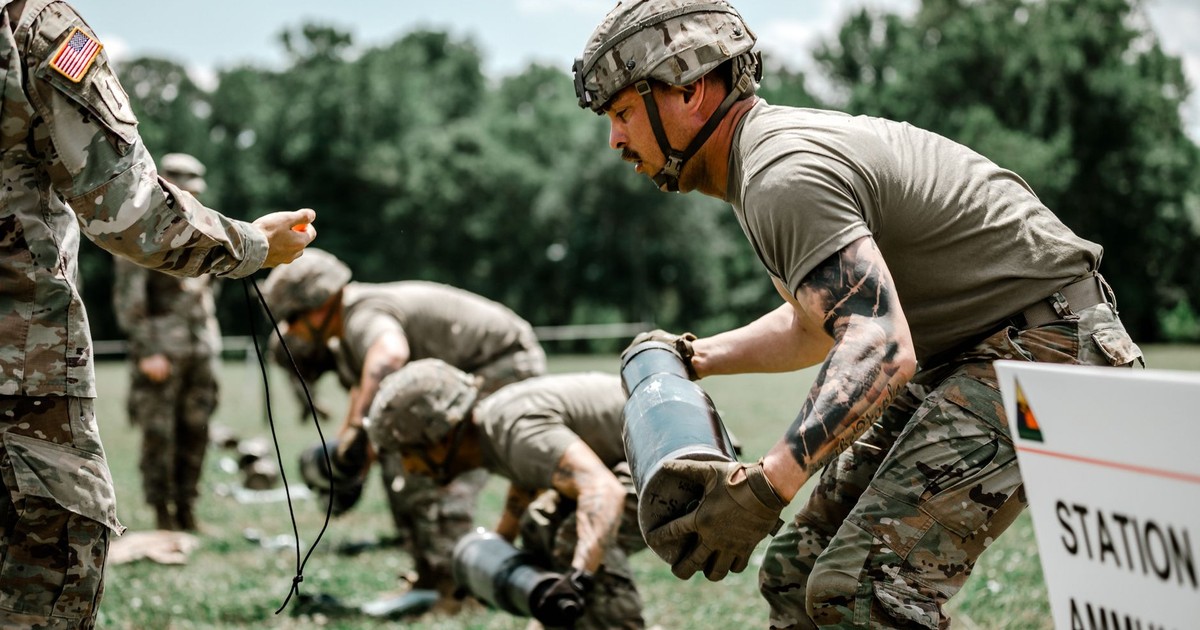
The image of the Vietnam soldier as an uneducated man dropped into the jungle with no idea what he was fighting for is one of the most persistent and least accurate portraits of the war. Vietnam veterans were the best-educated forces the nation had ever sent into combat. 79% had a high school education or better.
In WWII, only 45 percent of troops had a high school diploma. During the Vietnam War, almost 80 percent of those who enlisted had high school diplomas, and the percentage was higher for draftees, even though only 65 percent of military-age males in the general population had finished high school at the time. The men who went to Vietnam were, on average, better educated than the civilian population of the same age.
This myth was partly driven by the “Fortunate Son” narrative: the accurate observation that college deferments allowed wealthier young men to avoid service. That was a real inequality. But the consequence of that inequality showing up in the data was not a predominantly uneducated military. It was a military that drew broadly from the American population, including plenty of men who had finished school and then some.
6. Black Soldiers Died in Disproportionate Numbers

Partly because of the draft’s inequities and partly because of the war’s overlap with the civil rights movement, a strong narrative developed that Black soldiers bore a disproportionate share of combat deaths in Vietnam. Civil rights leaders, including Martin Luther King Jr., repeated the claim. It was emotionally powerful and politically resonant.
African Americans did suffer disproportionately high casualty rates in the early years of the war. In 1965, despite comprising only 11% of the total U.S. population, African Americans constituted 14.1% of combat deaths in Vietnam. In response to criticism from civil rights leaders, the Pentagon ordered cutbacks in the number of African Americans in combat positions. The Department of Defense took steps to readjust force levels to achieve a more equitable proportion of Black soldiers in Vietnam. This resulted in a dramatic decrease in the proportion of Black casualties, and by late 1967, Black casualties had fallen to 13%, and were below 10% from 1970 to 1972.
The real inequality in Vietnam was about who got sent at all, not simply who died once there. College deferments, medical exemptions, and family connections disproportionately protected wealthier white men from service. Compressing that systemic injustice into a single claim about combat deaths simplified a more complicated story.
7. Vietnam Was America’s Longest War
For decades, Vietnam was the standard reference point for a prolonged, costly American military commitment. “The longest war in American history” was a phrase attached to it in textbooks, newspaper columns, and political speeches. Then came September 11, 2001.
The War in Afghanistan ran from 2001 to 2021, a span of twenty years against Vietnam’s roughly decade-long period of major U.S. combat involvement. Pop culture continues to treat Vietnam as the benchmark for prolonged warfare, even though the post-9/11 conflicts lasted significantly longer and involved their own complex global entanglements.
The myth persists because Vietnam’s cultural imprint is so much deeper than Afghanistan’s. The music, the films, the protests, the photographs burned themselves into the national consciousness in a way that later conflicts, despite their duration and cost, have not. How long a war lasted and how large a space it occupies in a country’s imagination are two entirely different measures.
8. The Viet Cong Were a Scrappy, Outgunned Guerrilla Force
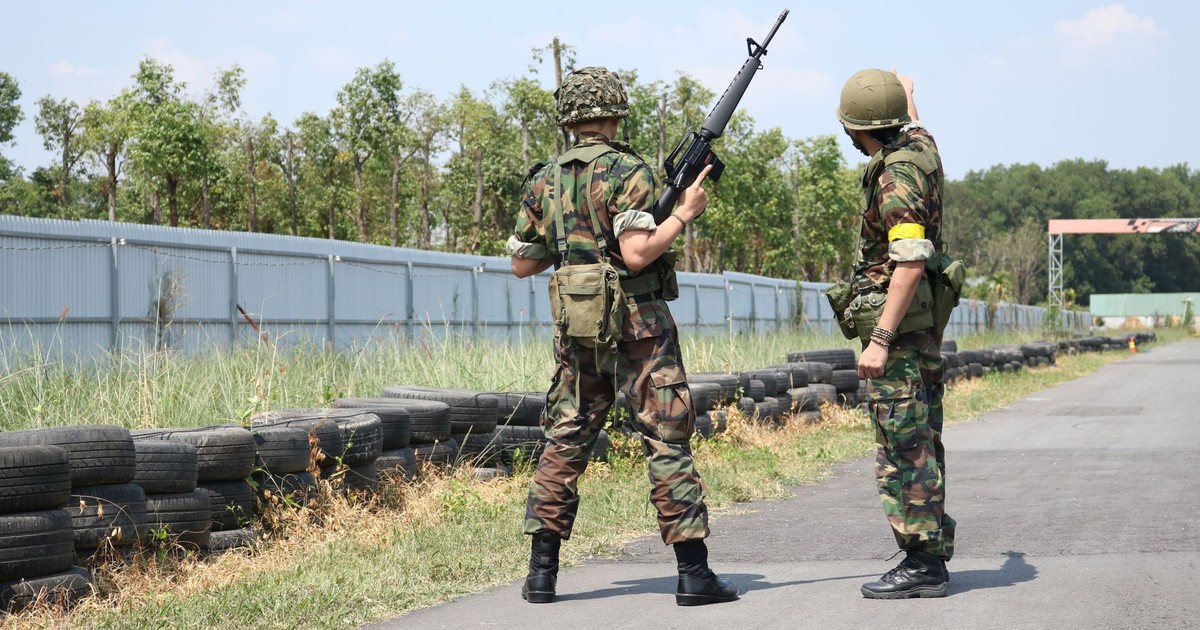
The David-versus-Goliath framing of the Viet Cong as a resourceful but primitively armed resistance movement facing off against the full might of the American military machine is compelling. It’s also, in important respects, misleading.
The Viet Cong, the pro-North force in South Vietnam, were armed by both North Vietnam and the Soviet Union. They carried AK-47s, a Soviet-made automatic rifle comparable in effectiveness to the M-16 used by American troops, alongside submachine guns, grenades, and rocket launchers. By contrast, the South Vietnamese military was initially equipped with aging World War II-era weapons.
The Viet Cong were not fighting with homemade weapons and sheer determination alone. They were a Cold War proxy force, supplied by a superpower with a strong interest in the outcome. That doesn’t diminish the tactical ingenuity that guerrilla warfare required, but it changes the nature of the contest considerably. The image of a barefoot fighter taking on a superpower is better cinema than history.
9. The Domino Theory Was Completely Wrong
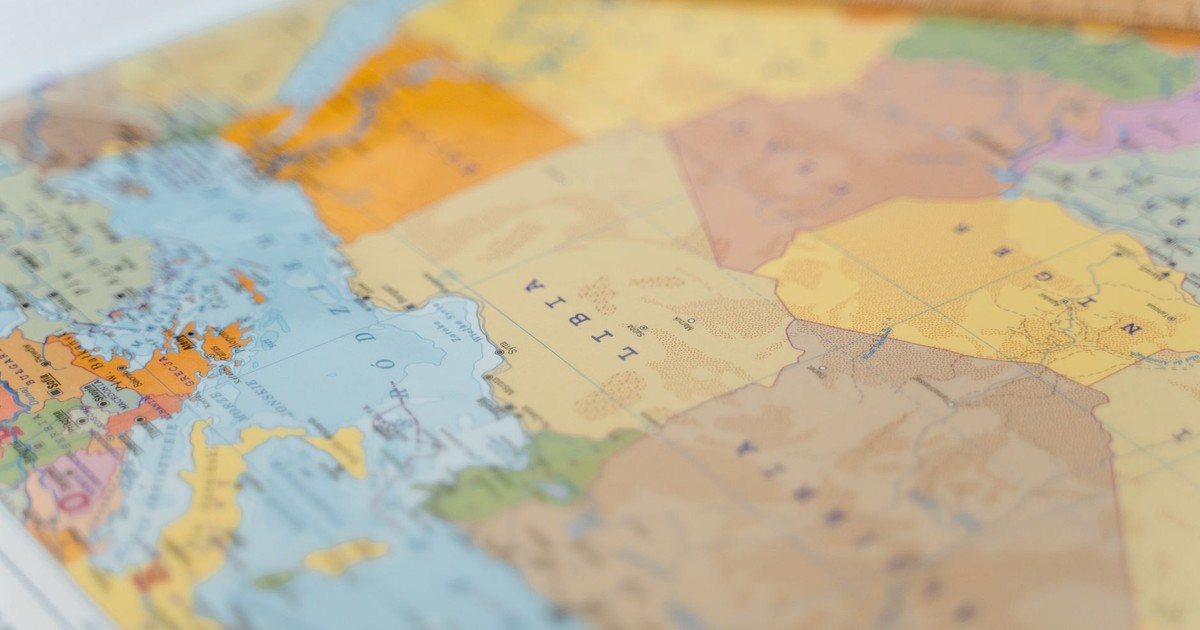
The domino theory, the idea that communist control of one Southeast Asian country would trigger a cascade of others falling to communism, is generally taught as a Cold War fantasy that reality disproved. Vietnam fell in 1975, and Thailand, Malaysia, and the Philippines did not become communist states. The theory gets invoked in classrooms as an example of flawed strategic thinking.
A closer look at what actually happened complicates that verdict. After the fall of Saigon in 1975, communism did spread to Laos and Cambodia. The full cascade didn’t reach Thailand or Indonesia, but neighboring states did fall, and the region experienced years of significant instability and communist insurgency. The theory overstated the automaticity of the process, but the underlying concern about regional communist expansion was not invented from nothing.
Treating the domino theory as entirely discredited flattens what was, at the time, a genuinely contested strategic question. Cold War Southeast Asia was a region of real instability and competing great-power interests. The theory was partly right. Calling it simply wrong is its own kind of distortion.
10. Returning Veterans Were Universally Spat on and Reviled
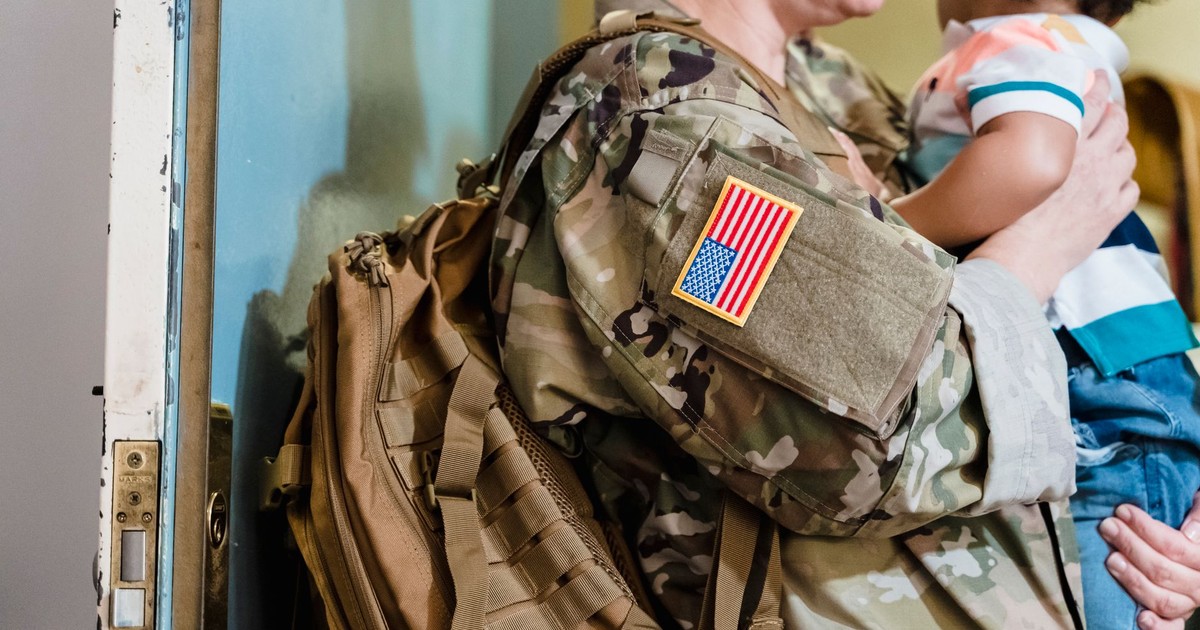
Few stories from the Vietnam era have more emotional staying power than the image of returning soldiers being spat on by antiwar protesters at airports. It became a defining symbol of the gap between the people who fought the war and the people who opposed it. Books were written about it. Politicians invoked it for decades.
Historian Jerry Lembcke, a Vietnam veteran and sociology professor, examined this narrative in his 1998 book The Spitting Image: Myth, Memory, and the Legacy of Vietnam. The book analyzes the widely believed narrative that soldiers were spat upon by antiwar protesters upon returning home. Lembcke examines the origin of the earliest stories and their popularization through Hollywood films, and contrasts the absence of credible evidence of spitting by anti-war activists with a large body of evidence showing a mutually supportive relationship between veterans and antiwar forces.
No unambiguous documented incident of this behavior has ever surfaced, despite repeated and concerted efforts to uncover them. What happened to veterans returning from Vietnam varied enormously depending on where they came home to, who their family was, and when they got back. Stories of parades, supportive families, and reintegration into civilian life existed alongside tales of alienation. The monolithic story of rejection erases a far more complicated and human reality. Some veterans faced genuine indifference or cold receptions. Others came home to warm welcomes. The experience was personal, specific, and varied, not a single national act of cruelty.
Read More: America Has Lost Its War With Iran
What the Record Actually Shows
History doesn’t remember what happened. It remembers what got told, and what got told about Vietnam was shaped by politics, grief, guilt, and a film industry that needed clean emotional arcs. The Viet Cong as heroic underdogs. The reluctant draftee as the representative soldier. The spat-upon veteran as the symbol of a divided nation. Each of these images carries a grain of truth, which is exactly what makes them so durable. Grains of truth make good containers for larger distortions.
What the actual record shows is a war fought largely by volunteers, more educated than any American force before them, launched on a legal pretext that senior officials knew was dubious at the time and that declassified documents confirmed as fabricated afterward. The soldiers who fought it came home to a country that was confused and exhausted, not uniformly hostile. The Tet Offensive broke American political will while failing militarily. The domino theory was partly right. The average age of the dead was 23, not 19. None of these corrections make the war less tragic. They just make it more accurate, which is the only place an honest reckoning can start.
The stories that get passed down between generations about Vietnam matter because they don’t stay in the past. They travel forward into every policy debate, every foreign engagement, every argument about when America should fight and why. Getting them right isn’t an exercise in historical pedantry. It’s about understanding what a country actually did, and what it told itself it did, and knowing the difference between those two things.
AI Disclaimer: This article was created with the assistance of AI tools and reviewed by a human editor.