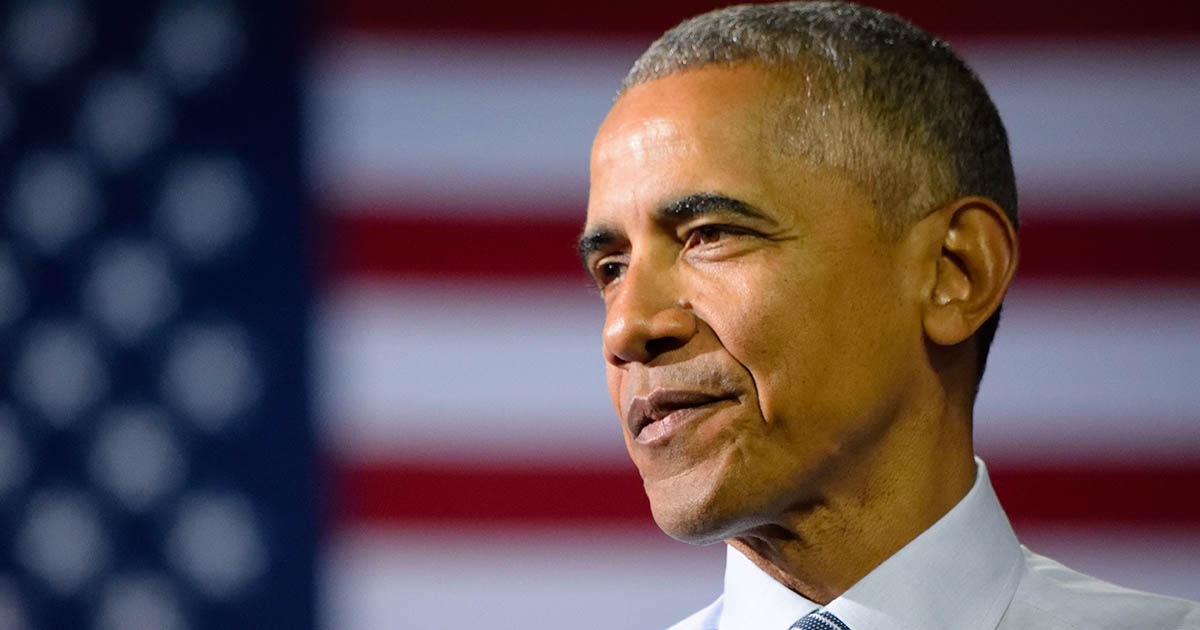

Barack Obama left the White House nearly a decade ago. He hasn’t held office, hasn’t run for anything, hasn’t appeared on a ballot since 2012. And yet in the summer of 2026, a sitting president is still saying his name out loud, still invoking him in press conferences, still measuring his own deals against his. When Obama finally addressed that fact directly on a podcast this week, the observation he made wasn’t angry. It was almost clinical. And that’s what made it land.
The comments came during a June 24, 2026 episode of All The Smoke, a podcast hosted by retired NBA players Matt Barnes and Stephen Jackson. It isn’t a typical political venue, which is probably why Obama said what he said. Barnes asked how the former president keeps his composure given years of attacks. Obama answered by saying he stopped thinking about it a long time ago, and then explained why the behavior itself tells you something.
“The idea that I’d be worrying about somebody who came before and me trying to measure ‘what’s he done today?’ Constantly worrying about that is a strange thing to me,” Obama said. “It shows me somebody who’s not focused on the American people and the job they’re supposed to do.” He upgraded the real estate metaphor as the conversation went on: first a room in Trump’s head, then a suite.
What Obama Actually Said
Obama criticized Trump’s relentless “obsession” with him and his family, suggesting the current president “is not focused on the American people.” “First of all, when I was president, the last thing I had time to do was worry about what somebody said or my predecessor did. They’re gone. I’ve got work to do,” he told Matt Barnes and Stephen Jackson.
The framing was deliberate. Obama wasn’t angry about being a target. He was making a different point: that the time and energy Trump spends on him is itself evidence of something. He said the preoccupation “shows me somebody who’s not focused on the American people and the job they’re supposed to do.”
Obama noted that during his own time in office from 2009 to 2017, “the last thing I had time to do was worry about what somebody said or what my predecessor did.” “If you’re doing the job right, every day you’ve got five, 10 things that are real hard, and you have to be constantly focused,” he said.
Then came the line delivered with the timing of someone who has waited a while to say it: “I obviously have a room in his head,” Obama told the hosts, upgrading it to “a suite in his head.”
Obama also noted that Trump behaves differently toward him in person than he does on social media. “Because he knows better,” Obama said. The observation is sharper than it sounds. It implies that the public performance of hostility is just that: a performance.
Barnes had asked Obama how he keeps his composure given everything Trump has said and done. Obama explained that early in his presidency, he learned “to screen out the noise, in order for you to understand what’s in front of you and deal with it well.” “It’s like if you are constantly worrying about what other people think, somebody can have a bad day and cuss you out, and suddenly controlling your performance, it’s controlling your thought processes,” he said. He added: “So, I screen that stuff out pretty early on, and I ain’t worrying about it. Another way of putting it is no reason to dignify that kind of stuff.”
A Pattern That Goes Back Further Than Most People Remember
Trump’s fixation on Obama began in 2011, when he became a leading voice behind the “birther” conspiracy questioning Obama’s citizenship. Trump repeatedly pressed for documentation and kept the issue in national headlines even after the release of Obama’s birth certificate. More than a year after the White House released the long-form certificate, Trump continued to question its legitimacy, claiming in August 2012 that an “extremely credible source” had told him the document was fraudulent.
During the 2016 campaign, Trump repeatedly described Obama as “the worst president” in U.S. history and “a disaster,” turning personal criticism into a central line of attack. He coined nicknames targeting the former president, including “Cheatin’ Obama,” a label deployed in a 2018 social media post comparing approval ratings.
Since returning to the White House, Trump’s references to Obama have intensified again, often surfacing in moments with no obvious connection to Obama’s presidency. During an exchange about the Epstein files in 2025, Trump told reporters: “The witch hunt that you should be talking about is they caught President Obama absolutely cold.” Trump added: “It’s time to go after people. Obama’s been caught directly. He’s guilty. This was treason. This was every word you can think of.”
According to UNILAD, which cited BBC reporting, Obama’s spokesperson issued a response to the treason claims: “Out of respect for the office of the presidency, our office does not normally dignify the constant nonsense and misinformation flowing out of this White House with a response. But these claims are outrageous enough to merit one. These bizarre allegations are ridiculous and a weak attempt at distraction.”
The Reflecting Pool Moment That Said Everything
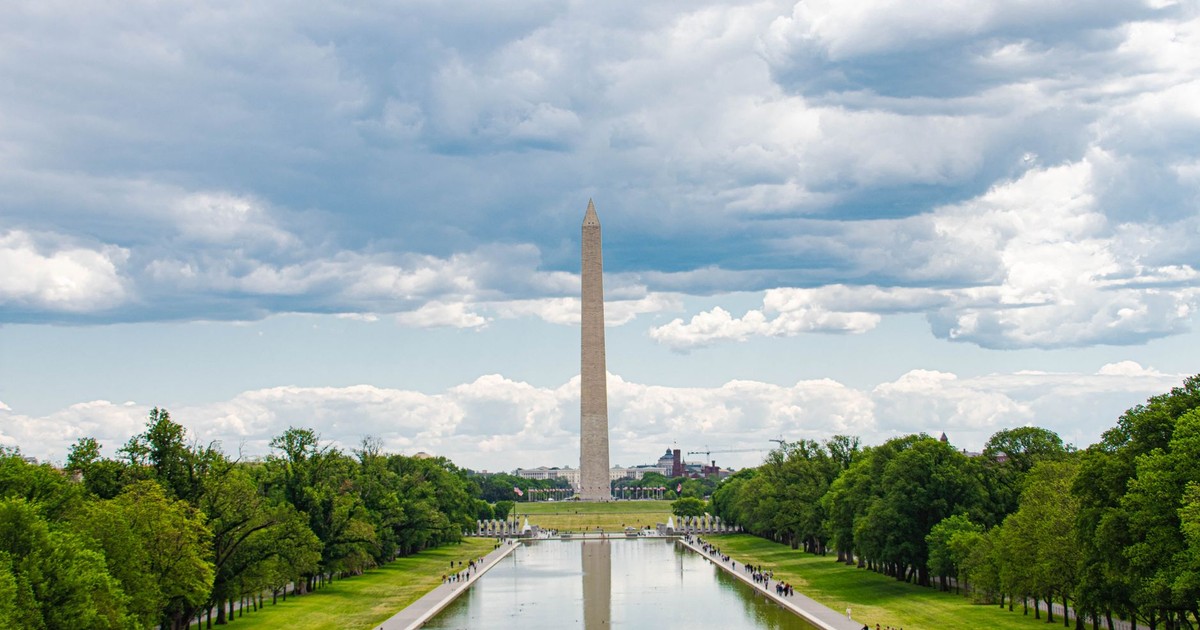
One of the clearest recent episodes came in late May 2026, when Trump faced questions about the renovation of the Lincoln Memorial Reflecting Pool. His renovation of the landmark had become covered in green algae, blue paint residue, and dead ducks floating in water. When reporters pressed him on it, the first name out of his mouth was his predecessor’s.
“Barack Hussein Obama, have you ever heard of him?” Trump asked reporters assembled in the Oval Office on June 22, before claiming Obama had spent more than $100 million on the project. Newsweek reported that independent fact-checkers found the Obama-era renovation cost roughly $34 million, significantly below Trump’s claim. The episode illustrated a recurring pattern: reaching for Obama’s name in response to questions about current decisions.
Trump has frequently invoked Obama by his full name, “Barack Hussein Obama,” including in official communications. This spring, during the Iran war, Trump renewed his attacks on the Obama-era Iran nuclear deal. According to the Washington Examiner, Trump has often mentioned Obama throughout both of his terms and during his campaigns, and in a late May Truth Social post declared that his administration’s envoys are negotiating a deal that is “THE EXACT OPPOSITE” of Obama’s. Trump pulled the United States out of the original agreement in 2018. He then bombed Iran, negotiated to reopen the Strait of Hormuz, and insisted he had secured tougher terms than Obama – a claim that independent analysts disputed.
The Racist Posts and the Line Even Some Supporters Felt Was Crossed
Even some of Trump’s supporters felt he crossed a line in February 2026 when he posted a video depicting Barack and Michelle Obama as apes to his Truth Social account. The minute-long clip, which also promoted conspiracy theories about the 2020 election, was eventually taken down. Trump refused to apologize. Initially, the White House defended the post against “fake outrage,” but later blamed a staff member for sharing the now-deleted video.
Obama called out what he described as “deeply troubling” behavior in response to the incident. It was one of the few moments he broke from his usual posture of public silence on Trump’s attacks.
The conduct raises a question that keeps coming up in other contexts too. The Trump IRS lawsuit examined how a sitting president used federal government institutions in ways that blurred the line between personal interest and executive power – a pattern that legal observers have repeatedly flagged across Trump’s second term.
The Numbers That Might Be Driving All of This
A CNN poll conducted by SSRS among 2,480 adults nationwide from May 7 – 31, 2026, found that Obama is viewed positively by 57% of Americans, far surpassing the ratings for his two Oval Office successors. Only 34% of the public holds a favorable opinion of Trump, with Biden trailing at just 30%.
Obama’s standing among political independents is more than twice as high as either Biden’s or Trump’s. Unlike his successors, he also has near-universal backing from his own party. Asked in an open-ended question which president they most admire, 30% of Americans named Obama, compared with 19% who named Trump. Trump left office after his first term with a 33% favorability rating, rebounded to 46% around his second inauguration, and has since fallen back to 34%, his lowest mark of the second term. The gap between the two men’s public standing isn’t narrowing.
The White House’s official response to Obama’s podcast comments arrived quickly and was brief. White House spokesman Davis Ingle responded that “Barack Hussein Obama will go down as one of the most dishonest, divisive, and destructive Presidents in history.” The use of Obama’s full middle name in an official statement was itself consistent with the behavior Obama described on the podcast: not policy rebuttal, just the same recurring signal, sent again.
Read More: Trump Promised No Taxes on Social Security. But Here’s What’s Actually Happening
The Real Exposure
Obama’s point on the podcast wasn’t really about his feelings. It was a fairly direct argument about what the presidency requires. When you’re doing the job properly, he said, the constant demands of actual governance – the five or ten hard things that arrive every day – leave no room for tracking what a predecessor said or did. The fixation, by his logic, isn’t personal. It’s a signal about where the attention is going instead.
That argument is uncomfortable because it’s hard to refute on its face. What it can’t settle is whether Trump’s references to Obama are compulsive or strategic. Invoking Obama’s name in front of a loyal base has been reliable political fuel for fifteen years. Some of the invocations – the late-night Truth Social posts, the treason accusations, the ape video – look like something closer to genuine preoccupation. Others, like blaming Obama while standing in front of a degraded reflecting pool, look like a reflex: reaching for the nearest exit when a question gets uncomfortable. Both can be true at once. What’s harder to explain away is that it keeps happening. Obama left the White House in January 2017. His name still comes up in official White House statements in 2026, spelled out in full, middle name included. That’s not strategy. That’s a habit.
AI Disclaimer: This article was created with the assistance of AI tools and reviewed by a human editor.