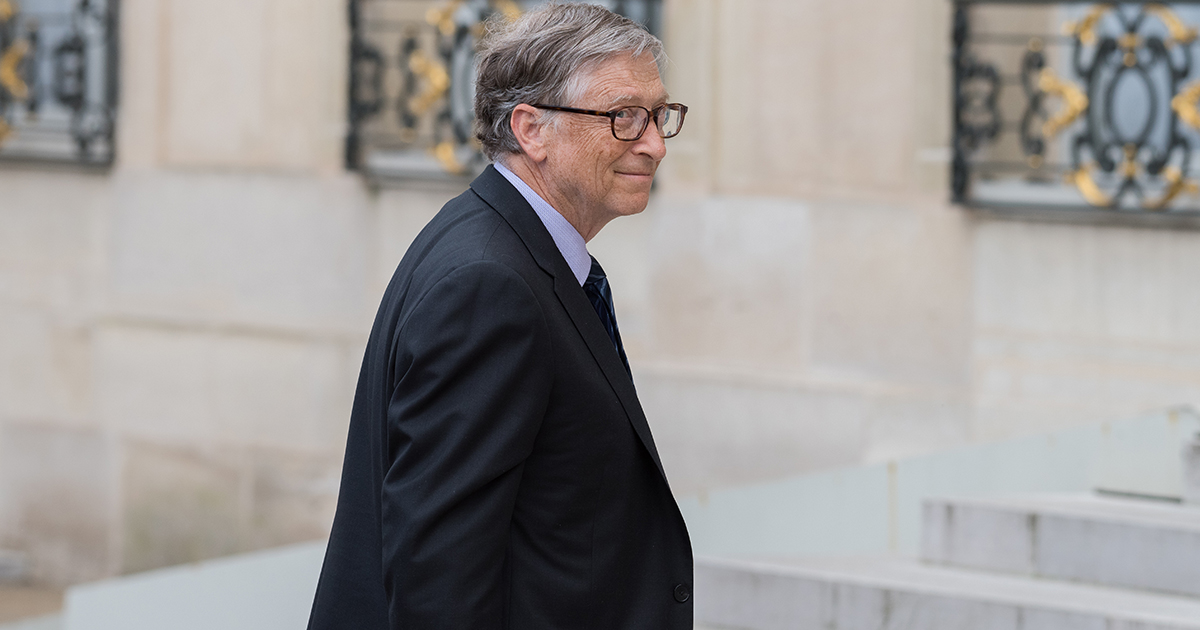

The names had been redacted for weeks. When the House Oversight Committee published the full, unredacted transcript of Bill Gates’ closed-door congressional interview on June 23, 2026, three women became part of the public record: Mila Antonova, a Russian bridge player; Karima Nigmatulina, a Russian nuclear physicist; and Dr. Alice Jacobs Nesselrodt, a medical entrepreneur. All three had been named by Gates himself during a nearly six-hour session before the committee on June 10. All three have been accused of no wrongdoing.
The revelations did not arrive in a vacuum. According to the recently released congressional transcript, Gates testified that Jeffrey Epstein had drafted unsent emails brainstorming ways to blackmail him over those extramarital affairs. What the transcript laid bare, in granular and sometimes uncomfortable detail, was not just the personal conduct of one of the world’s most prominent philanthropists, but a portrait of how Epstein allegedly operated: collecting real information, layering it with invented claims, and holding the mixture over powerful men like a lit match he never quite touched to the kindling.
Gates, who has not been accused of any wrongdoing and has denied any illicit actions, spoke to the committee as part of an ongoing probe linked to the Justice Department’s Epstein files release. During the interview, held on Capitol Hill on June 10, the businessman maintained that his three-year relationship with Epstein from 2011 to 2014 was strictly work-related. Here is a detailed account of what the transcript revealed, who the three women are, and how Epstein allegedly sought to exploit what he knew.
How Bill Gates and Jeffrey Epstein First Connected
Gates told the committee that when he first met Epstein, at a January 2011 dinner in New York arranged by his former science adviser Boris Nikolic, he was aware Epstein had been convicted of crime but had not looked into the specifics, acknowledging he “probably should have.” He said it was not until 2018, when the Miami Herald detailed the extent of Epstein’s crimes, that he grasped their full scope and learned Epstein had registered as a criminal offender.
Gates said the primary reason he met with Epstein was Epstein’s claim that he could raise billions of dollars for global health from wealthy clients, money that never materialized. Gates told the committee: “I was so focused on the possibility of raising funds for global health that I allowed that goal to override my better judgment. If the time I spent with Epstein lent him credibility, I am deeply sorry.”
Asked how often he saw Epstein, Gates gave this breakdown: three times in 2011, twice in 2012, and “five or six” times in each of 2013 and 2014, noting some of the 2013 contacts were Skype calls. That adds up to what Gates described elsewhere as roughly 12 to 14 in-person meetings plus two Skype calls over the four-year period.
The Role of Boris Nikolic
Dr. Boris Nikolic, Gates’ longtime science adviser, sits at the center of how these two worlds connected. Nikolic, a physician and biotech venture capitalist, had a close friendship with Epstein. The late financier named Nikolic as a backup executor for his will. Nikolic’s name appears more than 14,000 times in the Justice Department’s files.
Gates said he never disclosed the affairs to Epstein, and speculated that Epstein learned about the relationships through Nikolic, who was aware of them because of their close working relationship. Gates told the committee: “One time it was a scheduling thing, when we were in London, where I said to him I was going to disappear and wanted him to show that I was meeting with him at that time.”
When Nikolic began the process of leaving the Gates Foundation, he engaged Epstein to help him negotiate the terms of his departure. Epstein traveled to Seattle at one point to assist in those negotiations, Gates said, and Nikolic eventually began making “veiled” threats via email. Gates’ own reading was that Epstein used those negotiations as an opportunity to gather compromising material he could deploy later.
Bill Gates Affairs: The Three Women Named in Testimony
Mila Antonova – The Bridge Player
Antonova and Gates first crossed paths in the summer of 2009, when they met at the North American Bridge Championships in Washington, D.C. She was in her early twenties; Gates was 54. Born and raised in Russia, she studied management at the Tolyatti Management Institute, developed a passion for bridge, and later moved to the United States, where she founded a bridge club.
Through Gates’ adviser Boris Nikolic, she was introduced to Epstein, who paid her tuition fees at a software programming school in 2013. According to Fortune’s reporting in March 2026, Epstein went further: between 2013 and at least 2018, he helped Antonova secure a visa, put her up in his New York apartments, funded her coding classes, and wired her regular cash payments. He then used these favors to try to pressure Gates, writing to Gates’ deputy in April 2018 that he had put Antonova up in his New York apartment and that Gates was “playing with fire.” Antonova’s attorney told Fortune that she had no knowledge of Epstein’s efforts to pressure Gates and that she “naively accepted” his help, believing he genuinely wanted her to succeed.
The reimbursement demand Gates received was, in his own reading, never a straightforward ask. He told the committee: “I viewed it as a tactic to reengage with me. I’d never asked him to do anything with respect to the person we’re discussing, so I was rather surprised.” None of the three women has been accused of any wrongdoing.
Karima Nigmatulina – The Nuclear Physicist
Karima Nigmatulina is a Russian nuclear physicist educated at Princeton and MIT. The PhD holder currently serves as general manager of a Moscow-based company called Asterus. Her career has been defined by rigorous science: she has published at least 17 research papers, with her work cited more than 570 times.
Gates revealed in his testimony that he met Nigmatulina through her work on “disease modelling and nuclear fission,” during which time she was working for TerraPower, a company in which Gates was an investor. Gates also referenced meeting Nigmatulina in London, a detail corroborated in the Epstein files. She has not made any public comment in connection with the proceedings.
Gates told the committee he had informed Melinda about his affairs with Nigmatulina and Antonova before 2013. He testified that those conversations had been “very distressing” for her.
Dr. Alice Jacobs Nesselrodt – The Medical Entrepreneur
The third name surprised the committee members and, by his own account, revealed something Gates had not expected Epstein to know. Gates had an affair with Dr. Alice Jacobs Nesselrodt, a medical entrepreneur, before he met Epstein in 2011. Gates appeared surprised to learn that Epstein was aware of the affair, having earlier told Congress that the financier only had knowledge of “the two that we’ve discussed.” Lawmakers then showed him an email that Epstein had sent himself in July 2013, mentioning Dr. Nesselrodt in relation to Gates, according to the transcript.
While still a student at Harvard Medical School, Dr. Jacobs founded IntelligentMDx after losing a patient to a staph infection. She raised $40 million in funding, and the company developed five FDA-cleared products before being sold to Qiagen. The World Economic Forum selected her as a Young Global Leader.
According to the transcript, Gates said his affair with Dr. Jacobs occurred before 2010, predating his first meeting with Epstein in 2011. Lawmakers showed Gates an email in which Epstein referenced Dr. Jacobs; Gates said he had been unaware that Epstein knew of the relationship and suggested Nikolic, who had professional ties to both, may have been the source.
The Alleged Blackmail Plot: Draft Emails and “Veiled” Threats

What the Draft Emails Said
Two emails from 2013 included in the DOJ files were sent by Epstein to himself. At least one appears to be written as a draft of a resignation letter from Boris Nikolic from the Bill and Melinda Gates Foundation. The emails describe Gates as having had extramarital affairs and an “STD,” and reference asking Nikolic to acquire antibiotics so that Gates could “surreptitiously give” them to then-wife Melinda French Gates.
Gates rejected the substance of those claims categorically. He told the panel: “I never had an STD. I never gave medicines to anyone covertly,” conceding only that he may once have voiced worries about a potential infection to a mutual associate.
The tech billionaire pointed specifically to the draft emails that Epstein appears to have written to himself in 2013, which contain a series of graphic, unverified allegations against Gates, and argued that Epstein would have mentioned other affairs if he had known about them. “I think that Epstein, when he was writing emails to himself, took every potential negative thing he knew, and some that are completely false, and he put those into draft emails to himself,” Gates said.
Gates’ Account of the Pressure Campaign
Gates’ position throughout his testimony was precise and deliberate: Epstein never sent him explicit blackmail. What Epstein did was construct the architecture of a threat and leave the door open. Gates told lawmakers: “He never blackmailed me, but looking at these emails, it raises a serious probability that he contemplated blackmailing me. He never sent me anything that I would call blackmail. As I’ve said, he made veiled references to things like we should all want to be friends. Now that I see the January release of documents, it appears that in many cases he, at least in emails to himself, was sort of rehearsing how either he or he coaching someone else might choose to blackmail me, but none of those messages were ever sent to me.”
Gates offered his own interpretation of the motive: “It looks like he’s musing on using a mixture of facts and falsities as an effort, almost like a blackmail, to advance some goal in improving Dr. Nikolic’s negotiating position as part of his exit from my employ,” he told the congressional committee.
In his opening statement to Congress, Gates stated: “Epstein was working to use information about my infidelities, in addition to many lies that he layered on top, to pressure me to reengage with him. He was unsuccessful in this effort.” Gates also stressed that the women he had affairs with had no connection to Epstein’s criminal network.
The Committee’s Broader Investigation
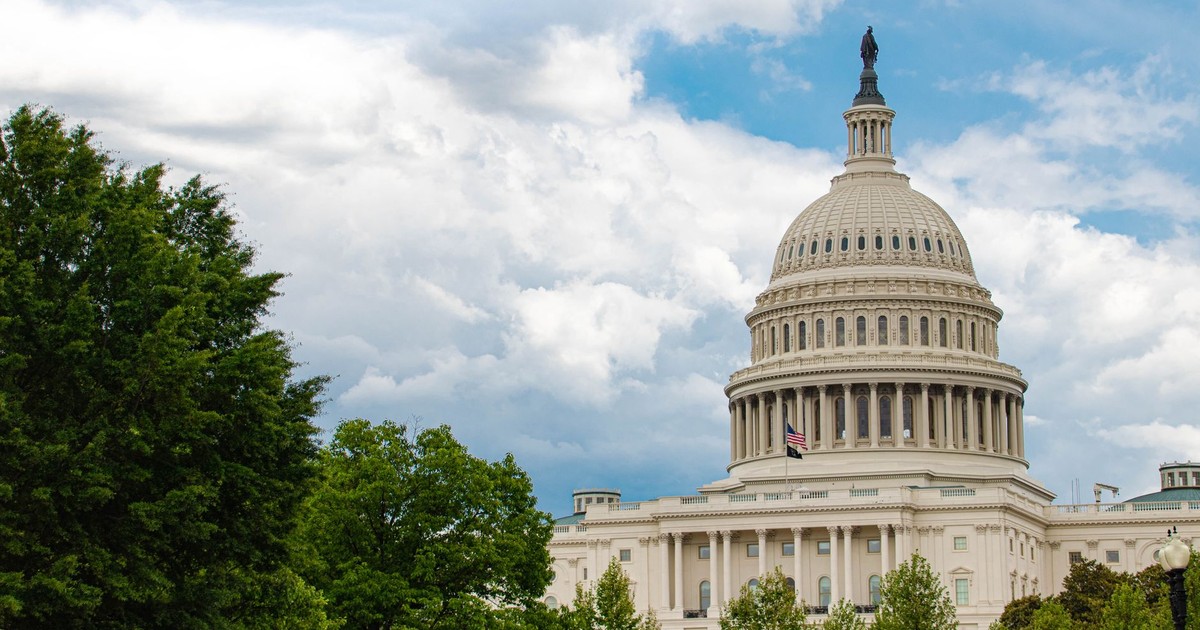
The Gates testimony was one piece of a sprawling congressional inquiry. The House Oversight and Government Reform Committee, led by Republican James Comer, has interviewed more than a dozen people in recent months about their interactions with Epstein, including former U.S. President Bill Clinton and Howard Lutnick, the current Commerce Secretary under President Donald Trump.
The committee also released testimony from its recent behind-closed-doors interview with Epstein’s former executive assistant Lesley Groff, who said she booked appointments for him “almost daily” but denied ever scheduling them with people she believed were underage.
The Department of Justice said last year it found no credible evidence that Epstein blackmailed prominent individuals. That finding sits in some tension with what Gates described to Congress: not explicit blackmail, but what he characterized as clear preparation for it.
Gates sat for the voluntary interview on June 10 in Washington, D.C., as part of the committee’s ongoing investigation into Epstein and his crimes. In a statement the following morning, a spokesperson for Gates said he appreciated the chance to appear before the House Oversight Committee and, as several committee members acknowledged, answered every question put to him over the nearly six-hour interview.
The Gates Foundation Response
The fallout extended well beyond Capitol Hill. The Gates Foundation commissioned an external investigation of its past engagement with Jeffrey Epstein, CEO Mark Suzman told staff in a memo, as Gates prepared to testify before Congress. The review was launched in March with help from Gates and the foundation’s independent board members and is expected to deliver an update this summer. It will also examine the foundation’s policies for vetting new philanthropic partnerships.
Gates also acknowledged making a $2 million donation to MIT during the period he knew Epstein, and said he told Epstein about it hoping to end Epstein’s requests that Gates give money in his name. He said MIT later investigated and found the gift was not Epstein-related.
Gates’ Denials and Public Statements
Gates did not wait for the transcript’s release to begin putting his account on the record. In late February 2026, Gates told the Wall Street Journal that his ties to Epstein were a major mistake and admitted to having extramarital affairs with two Russian women, but denied any involvement with the financier’s activities. He did not name the women at that point.
In the DOJ files, Epstein described schemes around Gates’ affairs. Gates told Congress that while Epstein was not able to blackmail him, “it looks like Mr. Epstein’s brainstorming was going in that direction.” He also told the committee: “I never went to his island, his ranch, or his Florida home. I have never victimized anyone. While he may have sought to foster a personal relationship, I was never interested in that and never reciprocated.”
Gates recalled a fall 2013 dinner at which Melinda French Gates had a strongly negative reaction to Epstein, saying, “Look, you know, either get these donations, you know, or maybe you should just cut it off now.” He cut ties with Epstein in 2014.
Gates, who has not been publicly accused of wrongdoing by any of Epstein’s survivors, appears in the Justice Department’s documents more than 3,000 times. His spokesperson reiterated after the transcript’s release that Gates supports the full release of the Epstein files.
Key Takeaways

The June 2026 congressional transcript is one of the most detailed first-person accounts yet published of how Epstein allegedly built and deployed leverage over a powerful figure. Several findings from the Gates testimony are worth holding together.
Gates acknowledged three extramarital affairs with a competitive bridge player, a nuclear scientist, and a doctor, and said Epstein had become aware of two of them, apparently through Nikolic. The third, with Dr. Alice Jacobs Nesselrodt, predated the Gates-Epstein relationship entirely, and Gates said he did not know how Epstein had learned of it.
The draft emails released by the Department of Justice, seemingly written by Epstein on behalf of Nikolic, vaguely referenced the affairs and suggested Gates had contracted an STD. While Gates acknowledged at least three affairs, he explicitly denied contracting any STD, suggesting Epstein mixed falsehoods with known compromising information to use as leverage. Gates told the committee: “If those emails that contained some truth and some false things were ever sent, then we could say there was an attempt at blackmail that never happened.”
After Gates tried to end his relationship with Epstein, the convicted offender attempted to use compromising information about Gates’ extramarital affairs to force his way back into Gates’ life, but never explicitly threatened him, Gates told the House Oversight Committee.
What the Transcript Actually Tells Us
The picture that emerges from the testimony and the DOJ files together is of a years-long effort by Epstein to gather personal information about Gates through people Gates trusted: his science adviser, a former foundation senior official, and women he had been involved with. The campaign ran for roughly a decade, routed almost entirely through intermediaries, and Gates appears to have been largely unaware of its scope until the Justice Department published its files in January 2026.
Gates put it plainly to the congressional panel: “You know, the foolishness of my spending time with him is about 100 times higher after I see the January emails.”
That assessment carries its own weight. Gates spent three years meeting with a convicted offender in pursuit of philanthropic funding that never arrived. The people closest to him fed information about his private life to that same man. And the emails Epstein wrote to himself show he was drafting the shape of a blackmail operation he apparently never executed. Whether that amounts to a near miss or simply to Epstein’s characteristic style of accumulating leverage he rarely needed to deploy directly is one of the things the ongoing congressional investigation has not yet settled. The transcript answered what Epstein knew. The question of what he intended to do with it remains genuinely open.
AI Disclaimer: This article was created with the assistance of AI tools and reviewed by a human editor.