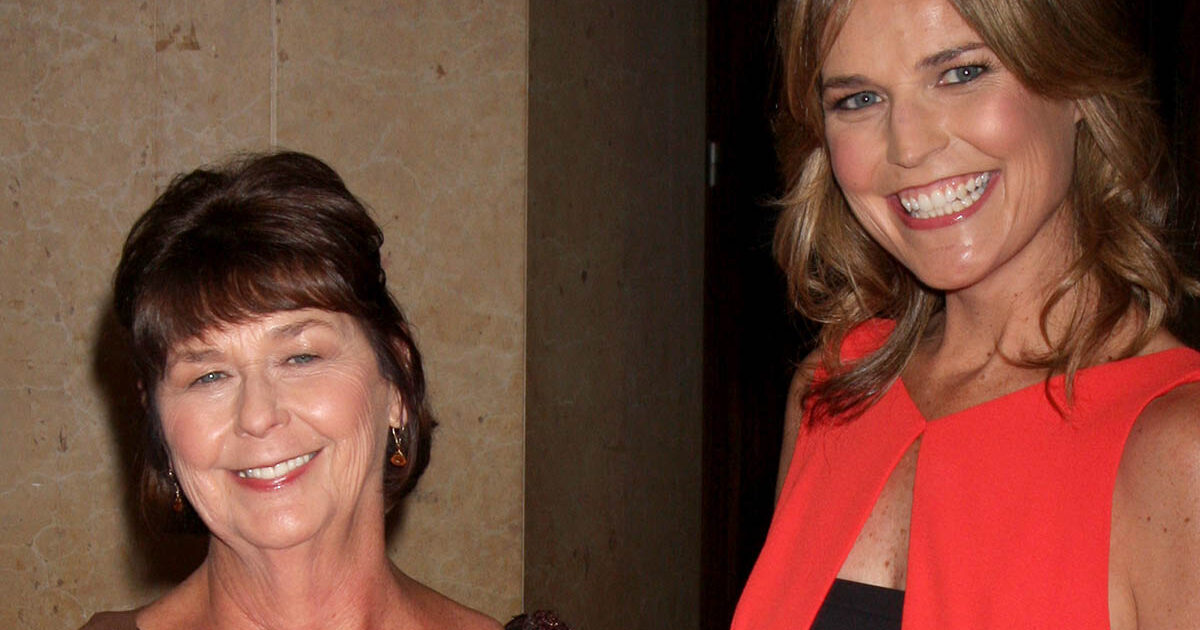

On the morning of June 23, 2026, Savannah Guthrie sat at the Today show desk and did something most journalists spend their entire careers trying to avoid: she made herself the story. Holding a tissue, fighting back tears in front of millions of viewers, the co-anchor set aside the professional distance she’d worked to maintain for nearly five months and begged strangers for help finding her mother.
Nancy Guthrie, 84, the mother of NBC News journalist and Today co-anchor Savannah Guthrie, was kidnapped from her home in Catalina Foothills, a suburb of Tucson, Arizona, on February 1, 2026. The case has drawn enormous national attention from the start, but June 23 brought a new and devastating development: the contents of a second ransom note, sent back in February but withheld from the public until now, had finally come to light. According to multiple media reports, that second note stated that Nancy Guthrie “perished shortly after she was taken” and is “buried in nature now.”
For Savannah Guthrie, who has continued showing up to anchor one of America’s most-watched morning programs while privately living with the kind of uncertainty most people can barely imagine, that moment on air was both unavoidable and undeniable. She wasn’t there to report on the story. She was there because the story is her life.
What the Ransom Notes Said
Investigators believe Nancy Guthrie was abducted from her home in the early hours of February 1, 2026, based on the time her pacemaker stopped communicating with her phone. She was 84 years old, and had been reported missing the next day, starting a search that has now gone on for nearly five months.
Nancy had last been seen around 9:45 p.m. the previous night, when she was dropped off at her Catalina Foothills home after having dinner with her daughter Annie Guthrie, who lives nearby. Her pacemaker stopped syncing with her Apple devices at 2:28 a.m. She was reported missing around noon the following day, after she did not show up at a friend’s house to watch an online church service.
In the early days after Nancy’s disappearance, multiple ransom notes were received, including those sent to a local Tucson media station and to TMZ. Many of the notes were deemed illegitimate by authorities; however, two were believed to be legitimate. One of those notes was received on February 2, demanding a $4 million ransom paid in bitcoin and including details on how to set up an exchange. A second email, sent on February 6, contained no apology or request for payment for the release of Nancy’s body, but expressed regret over her passing, according to three people familiar with the matter who spoke to NBC News.
The Guthrie family received two notes sent to Tucson media outlets that investigators deemed potentially credible, and the FBI tried to trace their origin. The first note demanded cryptocurrency for Nancy Guthrie’s return. The second note, according to sources familiar with the investigation who spoke to ABC News, said she had died shortly after she was taken and was buried in nature.
The contents of the second note were known to CNN and to KOLD’s news department. Both organizations reported that they agreed to a request from law enforcement officials and the Guthrie family not to reveal the contents of the notes, so that any future communications with the kidnapper or kidnappers could be authenticated. One note said that those who abducted Guthrie did not mean to kill her but that she died shortly after her disappearance. While CNN and its Tucson affiliate KOLD had held off on reporting the full contents, other news outlets including Air Mail, NBC, and ABC began publishing details over the past week.
Savannah Guthrie’s On-Air Plea
The Today co-anchor spoke briefly on June 23 after a report on the show by NBC News correspondent Liz Kreutz concerning the second note sent to media outlets following the disappearance of Nancy Guthrie. What followed was one of the most striking moments morning television has seen in years.
“This is unusual and unprecedented to say the least to be sitting here,” Guthrie said. Fighting back tears, she urged anyone with information to come forward, saying her family continues to live in agony with the uncertainty surrounding her mother’s disappearance every day.
She was careful to note her own role. “I don’t have any comment on this story, and I’m not involved in our coverage, but I can’t pretend I’m not here,” she said, wiping away tears. What came next was a direct appeal stripped of any journalistic filter, delivered from one person to anyone who might be watching: “This is a news story today that is on your radar, but this is the life that my sister lives, that I live, that my brother lives, that our extended families live, that our children live, every day.”
“No matter how much I try to come out here every day and smile and find that joy, and I will, I promise I will, this is a moment to tell you that we need your help. We’re begging for your help, and I’m not going to miss that opportunity. And so please if you’re watching, no matter how small, the reward is there. You can tell us, it can be anonymous. Please do the right thing for us, for our family, for our children. We love our mom, and we’ll never stop looking for her, ever.”
Following Kreutz’s report, Craig Melvin commended Savannah’s “bravery and courage” in returning to Today as “nothing short of remarkable.” She was joined at the desk by co-hosts Craig Melvin, Al Roker, Carson Daly, and Jenna Bush Hager.
Five Months Without Answers
The investigation has been exhaustive, and investigators have refused to let it go cold. A multi-agency investigation led by the Pima County Sheriff’s Department, with assistance from the FBI, US Customs and Border Protection, and search-and-rescue teams, has included extensive forensic analysis, neighborhood canvassing, and review of surveillance footage.
The FBI described the suspect in the doorbell camera video as a male about 5 feet 9 inches to 5 feet 10 inches tall with an average build. In one clip, the suspect approaches the front door and raises a gloved hand to the camera before turning back. In a separate clip, the masked suspect faces the camera holding a flashlight in his mouth before covering the lens with vegetation. Her blood was found on the porch, but the case remains unsolved.
Investigators also deployed a device called a “signal sniffer,” mounted on a helicopter, which may help pinpoint her location. Signal sniffers are often used in missing person cases because they can detect low-power electronic signals, such as those emitted by a pacemaker. Nancy Guthrie’s pacemaker app showed a disconnect from her phone at 2:28 a.m. Investigators noted that this most likely indicates she moved out of Bluetooth range rather than that her heart stopped, since her phone was found at her residence.
The FBI identified the backpack carried by the suspect as a black, 25-liter Ozark Trail Hiker Pack, and CBS News first reported that it is sold exclusively at Walmart. Pima County Sheriff Chris Nanos told CBS News that the backpack was “one of the most promising leads” in the case so far.
DNA analysis has also been underway for months. At the 100-day mark, the investigation could hang on a strand of DNA still being evaluated by scientists at the FBI laboratory in Quantico, Virginia, in hopes of identifying her abductor. The DNA recovered from Guthrie’s home in Tucson was first sent by Pima County sheriff’s detectives to a private laboratory in Florida for analysis. Sources close to the investigation told CBS News there’s concern that the DNA found at the home may not yield a usable profile for comparison in databases. The sheriff’s department’s contracted lab in Florida is continuing to analyze the samples and has not reached a conclusion on whether they’re usable.
On February 5, 2026, the U.S. Attorney’s Office for the District of Arizona said the FBI arrested Derrick Callella, 42, in Hawthorne, California, and charged him with transmitting a ransom demand in interstate commerce and using a telecommunications device anonymously with intent to abuse, threaten, or harass. Authorities stated that the scheme was unrelated to the other ransom demands that had received wide publicity. The Pima County Sheriff’s Department and the FBI fielded around 40,000 to 50,000 calls to their tip lines in the weeks following Nancy’s disappearance.
Despite all of that, investigators have not released the names of any suspects or persons of interest in the case.
A Family Determined to Keep Looking
From the first days after Nancy disappeared, the Guthrie family was public and visible in ways that went far beyond what most families can manage under that kind of pressure. Savannah Guthrie, who paused working on the Today show and pulled out of covering the 2026 Winter Olympics to focus on her mother’s case, released a video stating: “We received your message, and we understand. We beg you now to return our mother to us so that we can celebrate with her; this is the only way we will have peace. This is very valuable to us, and we will pay.”
In a March interview with NBC, Savannah said the family believes the two notes are authentic. “There are a lot of different notes, I think, that came, and I think most of them – it’s my understanding – are not real, and I didn’t see them,” she explained. “But I believe the two notes that we received, that we responded to, I tend to believe those are real.”
Savannah Guthrie and her family are also offering a $1 million reward for the return of her mother. The FBI is offering up to $100,000 for information leading to Nancy Guthrie’s location or the arrest and conviction of anyone involved.
The White House posted information about Nancy Guthrie on its social media accounts urging the public to report any relevant information. President Donald Trump called Savannah on February 4, 2026, offering additional federal resources and expressing hope for her mother’s safe recovery.
The story of a family refusing to stop searching, even as the evidence turns grimmer, is one that cuts through ordinary news fatigue. For those drawn to cases where love outpaces certainty, the story of a man missing for 30 years who eventually reappeared offers a reminder that the unknown can sometimes resolve in ways no one expected.
What This Means Now
Authorities have not publicly confirmed Nancy Guthrie’s death, no body has been recovered, and the FBI Phoenix Field Office and Pima County Sheriff’s Department continue to treat the case as an active investigation.
A former FBI agent told Newsweek that the note’s details reinforce theories that Guthrie’s disappearance was a kidnapping for ransom that “went south when she died.” The note’s reference to Guthrie being “buried in nature” is “poetic” and “soft” phrasing, the agent said. “They didn’t say they threw her in the ground or they discarded her in the desert.” The agent also noted how unusual it was for the abductors to inform the family about Nancy’s death at all. “They say this was an accident, implying they did not mean to kill her,” she said.
The note’s suggestion that her death was unintentional doesn’t resolve anything. It doesn’t tell the family where she is. It doesn’t tell investigators who did this. It leaves the Guthries in a place that the rest of us can barely process: holding a communication that claims their mother is dead, with no way to confirm it and nowhere to bury their grief.
The note’s belated disclosure raised its own questions about what was withheld and when, and why the information only surfaced publicly now, nearly five months in. CNN and the Tucson station withheld full details of the notes so future communications could be authenticated. That protective silence ultimately broke under pressure from other outlets, forcing the story into the open whether the family was ready or not.
Read More: U.S. States With the Highest Crime Rates
The Part That Doesn’t Get Easier
Savannah Guthrie is a journalist who has covered the most difficult news stories of the past two decades. She knows better than anyone how these cases work, what disclosures mean, and what they don’t. And yet she sat at that desk on Tuesday morning, held her tissue, and said the words that no journalist wants to say: not as a reporter with a platform, but as a daughter who is running out of time and asking strangers for help.
The case has everything that makes an investigation hard: a victim with health vulnerabilities, evidence that is degrading slowly in a lab, ransom communications that may or may not be genuine, and no confirmed suspect. What it also has is a family that keeps showing up. Savannah goes back to that desk every morning. Her siblings released videos. Her family posted the reward. The search teams kept going.
“Somebody knows something.” That sentence has been said in too many missing person cases to count. In this one, it’s said by a woman who anchors a national broadcast in front of millions of people every morning while simultaneously not knowing whether her mother is alive. That combination, the professionalism and the grief existing in the same hour, on the same set, in front of the same camera, is something that doesn’t resolve neatly. Some situations don’t. The case remains active. The reward stands. And the family is still looking.
AI Disclaimer: This article was created with the assistance of AI tools and reviewed by a human editor.