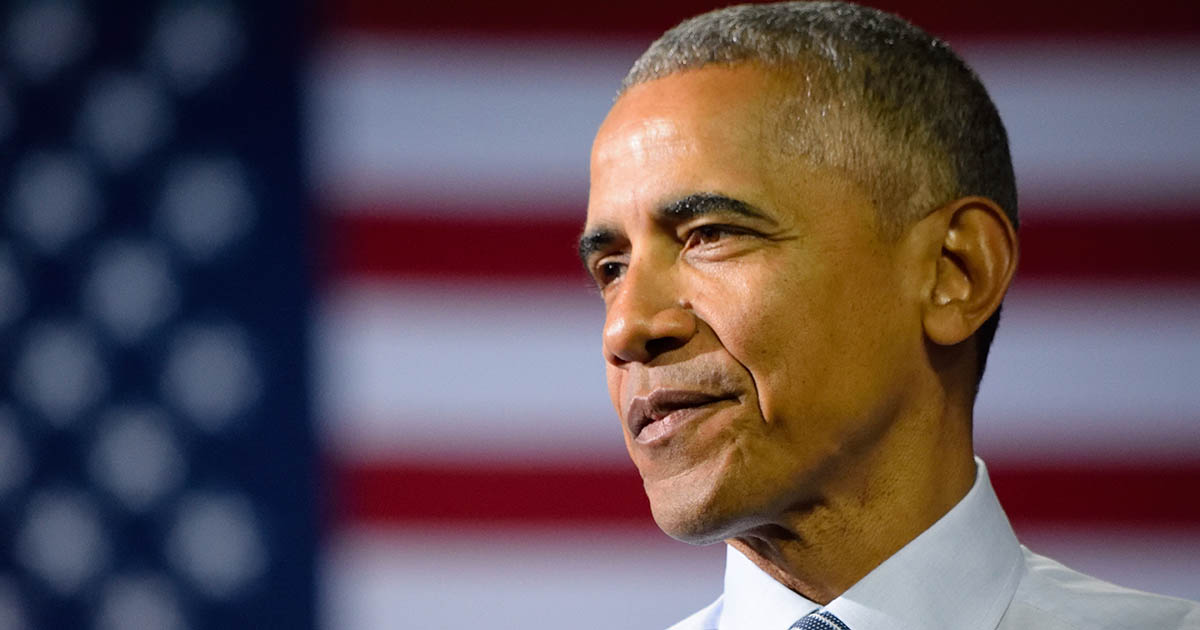

The timing is almost theatrical. Opening weekend festivities for the Obama Presidential Center in Chicago take place June 20 and 21, 2026, drawing Democratic figures and party faithful to the South Side to celebrate the legacy of the man who, for a generation, redefined what a Democratic candidate could mean to the country. And as they file through the exhibits, past the replica Oval Office and the “Hope” poster from 2008, the same question hangs in the air that has followed Democrats since January 20, 2017: Who comes next?
It’s a question that sounds simple until you try to answer it. Barack Obama didn’t just win two presidential elections. He restructured what voters believed a Democratic candidate could look like, sound like, and represent. He built a coalition that crossed lines of race, age, and geography in ways the party hasn’t come close to replicating since. Now, with 2028 approaching and a party still sorting through the rubble of 2024, Democrats are scanning their bench for someone who could do it again. While no one has officially declared their candidacy, the unofficial 2028 Democratic presidential field is taking shape, and it’s sprawling. The possibilities include former presidential candidates, governors, senators, House members, and even celebrities.
The party doesn’t just need a candidate. It needs a diagnosis. The 192-page DNC autopsy report, released by Democratic National Committee Chair Ken Martin after it was initially leaked, sought to answer questions such as how the party burned through billions of dollars and what its path forward would be as the 2026 midterms and the 2028 presidential election loom. Whoever emerges as the 2028 Democratic nominee will inherit both the hopes of a party desperate to return to the White House and the unresolved tensions that have been piling up since Harris lost to Trump.
The Scale of the Hole Democrats Are Trying to Fill
Before mapping the field, it’s worth being precise about what’s actually being asked of the next nominee. The 2024 loss wasn’t simply about a single candidate making the wrong calls. It exposed structural fractures that go well beyond any individual’s performance on the debate stage. Since the 2024 election, the Democratic Party has been struggling to reconcile its significant losses, not just of the presidency and Senate majority, but of large swaths of formerly reliable Democratic voters. Debates over what to do next have reached a fever pitch.
The gravest threat to the party’s future lies in its continuing losses among Hispanic voters, by far the country’s fastest-growing demographic group. In 2024, Hispanics shifted toward the GOP by nearly 30 points, including 35 points among Hispanic men and 45 points among all Hispanics aged 18 to 54. A shift that dramatic doesn’t reverse with better ad copy. It reflects a realignment of the kind that takes years to undo. In 1990, nearly two-thirds of Americans said the Democratic Party represented the interests of poor Americans better than the Republican Party. That figure dropped to only 42 percent in 2024.
Top party strategists have spent months warning that Democrats can’t win back the White House in 2028 by banking on voters’ dissatisfaction with Trump and MAGA. Obama’s 2012 campaign manager Jim Messina put it directly in an interview with Axios: “You can’t win a presidential election on opposition alone.” He added that “the midterms are going to be 85-90% driven by voter opposition to Trump and maybe 10-15% based on what Dems stand for.” “We cannot rely on that same calculation to win in 2028.”
The 2028 Democratic nominee will need to do more than beat a Republican. They will need to tell a story about what the party actually stands for – and make it stick with voters who have heard that pitch before and walked away unimpressed.
The Front-Runner: Gavin Newsom
If the 2028 primary were decided by prediction markets and media saturation today, Gavin Newsom would win going away. Newsom, the Governor of California, currently holds the best Democratic presidential nominee odds for 2028. As of June 2026, his odds translate to about a 30 percent chance to be the Democratic nominee.
His supporters point to a candidate who is articulate, telegenic, and disciplined on camera, and who has spent years picking fights with Donald Trump that kept him in national headlines. Despite fluctuations, Newsom remains the front-runner with about 25 percent market probability, with his price peaking at 27 percent on June 1, 2026, following his final State of the State speech and increased media attention positioning him as a leading contender.
His critics raise a more stubborn problem. California, for all its size and economic weight, is a state that Democrats don’t need to win. A governor who built his brand in San Francisco and Sacramento has a credibility problem in Macomb County, Michigan, or Luzerne County, Pennsylvania – the places that have been deciding presidential elections for a decade. His opponents will make sure those concerns stay front and center throughout the primary.
Josh Shapiro’s Swing-State Strategy
If Newsom is the candidate who plays best on national television, Josh Shapiro is the candidate who understands the electoral map. The Pennsylvania governor has a plan that could give him an edge in the 2028 presidential primary: engineer a blowout for his state’s Democrats in the 2026 midterms to prove he can turn the electoral college’s biggest battleground blue again. Shapiro has quietly and methodically tightened his grip on Pennsylvania’s Democratic machine, recruiting key congressional candidates, clearing the field for them, and remaking the state party.
He’s at only 4 percent in early 2028 primary polls, despite a robust national media strategy and his considerable popularity in a must-win swing state that President Trump carried in 2024. Top Democrats say Shapiro is betting that a strong 2026 performance could help him stand out in a field that could include better-known contenders such as Newsom and former Vice President Harris.
The upcoming Pennsylvania governor race has drawn national attention, with Shapiro’s strong position bolstering his profile as a potential 2028 presidential candidate. For a party that has spent the better part of a decade losing states it used to take for granted, a governor who can hold Pennsylvania while building Democratic majorities across it is a concrete, data-backed argument for electability.
Kamala Harris: The Unresolved Question
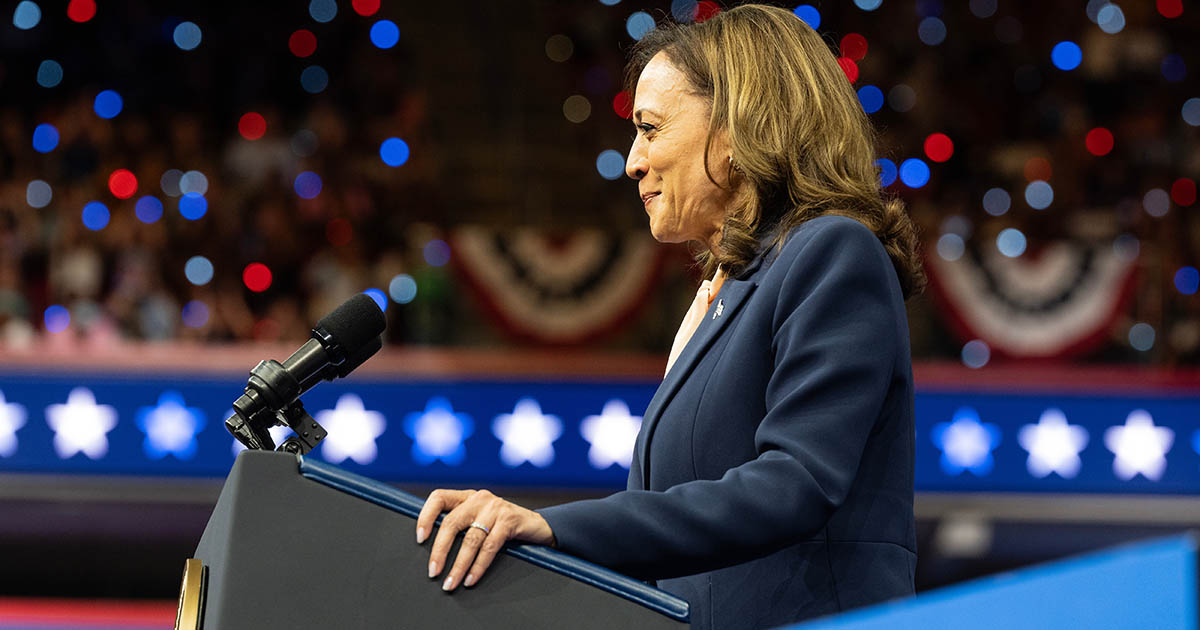
No one in the Democratic Party has figured out quite what to do about Kamala Harris. She ran in 2024, lost to Trump, and has been sending signals ever since that she isn’t ready to leave the stage. In an interview with BBC’s Laura Kuenssberg, Harris hinted she could make another bid for the White House, saying she would “possibly” be president one day and expressing confidence that America would see a woman in the Oval Office. She made her clearest indication yet of a potential 2028 campaign during that October 2025 interview, following her defeat to Trump. “I am not done,” Harris said.
The DNC’s postelection autopsy faulted Harris for writing off rural America and failing to go on the offensive against Donald Trump hard enough – criticisms that have raised genuine doubts about her 2028 prospects. Though her support appears to have softened since the 2024 election, Harris remains a prominent figure in discussions of the race. In August 2025, she announced she would not run for Governor of California, fueling speculation about a 2028 presidential bid.
Former Vice President Harris carries about a 10 percent chance of representing the Democratic Party in the 2028 election, according to current prediction markets, putting her roughly level with Alexandria Ocasio-Cortez. Whether she runs again will depend, at least partly, on whether anyone in the field makes the argument for her return feel unnecessary.
Jon Ossoff: The Dark Horse Gaining Ground
In June 2026, an opinion piece highlighting Jon Ossoff as an ideal 2028 candidate contributed to a market price increase from 7 percent to 9 percent by mid-month, signaling growing perception of his viability despite his own denials of interest. That kind of organic momentum, driven by editorial enthusiasm rather than a campaign operation, is the sort of thing that gets party strategists paying closer attention.
Ossoff is a two-term Georgia senator who has demonstrated the ability to win in a state that was once considered reliably Republican. His May 2026 speech in Atlanta, which emphasized voting rights and building a broad coalition, energized his base and contributed to a gradual increase in his market price. He is young, well-funded for his Senate race, and represents the exact kind of Sun Belt appeal that Democrats need if they are ever going to build a coalition that doesn’t depend entirely on flipping back Rust Belt states.
Ruben Gallego, who has served as a U.S. senator from Arizona since 2025, has also been mentioned as a potential 2028 candidate. Gallego, a Marine combat veteran who won his Senate seat by building unusual crossover support among Latino voters, stated in an April 2026 interview that he would “have to look at it,” referring to a potential run for president. He represents another version of the Sun Belt expansion argument, with perhaps the most credible Latino voter outreach story of anyone in the field.
Alexandria Ocasio-Cortez and the Progressive Lane
The most electric name in progressive Democratic politics right now is one that hasn’t committed to running. Left-wing Democrats are quietly escalating efforts to persuade New York Rep. Alexandria Ocasio-Cortez to run for president. One big reason: they see no clear alternative. Bernie Sanders, at 84, is too old, and no other Sanders-like politician with national punch is emerging.
The numbers behind the speculation are real. Ocasio-Cortez recently set her own fundraising record by raising $9.6 million in the first quarter of 2025 for her congressional reelection campaign. The haul included average donations of $21 and 266,000 individual donors, nearly two-thirds of whom were first-time givers. She has also headlined major political rallies alongside Sen. Bernie Sanders, drawing overflow crowds of more than 10,000 in deep-red states like Utah, Idaho, and Montana.
Allies have pitched Ocasio-Cortez with a straightforward case: Sanders staffer Ari Rabin-Havt told Newsweek that “she has a supporter base that, in many ways, has a larger potential width than Bernie’s.” He added: “It would be the height of arrogance to assume she couldn’t win the 2028 nomination.”
What she hasn’t done is decide. Ocasio-Cortez is preparing to run for either the Senate or the presidency in 2028, with people familiar with her operation saying she is working to boost her profile both across New York and nationally, and that her team is working to give her choices.
Pete Buttigieg and the Rest of the Field
Pete Buttigieg, who previously ran in 2020, continues to be a factor in early polling. He has shown strong support in key states like New Hampshire, where he is tied with Newsom in one survey, and recently headlined a town hall in Iowa, signaling continued interest in a national campaign. Among the broader field, Jared Polis of Colorado, J.B. Pritzker of Illinois, Elissa Slotkin of Michigan, Gretchen Whitmer of Michigan, Raphael Warnock of Georgia, and Tim Walz of Minnesota have all been discussed in national media as potential contenders.
A May 2026 poll of likely Democratic primary voters included 13 Democrats commonly identified as potential 2028 presidential candidates. In the ranked-choice simulation, Harris led Newsom 52 to 48 percent within the poll’s margin of error – a result that underscores how genuinely unsettled this race remains. Depending on who enters, who drops out, and what shape the midterm landscape takes by late 2026, the eventual 2028 Democratic nominee could come from almost anywhere in that list.
What “The Next Obama” Actually Means
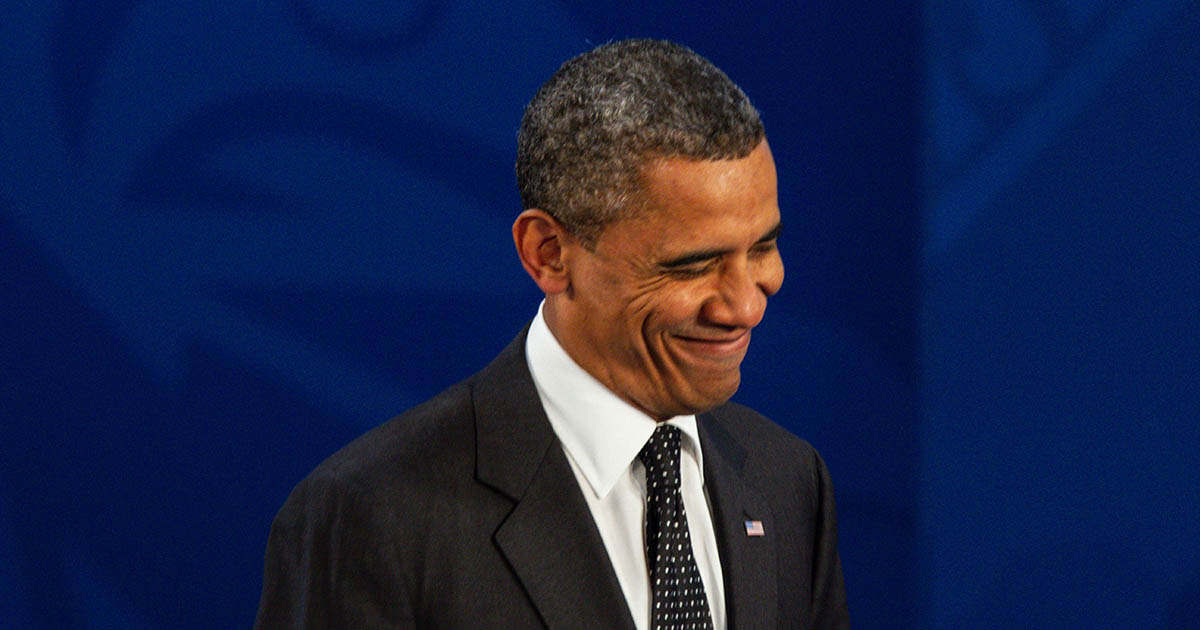
The Obama comparison is simultaneously the most useful shorthand in Democratic politics right now and the most misleading one. It captures something real: the party’s desire for a candidate with cross-demographic appeal, genuine oratory, cultural authority, and the ability to inspire first-time voters. It’s misleading because it sets a standard that even Obama himself might struggle to clear in 2026’s media environment.
Democrats are still debating what went wrong in 2024 as they try to retake the White House in 2028. Many point to former President Biden’s decision to run for reelection at age 81, his disastrous debate performance, and Kamala Harris being quickly anointed the nominee when Biden dropped out. But the structural problems predate those decisions. The coalition Obama built was partly a product of a specific historical moment – the financial crisis, the exhaustion with Bush-era foreign policy, a media landscape that still ran on cable news and newspapers. That world is gone.
The DNC’s postelection report calls for a fundamental rethink of how Democrats campaign, communicate, and organize – one that begins well before the next election cycle and continues long after it ends. That’s the real ask. Not just finding a candidate who looks like Obama, but building an infrastructure, a message, and a method of reaching voters that can function in 2028’s fractured, algorithm-driven information environment.
The Unresolved Argument at the Heart of the Party
Underneath the polling numbers and the prediction market odds, there is a genuine and unresolved argument inside the Democratic Party about what went wrong and how to fix it. Do Democrats need a more moderate policy direction, as many former Bill Clinton advisers suggest? Is the problem not progressive-leaning policies but poor messaging, as DNC Chair Ken Martin believes? Will a younger set of political leaders do the trick?
That argument maps almost perfectly onto the candidate field. Newsom and Shapiro represent one theory: that the party needs a credible, experienced, broadly electable leader who can speak to voters who have drifted toward Republicans on economic and cultural grounds. Ocasio-Cortez and Gallego represent a very different theory: that the party’s problem is not that it has gone too far left, but that it hasn’t been clear or bold enough in fighting for working-class economic interests – and that the energy and turnout required to win come from inspiration, not triangulation.
Both theories have evidence behind them. Both have evidence against them. What neither side has yet produced is a candidate who decisively settles the argument by winning.
Read More: 12 Terrible Moments in America That People Still Remember
The Party’s Best Bet Isn’t Finding Obama
The Democratic Party’s 2028 presidential primary is shaping up to be one of the most genuinely open nomination contests in modern American political history. More than $1.2 billion has already traded on prediction markets tracking the 2028 Democratic nominee – a figure that reflects both the intensity of interest and the real uncertainty about who actually emerges. Gavin Newsom leads current markets and polling averages, but his California-centric brand remains a genuine liability in the electoral states that matter most. Josh Shapiro is playing a longer game, betting that a dominant 2026 midterm performance in Pennsylvania becomes a nomination-level argument about electability. Jon Ossoff represents the Sun Belt expansion theory in its most credible current form. And Ocasio-Cortez, if she runs, scrambles every existing dynamic in the race.
The honest answer to “who is the next Barack Obama?” is that the party doesn’t yet know – and may be asking the wrong question. Obama won in 2008 partly because he was the right person for a specific set of historical circumstances that no longer exist. The 2028 Democratic nominee will need to be the right person for different circumstances: a fragmented media environment, a coalition that has slipped in directions a single charismatic candidate cannot easily reverse, and a country that has been through four more years of polarization since the last time Democrats held the White House. There’s a version of that search that ends in disappointment, with a party that finds someone who looks and sounds the part but doesn’t connect with the voters who’ve moved away. The party’s best hope in 2028 isn’t finding someone who reminds voters of Obama. It’s finding someone who makes voters forget they were looking.
AI Disclaimer: This article was created with the assistance of AI tools and reviewed by a human editor.