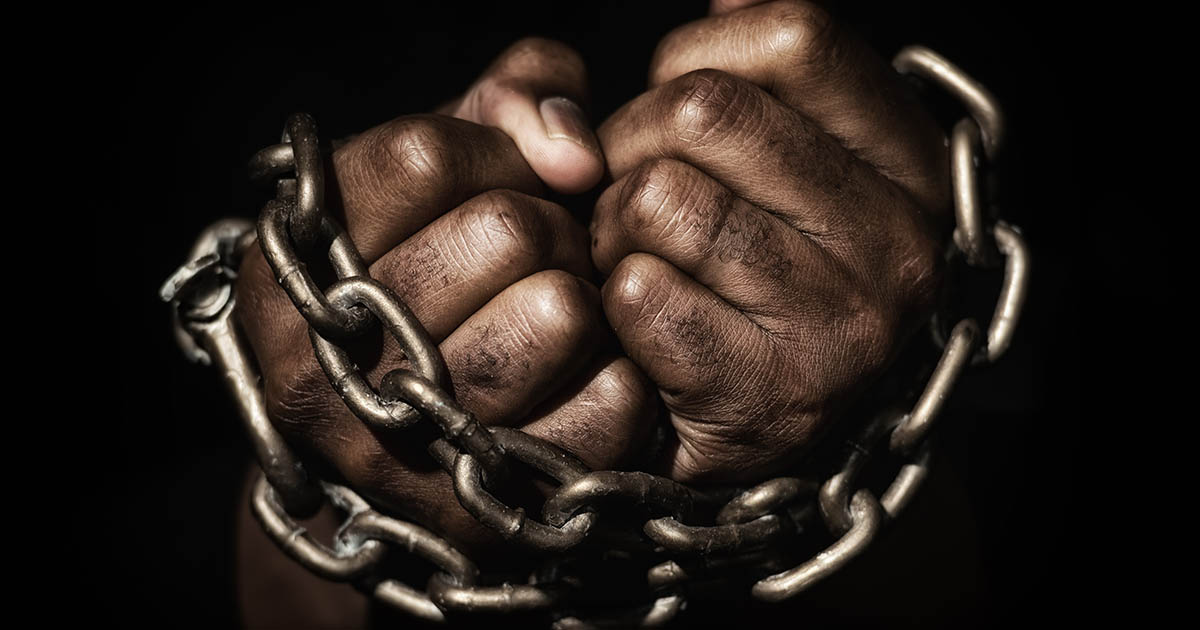

The standard American classroom version of slavery can be summarized in a few sentences: it happened in the South, it lasted until Lincoln freed the enslaved with the stroke of a pen, most Southerners owned plantations, the Civil War was fought over states’ rights, and when it was over, it was over. Almost every one of those ideas is wrong, or at minimum, a drastic oversimplification. They are not harmless misunderstandings. They shape policy debates, courtroom arguments, and dinner-table conversations about reparations, inequality, and what the country actually owes to its history.
The problem isn’t that Americans don’t care about this history. Most do, at least in the abstract. The problem is that the version most of us absorbed in school was filtered through decades of political compromise, regional sensitivity, and a determined effort to make an ugly story a little more palatable. Hollywood finished the job. The result is a set of slavery misconceptions American culture has treated as fact for generations, surviving long after historians corrected the record.
None of what follows is contested among serious historians. These are not fringe interpretations or ideological arguments. They are, simply, what the evidence shows.
1. The North Had Nothing to Do With Slavery
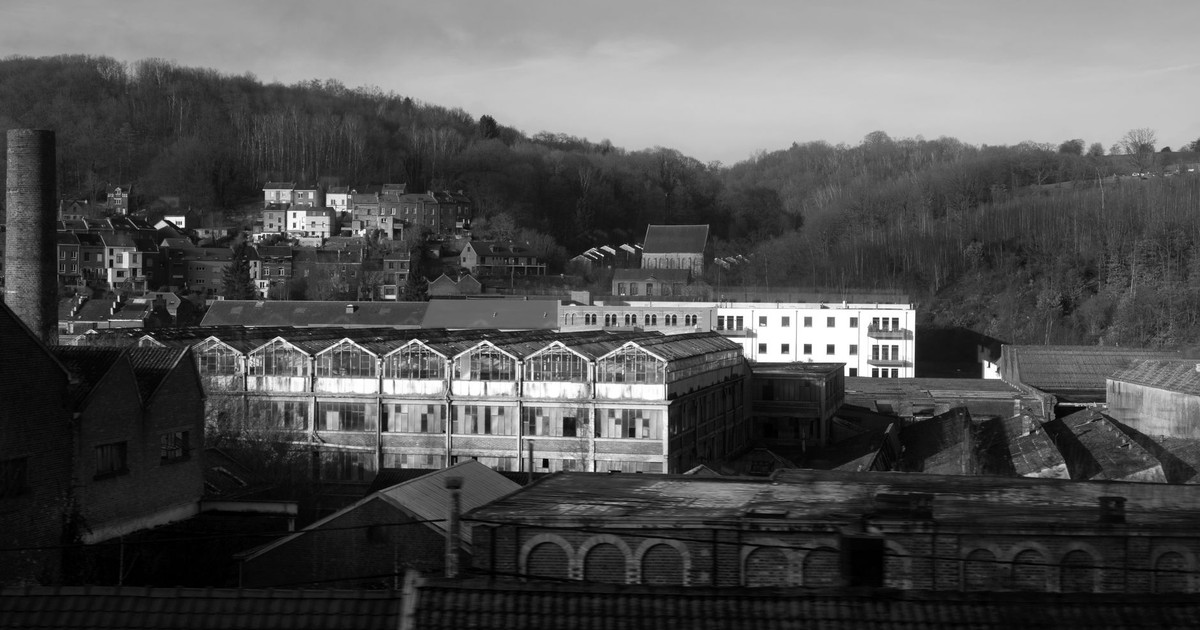
The mental image most people carry of American slavery is specific: a cotton plantation somewhere deep in Mississippi or Georgia, a white columned house in the distance, and a geography that places the North firmly on the right side of history. When most people think of slavery, they picture the American South. But slavery existed in all 13 British North American colonies, and the fact that it was more common in the South should not obscure the reality that African Americans were enslaved in both the mid-Atlantic and New England colonies as well.
In the North, slavery was most prominent in major port cities like New York and Philadelphia, where enslaved people worked on the docks and as artisans. The difference was scale and structure, not principle. Northern businessmen grew rich on the slave trade and investments in Southern plantations, and slavery was only abolished in New York in 1827 and in Connecticut in 1848. That is not ancient colonial history. That is within living memory of people who fought in the Civil War.
The North’s entanglement with slavery ran deeper than its own enslaved population. The cotton picked by enslaved people in Mississippi was shipped to textile mills in Massachusetts. The financing for Southern plantations came, in significant part, from Northern banks. According to HISTORY, Congress outlawed the African slave trade in 1808, but the domestic trade flourished, and the enslaved population in the United States nearly tripled over the next 50 years, reaching nearly 4 million by 1860, with more than half living in the cotton-producing states of the South. The North’s economy and the South’s economy were not separate systems. They were the same system.
2. The Civil War Was Fought Over States’ Rights
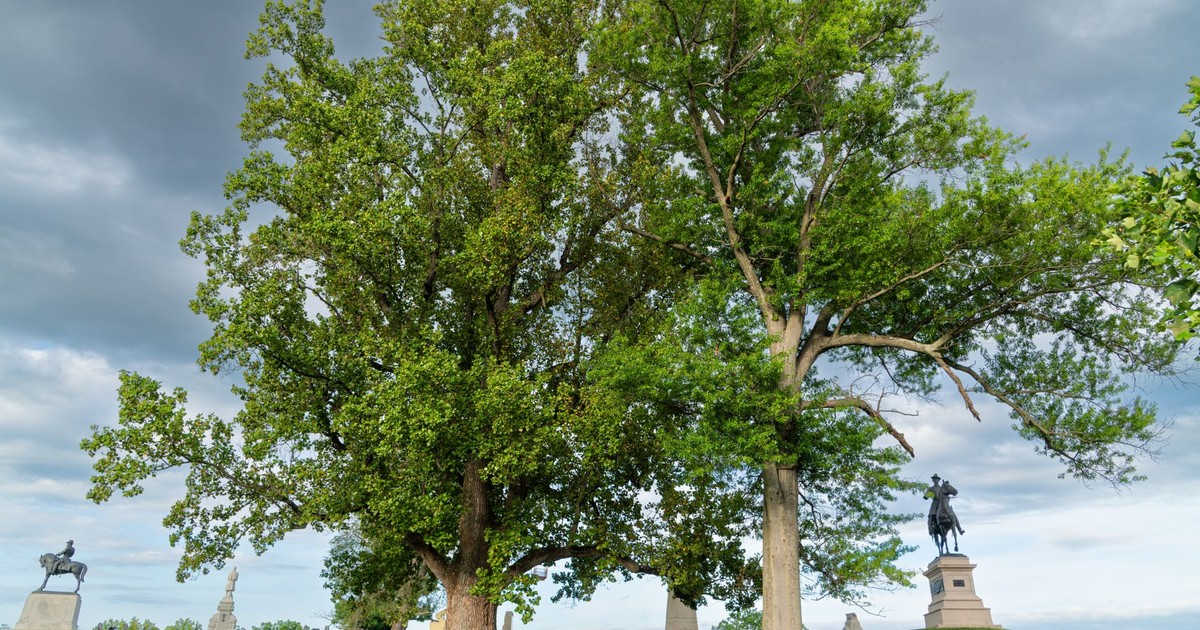
This is probably the most durable misconception of all, and it did not survive by accident. The “states’ rights” framing was a retrospective creation, promoted aggressively after the war by Confederate veterans and their descendants as a way to lend a constitutional dignity to what had been a defense of slavery. Anti-Northern sentiment in the South reached a boiling point when Abraham Lincoln won the 1860 election. The Southern states, believing Lincoln planned to abolish slavery at the federal level, issued declarations of secession explicitly framed around protecting the institution of slavery and formed the Confederate States of America.
Those declarations were not ambiguous. In South Carolina, the first state to secede, legislators declared that “an increasing hostility on the part of the non-slaveholding States to the institution of slavery” was a primary catalyst for their action. Mississippi’s declaration stated directly that its position was “thoroughly identified with the institution of slavery.” These were not documents buried in archives; they were the official, public explanations given at the time by the states that seceded.
As the other Confederate states followed South Carolina, the Confederacy developed a platform of “states’ rights” and “home rule” that aimed to preserve white supremacy and enslavement. The “states’ rights” argument arrived later, once the Confederacy had lost and its defenders needed a more acceptable story. It worked remarkably well.
3. Most Southerners Owned Enslaved People

The image of a planter class stretching from Virginia to Texas, every white family with its cotton fields and its enslaved workforce, is historically inaccurate. Not all Southerners owned enslaved people. Roughly 25 percent of all Southerners were slaveholders. One quarter of a population built and maintained a system so economically dominant that the other three-quarters organized their society, their politics, and ultimately their willingness to fight a war around it.
On one hand, it means the majority of white Southerners did not personally own enslaved people. On the other, the 25 percent figure is not evidence that slavery was marginal to Southern life. It is evidence of how completely a relatively small owning class shaped an entire civilization.
The wealth generated by enslaved labor was also staggering in ways that contemporary Americans rarely reckon with. By 1860, enslaved people represented the single largest capital asset in the entire American economy, worth more than all the country’s railroads and factories combined. That concentration of wealth was what the planter class was defending, and what the non-slaveholding white Southerner was told, repeatedly, to die for.
4. The Emancipation Proclamation Freed All Enslaved People
Abraham Lincoln issued the Emancipation Proclamation on January 1, 1863. The popular understanding is that this document freed enslaved people in the United States. The actual document did something considerably more limited. It declared enslaved people in Confederate states “to be then, thenceforward, and forever free,” which sounds sweeping, except that it applied only to states currently in rebellion against the Union, which means it applied precisely where the federal government had no ability to enforce it.
The war had begun as a struggle to preserve the Union, not a struggle to free the enslaved, but as the war dragged on it became increasingly clear to President Lincoln that the best way to force the seceded states into submission was to undermine their labor supply and economic engine, which was sustaining the South. The Proclamation was a military and political strategy as much as a moral declaration. It did not apply to enslaved people in the border states that had stayed in the Union, including Kentucky, Missouri, Maryland, and Delaware.
Lincoln’s Emancipation Proclamation freed more than 3 million enslaved people in the Confederate states by January 1, 1863, which prompted Black people to enlist in the Union Army in large numbers, reaching some 180,000 by war’s end. Full legal abolition across the entire country only came with the 13th Amendment in December 1865, months after the war had ended. Even then, the practical reality on the ground was far more complicated.
5. Enslaved People Passively Accepted Their Condition
One of the most persistent and damaging myths about American slavery is the idea that enslaved people were largely passive, accepting their condition with resignation or even contentment. This image was not accidental. The idea that Black people were powerless to resist their own enslavement is rooted in ugly stereotypes. In the 1830s, a white actor invented the character Jim Crow, a lazy and dim-witted Black slave, and cartoonish, dehumanizing figures like this spread through American culture, allowing white people to justify slavery by casting Black people as inferior and as contented servants.
The actual historical record is a catalog of resistance. Enslaved people resisted constantly, through every means available to them: work slowdowns, sabotage of tools and equipment, feigned illness, running away, the preservation of cultural and religious practices, and, when conditions reached a breaking point, armed rebellion. Nat Turner’s 1831 rebellion in Virginia, which killed around 60 white men, women, and children before being violently suppressed, was not an isolated incident. It was one entry in a long record that included the 1739 Stono Rebellion in South Carolina and the 1811 German Coast Uprising in Louisiana, which involved between 300 and 500 enslaved and free Black people marching on New Orleans before being crushed by militia and federal troops.
By focusing on resistance, educators reveal as false the myth that slavery was a benign institution and that enslavers were fundamentally kind. If either were true, the enslaved would not have resisted. The sheer reach and sophistication of the slave code, the elaborate system of laws designed to control enslaved people’s movement, literacy, and associations, says everything. You don’t build a legal apparatus that comprehensive to manage people who have accepted their condition.
6. The Domestic Slave Trade Was a Minor Feature of Slavery
Most Americans, when they think about the slave trade, think about ships crossing the Atlantic from West Africa. That trade was banned in 1808. What replaced it, and what the popular imagination largely ignores, was a massive internal American slave trade that continued right up to the Civil War.
In 1793, northerner Eli Whitney invented the cotton gin, a device that made it possible for textile mills to use the type of cotton most easily grown in the lower South. The invention brought about a robust internal slave trade. As the lower South became more established in cotton production, the region required more slave labor, which it received from upper South slaveholders looking to offload their surplus.
The human cost of this internal market was enormous. According to Encyclopedia Virginia, historians estimate that from 1820 to 1860, as many as two million enslaved African Americans were sold from one owner to another, with around 666,000 of those transactions moving people from the Upper South to the Deep South. This means that an enslaved person in Virginia in 1820 lived with the constant knowledge that they could be separated from their family and sold to a cotton plantation in Mississippi with almost no warning. The cruel separation of families was one of the most devastating features of slavery. The domestic trade was not a footnote. For many enslaved families, it was the central terror of daily life.
7. Only a Small Fraction of Africans Came to North America
The image of American slavery as the defining global story of the transatlantic slave trade is understandable, but it gets the scale of the trade significantly wrong. According to Slavery and Remembrance, for 366 years, European slavers loaded approximately 12.5 million Africans onto Atlantic slave ships, of whom about 11 million survived the Middle Passage to reach the Americas. Of those, roughly 500,000, or about 4.5 percent, were taken to mainland North America or what became the United States.
The vast majority of enslaved Africans were transported to the Caribbean and Brazil, where the mortality rate in sugar production was so extreme that planters relied on continuous new imports to replace the people they worked to death. The North American mainland, by contrast, had a self-sustaining enslaved population that grew through natural increase. Though Congress outlawed the African slave trade in 1808, the enslaved population in the United States nearly tripled over the following 50 years.
None of this diminishes the brutality of American slavery. The United States held, by 1860, the largest enslaved population in the Western Hemisphere, built not primarily on continuous importation but on a system of hereditary bondage so complete that children born to enslaved mothers were enslaved from birth, in perpetuity, with no legal recourse.
8. The Civil War Ended Slavery Immediately and Completely

Emancipation, in practice, was not a single moment. It was a slow, contested, and in many places violently resisted process that unfolded over years, not days. When slavery ended in the United States, freedom still eluded African Americans who were contending with the repressive set of laws known as the Black Codes. Widely enacted throughout the South following the Civil War, these laws both limited the rights of Black people and exploited them as a labor source. Life after bondage didn’t differ much from life during bondage for the African Americans subjected to the Black Codes.
This was by design, as slavery had been a multi-billion dollar enterprise, and the former Confederate states sought a way to continue this system of subjugation. Formerly enslaved people were prohibited from owning land, forced into labor contracts with their former enslavers, and subject to arrest for “vagrancy” if they refused. The legal architecture of slavery was dismantled, then rebuilt in a new form within months of the war’s end.
In the years following Reconstruction, the South reestablished many of the provisions of the Black Codes in the form of the so-called Jim Crow laws, which remained firmly in place for almost a century and were not finally abolished until the passage of the Civil Rights Act of 1964. The distance between 1865 and 1964 is 99 years. That is not ancient history. That is grandparents.
9. The Enslaved Were Mostly Agricultural Field Workers
The image of enslaved people working cotton or tobacco fields is accurate for a significant portion of the enslaved population, but it flattens a much more varied reality. Enslaved people worked in virtually every sector of the American economy, in roles that required considerable skill, knowledge, and expertise.
In the South, enslaved people worked as carpenters, blacksmiths, engineers, midwives, cooks, pilots of riverboats, and skilled tradespeople whose labor built the physical infrastructure of cities like Charleston, New Orleans, and Washington, D.C. The White House and the U.S. Capitol were built substantially by enslaved labor. In the North, enslaved people worked on the docks and as artisans in major port cities like New York and Philadelphia.
The “field hand” image, however accurate for many, allows people to underestimate the scope of what slavery actually was. It was not a single labor system confined to agriculture. It was the foundational economic institution of American society, present in its cities and ports, its homes and hospitals, its shipping lanes and construction sites. The wealth it generated did not stay in the South. Many northern businessmen grew rich on the slave trade and investments in Southern plantations.
10. The 13th Amendment Settled the Historical Debt
The 13th Amendment, ratified in December 1865, formally abolished slavery across the United States. The 14th granted citizenship. The 15th gave Black men the right to vote. A common assumption is that these amendments drew a legal line, that what came before was history, and that what came after was, at least in principle, a level playing field. The historical record does not support this.
Under Presidential Reconstruction, all land that had been confiscated by the Union Army and distributed to formerly enslaved people by the army or the Freedmen’s Bureau reverted to its prewar white owners. The promise of land redistribution, which would have given formerly enslaved people an economic foundation after generations of uncompensated labor, was revoked within months of the war’s end. As a result of Presidential leniency, many Southern states in 1865 and 1866 successfully enacted a series of Black Codes designed to restrict freed Black people’s activity and ensure their availability as a labor force.
After Reconstruction ended, many of the Black Codes’ provisions were reenacted as Jim Crow laws, which lasted until 1964. The Black Codes had been designed to replace the social controls of slavery that the Emancipation Proclamation and 13th Amendment had removed, and to assure the continuance of white supremacy. The gap in generational wealth between Black and white Americans that researchers document today traces a direct line back through Jim Crow, through the Black Codes, and through two and a half centuries of uncompensated labor. The 13th Amendment was a legal turning point. It was not a reset.
What This Actually Means
These are not obscure historical corrections that only matter to academics. The difference between understanding American history and misunderstanding it has real consequences for how people think about everything from housing policy to school curriculum to who owes what to whom.
Some of these slavery misconceptions American culture has carried for generations were not innocent errors. They were constructed, maintained, and spread with purpose. The “states’ rights” framing of the Civil War didn’t survive because it was persuasive on the merits. It survived because it was aggressively promoted by people who needed a more acceptable story. The same is true of the passive, contented enslaved person. The same is true of the North as an innocent bystander. These myths had architects and beneficiaries.
Getting the history right is not about assigning collective guilt or relitigating grievances for their own sake. The myths covered here weren’t accidents of imperfect record-keeping. They were choices, made by people with something to protect, and repeated by a culture that found them more comfortable than the alternative. Some of these patterns go back further than the Civil War itself. Naming that isn’t a solution, but it is where any honest conversation about what America was, and what it still carries, has to start.
AI Disclaimer: This article was created with the assistance of AI tools and reviewed by a human editor.