
Walmart’s parking lots get full for a reason. The retailer has built its entire identity around the promise of lower prices, and for a lot of things on your list, that promise holds. But run the unit-price math on certain categories and the picture shifts fast. Some Walmart product prices that look like deals at a glance are actually more expensive per ounce, per pod, or per sheet than what you’d pay at a warehouse club, a dollar store, or even your regular grocery chain.
The trap isn’t that Walmart is dishonest about pricing. It’s that the framing works. A $3.98 bottle of laundry detergent looks cheap standing next to a $22 jug at Costco. Pull out a calculator and compare what each one costs per fluid ounce, and you start doing a different kind of math. This is the math Walmart counts on most shoppers skipping.
Most of us do skip it. We’re moving fast, kids in tow, list in hand, and the sticker price is what registers. What follows are the categories where that instinct costs you real money, backed by current price data.
Spices: The Per-Ounce Trap
The spice aisle is where Walmart’s “everyday low prices” reputation takes one of its biggest hits, at least when you compare it to competitors selling the same ingredient in larger volumes. Walmart’s McCormick garlic powder costs 95 cents per ounce, while Aldi’s Stonemill garlic powder runs just 40 cents per ounce, according to a 2025 analysis by FinanceBuzz. That’s not a marginal difference. At 95 cents versus 40 cents per ounce, you’re paying more than double for the same pantry staple.
Small spice jars carry a built-in price premium. The packaging, the shelf space, the single-unit format – all of it adds cost that ends up in the sticker price. International grocery stores and discount chains like Aldi buy and sell in volumes that strip most of that out. While Walmart charges $9 for a two-pack of a common seasoning blend, Dollar Tree offers the same quantity for $2.50, a 72% savings. Buy your everyday spices at Aldi or an international grocery store, and save Walmart for everything else.
Coffee Pods: Paying for Convenience Twice

The K-Cup format already costs more per cup than ground coffee brewed in a traditional pot. Buying those pods at Walmart adds another layer of cost on top. Coffee beans have driven much of that increase: supply disruptions from climate-related harvest failures in major growing regions have pushed costs up across the board, and those increases have landed squarely on the shelf price.
If you’re a coffee drinker, Costco or an online subscription service will give you a lower price per pod than Walmart does. A bulk purchase at Costco, or a subscription service that ships on a schedule, spreads the cost out in a way that a single box of pods from Walmart simply can’t match.
Snack Variety Packs: The Convenience Markup
The mixed-snack variety pack is sold on the idea that variety is worth paying for. In terms of Walmart product prices, the data suggests you’re paying a real premium for it. Walmart’s variety packs of snacks typically run more expensive per ounce than a larger single-item pack, averaging around $11 per pack. You’re paying for the assortment, the individual portion packaging inside the outer package, and the marketing that goes with it.
Buy the large single-bag version of whatever snack your household actually goes through. If variety matters, pick two or three separate large bags. The per-ounce cost drops immediately, and you get more of what you actually like instead of the three flavors no one touches at the bottom of the box.
Fresh Herbs: Small Packet, Big Price

A small plastic clamshell of fresh cilantro or parsley at Walmart looks like a reasonable spend until you realize how little is actually inside and how quickly it wilts. Walmart’s small herb packets can be surprisingly expensive for what they contain, with international warehouse stores offering larger quantities at better prices compared to the $1.50-average per packet at Walmart. Some shoppers save more by growing their own herbs at home year-round.
A four-inch pot of basil from a garden center costs about the same as one of those plastic packs and keeps producing for weeks. Rosemary, thyme, and mint are even harder to kill. If growing your own isn’t practical, a Latin or Asian grocery store will typically sell a much larger bunch of cilantro, parsley, or green onions for less than Walmart’s clamshell price. Warehouse clubs also carry larger herb bundles that undercut Walmart on a cost-per-gram basis.
Bottled Water: The Format Penalty

Bottled water is a category where the size of the purchase determines everything. Walmart’s per-bottle price on a standard case of water is reasonable for a grocery store, but it doesn’t compete with bulk pricing at warehouse clubs. A spring 2026 price comparison by Consumer Reports, which surveyed grocery baskets across dozens of retailers in six cities, found that Costco’s average prices ran 21% lower than Walmart’s, with bottled water among the clearest category wins for the warehouse club due to its Kirkland Signature sourcing and focused buying strategy.
For most households, a filtered water pitcher or a faucet-mounted filter eliminates the per-bottle cost entirely and produces better-tasting water than most plastic-bottled options. If bottled water is genuinely necessary, warehouse club pricing beats Walmart’s individual-case price consistently.
Laundry Detergent: Bulk Always Wins

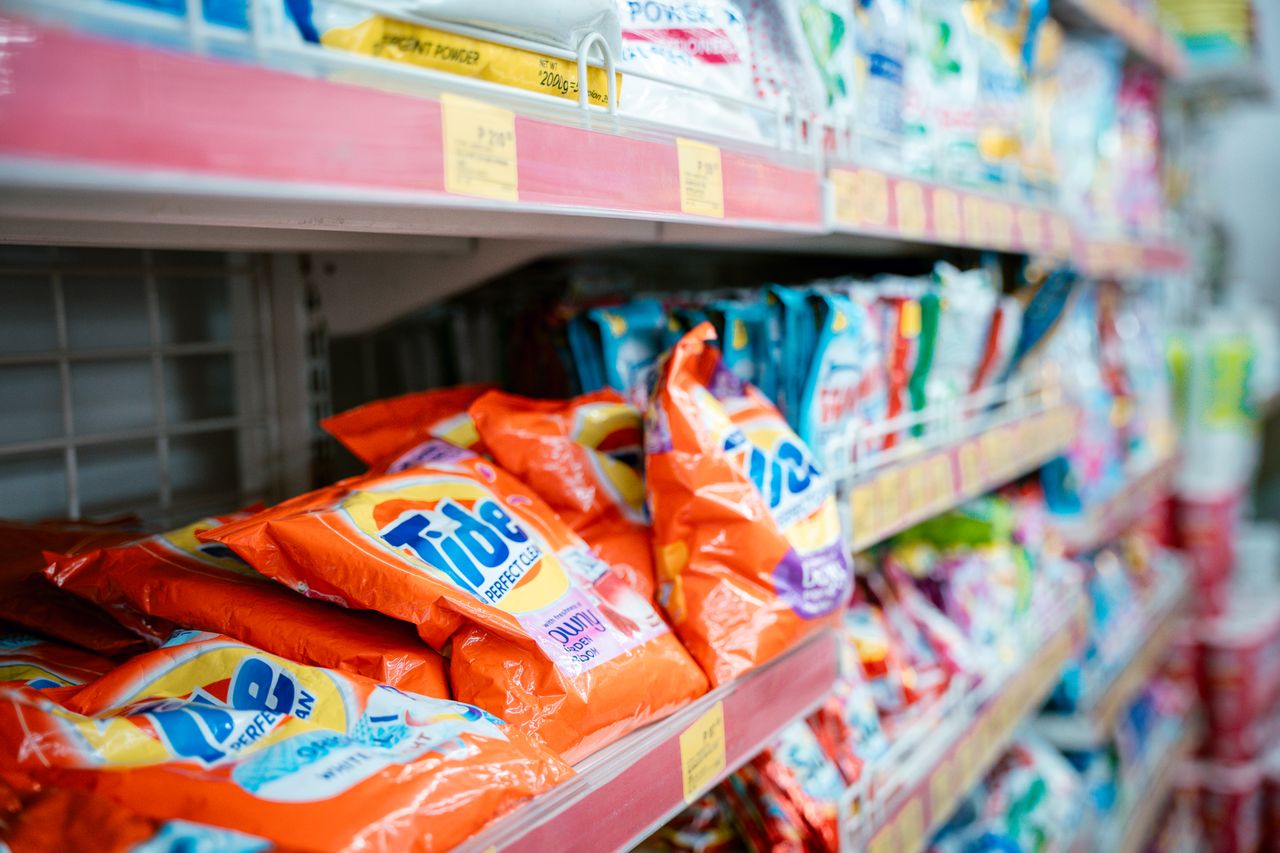
Laundry detergent is one of those products where the format matters more than the brand. A mid-sized bottle at Walmart looks cheap. Buying in bulk from a warehouse club reframes the entire calculation. Costco and Sam’s Club both offer substantially lower per-ounce costs than conventional grocery stores on name-brand detergents, and the gap widens when you account for what shrinkflation has done to Walmart shelf sizes.
NPR’s January 2026 price audit, which tracked 114 items across a Georgia Walmart over multiple years, identified Tide as a clear example: the bottle shrank from 100 ounces pre-pandemic to 92 ounces in 2022 with a price increase, then to 84 ounces in 2024, and down again to 80 ounces in late 2025, while the label kept promising 64 loads of laundry throughout. Procter & Gamble called it efficiency. Whatever you call it, a single large bulk purchase at Costco or Sam’s Club gives you more detergent for less money and fewer trips.
Paper Towels: Check the Sheet Count
Paper towels are sold on roll count, not sheet count, which makes accurate comparison deliberately difficult. A 12-pack at Walmart and a 12-pack at a warehouse club are not the same product because the rolls themselves are different sizes. Manufacturers stealthily shrank products like paper towels during the post-pandemic inflation peak while charging the same or slightly more, so the nominal price on the shelf tells you almost nothing useful.
Costco and Sam’s Club consistently offer better value when paper towels are bought in bulk, though roll sizes vary considerably depending on the brand, making unit price comparison essential. The only honest comparison is cost per 100 sheets, not cost per roll. Run that number and the warehouse clubs reliably come out ahead on any name-brand paper towel.
Pre-Cut Fruit: The Convenience Tax in Produce
Pre-cut fruit containers are one of the clearest examples of paying for labor. The fruit itself hasn’t changed. Someone just cut it for you, and that service gets added to the sticker price. Walmart’s pre-cut fruit runs between $3 and $10 per container, depending on the variety and the size. A whole pineapple, a bag of whole oranges, or a bunch of grapes will consistently cost less per edible ounce than the pre-cut version sitting in the refrigerated section next to it.
Buying pre-cut fruit to save time while also trying to save money sets those two goals against each other. If you genuinely won’t eat the fruit unless it’s pre-cut and ready to grab, the convenience markup pays for itself in reduced food waste. But if convenience is your reason and cost is also your concern, that trade-off doesn’t add up.
Read More: Costco vs Walmart, Which Rotisserie Chicken Wins? And Other Grocery Comparisons
Greeting Cards: Dollar Tree Wins, Clearly
Walmart greeting cards are cheaper than what you’d pay at CVS or Walgreens, which makes them feel like a deal by comparison. Greeting cards are one of those sneaky budget busters that can really add up, and retail experts point out that greeting cards are cheaper at the dollar store than at Walmart, where Dollar Tree lets you get two for $1. A Walmart birthday card typically costs $3 to $7. A Dollar Tree card costs 50 cents. The card gets thrown away after the party regardless of which store it came from.
Electronic Accessories: Amazon and Warehouse Clubs Beat Walmart Consistently
Phone chargers, USB cables, earbuds, screen protectors, HDMI cables, and adapter dongles are all categories where Walmart’s in-store pricing gets undercut by Amazon’s third-party marketplace. Even on specific named electronics, warehouse clubs beat Walmart’s pricing: Costco sold AirPods 4 for $138.99 while Sam’s Club had them at $169, according to GOBankingRates’ August 2025 comparison. On commodity accessories like cables and adapters, Amazon’s volume and seller competition push prices even lower.
Selection compounds the gap. Walmart carries a curated range of accessories at in-store prices designed for walk-in convenience. Amazon’s third-party sellers compete on price down to the penny. If you need a cable or a charger today and can’t wait for shipping, Walmart serves the purpose. If you can wait two days, the price difference is usually worth it.
What the Price Tag Isn’t Telling You

Walmart’s pricing advantage is real in many categories. The retailer consistently beats traditional grocery chains on staples like canned goods, store-brand cereals, and basic personal care items. Walmart doesn’t overcharge as a rule. A reputation for low prices can, though, make shoppers stop looking, and that’s when the math stops working in their favor. Retail experts note that any store can charge less for certain items for reasons other than a genuine decline in costs – some retailers use selected products as loss leaders while making up the difference on others with higher margins.
Some walmart product prices are genuinely competitive. Others are carried by the assumption that Walmart must be cheapest, even when the unit-price data says otherwise. The number that tells you whether a deal is real isn’t on the front of the package. It’s in the ounces-per-dollar column you usually don’t calculate because you’re already in the next aisle.
AI Disclaimer: This article was created with the assistance of AI tools and reviewed by a human editor.