
The argument that happens most reliably in history isn’t about which battles were fought or which kings made which mistakes. It’s about who gets remembered and who doesn’t. The people who reset the terms of daily life, who ended a disease, stopped a war, or made the technology in your pocket possible, often did their work in total obscurity. Sometimes the record was corrected decades later. Sometimes it wasn’t.
The erasure follows patterns that are easy to see once you start looking. Women’s work was attributed to male colleagues. Black scientists’ breakthroughs got published under white supervisors’ names. Working-class inventors couldn’t afford the lawyers. The stories got simplified, and the people who were complicated, inconvenient, or just not the right symbol for the moment got left out. Twelve people whose stories are specific enough and strange enough that once you know them, you can’t quite accept the tidied-up version of history anymore.
Some of these names have started to get their due in recent years. Others are still footnotes. All of them deserve to be in the main text.
1. Hedy Lamarr
She was one of the most photographed faces in Hollywood during the 1940s, starring in films like Samson and Delilah and Ziegfeld Girl, and the entertainment press had no interest in anything else she might have been doing. What she was doing, in her spare time, was inventing the foundation for modern wireless communication.
During World War II, Lamarr developed a “Secret Communication System” together with avant-garde composer George Antheil. The system used the concept of frequency hopping to guide torpedoes in a way that was unjammable. The invention reduced the risk of detection or jamming of radio-controlled torpedoes by using multiple radio frequencies to broadcast a signal, switching frequencies at split-second intervals in a seemingly random pattern, so that if both the sender and receiver hopped frequencies at the same time, the signal was clear.
Lamarr and Antheil never profited from their invention during their lifetimes. When the patent was issued in 1942, it listed her married name at the time, Hedy Kiesler Markey. The technology was later used for military communications and became a precursor to modern technologies including Bluetooth and Wi-Fi. The Electronic Frontier Foundation jointly awarded Lamarr and Antheil its Pioneer Award in 1997, and she also became the first woman to receive the Invention Convention’s Bulbie Gnass Spirit of Achievement Award. Although she died in 2000, Lamarr was inducted into the National Inventors Hall of Fame for the development of her frequency hopping technology in 2014, more than seven decades after the original patent was filed.
2. Alice Ball

Alice Ball was 23 years old and working as a chemistry instructor at the College of Hawaii when she solved a problem that had defeated researchers for decades. The National Women’s History Museum notes that Ball became the first woman and first African American to earn a master’s degree in science from the College of Hawaii in 1915, after completing her studies in pharmaceutical chemistry the year prior.
Her technique, known as the “Ball Method,” isolated the ethyl esters of the fatty acids in chaulmoogra oil, allowing the treatment to be easily injected and absorbed by the body. It was the first effective treatment for leprosy, alleviating symptoms and halting the disease’s progression.
Shortly after her discovery at the University of Hawaii, Ball died at the age of 24 and was unable to publish her findings. The president of the university continued her work, publishing the findings as his own, without giving credit to her. Her name resurfaced only because a 1922 medical paper, written by a doctor named Harry Hollmann, referred to the process as the “Ball Method,” a small act of attribution that kept her from disappearing entirely. The University of Hawai’i later installed a plaque in her honor, established the Alice Ball Scholarship for those pursuing graduate degrees in chemistry, designated February 28th as Alice Ball Day, and dedicated a chaulmoogra tree to her honor. The plaque went up in 2000, 84 years after her death.
3. Ignaz Semmelweis

In the 1840s, dying in childbirth at a Viennese teaching hospital was almost expected. The First Obstetric Clinic at the Vienna General Hospital had a mortality rate from puerperal fever, a serious infection of the reproductive tract after delivery, that ran nearly 10 percent on average from 1840 to 1846. Women who found out they’d been admitted to that particular ward sometimes begged to give birth in the street instead.
In 1847, Ignaz Semmelweis identified the cause of childbed fever. His observation was straightforward: the doctors-in-training in the fatal ward went directly from performing autopsies to examining pregnant women, without washing their hands. The midwife-run ward, where no autopsies were conducted, had a fraction of the deaths. After he ordered students to wash their hands with chlorinated lime solution before every examination, the mortality rate in the First Clinic fell to around one percent.
His colleagues in the medical community refused to believe that they were causing patients to die through the transmission of infectious material. The germ theory of disease hadn’t been established yet, and the idea that respectable doctors were killing their patients by not washing their hands was professionally insulting in a way that apparently mattered more than the data. After struggling for years to promote his hand-disinfection policies, Semmelweis was committed to an asylum at the age of 47, and he died 14 days later. Historians believe he was beaten by guards. He was right about everything. Nobody apologized.
4. Claudette Colvin
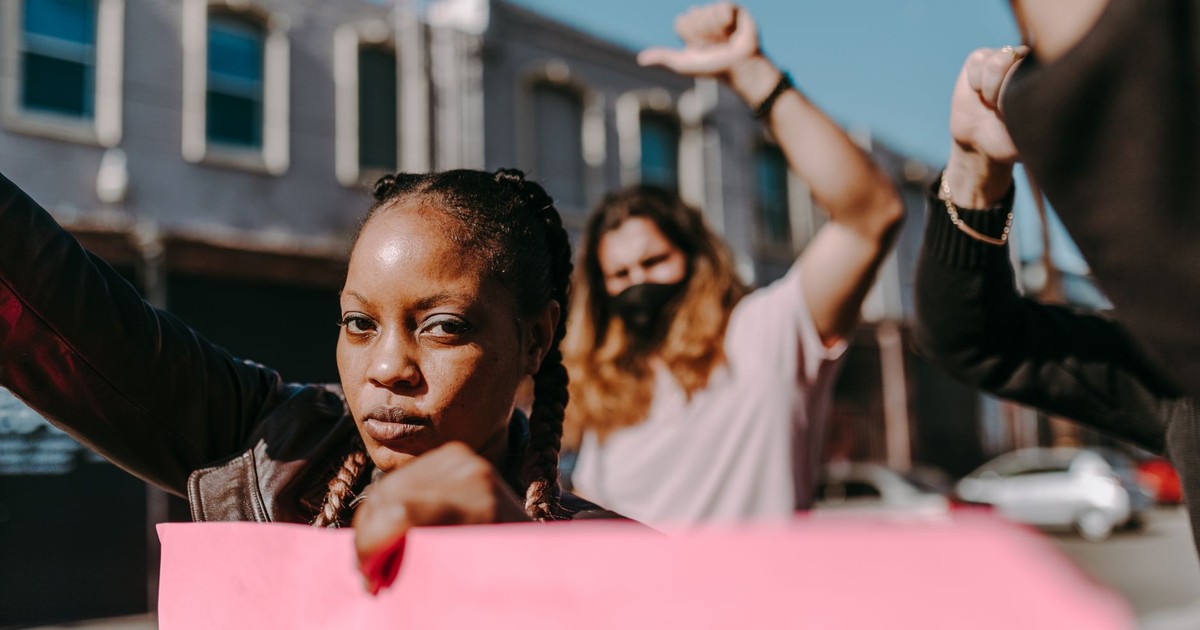
A full nine months before Rosa Parks’s famous act of civil disobedience, 15-year-old Claudette Colvin was arrested on March 2, 1955, for refusing to give up her seat on a segregated Montgomery, Alabama bus. Colvin was traveling home from school when the bus driver ordered her, along with three fellow Black students, to give up their row of seats to a white passenger. Her friends obliged. She didn’t.
She was handcuffed, dragged off the bus, and charged with violating segregation laws, disturbing the peace, and assaulting a police officer. She pleaded not guilty. Civil rights leaders, including the NAACP, were aware of what had happened but concluded that a pregnant 15-year-old was not the right symbol for the test case they were planning. Rosa Parks, who was older, employed, and had no such complications, became that symbol nine months later when she, too, refused to move.
Colvin went on to become one of four Black plaintiffs in a successful federal lawsuit against the city’s bus system, Browder v. Gayle, which reached the Supreme Court and ended bus segregation in Montgomery. That ruling contributed to the broader dismantling of segregated public transit in the United States. But Colvin’s role was almost entirely invisible to the people whose lives it changed. She spent decades working as a nurse’s aide in New York.
5. Rosalind Franklin

The double-helix structure of DNA is one of the most famous scientific images in history. James Watson and Francis Crick published the discovery in 1953 and received the Nobel Prize in 1962. The person whose X-ray crystallography work made the discovery possible, a precise, technically demanding photograph known as Photo 51, was a British chemist named Rosalind Franklin, and she received no prize, no shared credit in the original paper, and no acknowledgment in Watson and Crick’s Nobel lecture.
Franklin had produced Photo 51 at King’s College London through painstaking experimental work. Her colleague Maurice Wilkins showed the image to Watson without her knowledge or permission. Watson later wrote in his memoir The Double Helix that he immediately understood its significance. Franklin died of ovarian cancer in 1958, four years before the Nobel was awarded. Since the prize isn’t given posthumously, the question of whether she would have been included became moot. Watson’s memoir, published in 1968, described Franklin in terms that historians have since characterized as dismissive and demeaning. Her central contribution to one of the most important discoveries in the history of science went largely unacknowledged until decades after her death.
6. Nicholas Winton

In the months before World War II erupted across Europe, a 29-year-old British stockbroker named Nicholas Winton canceled a ski trip and traveled to Prague instead. What he found there were thousands of Jewish children whose parents understood, with increasing clarity, that they were running out of time. Winton organized what became known as the Kindertransport, a series of trains that carried children out of Czechoslovakia to safety in Britain.
Between March and August 1939, Winton arranged the rescue of 669 children, finding British families willing to take them in, forging documents when necessary, and navigating bureaucracies that had little interest in helping. He never spoke publicly about what he had done. His wife found a scrapbook in their attic in 1988, nearly 50 years later, containing the names and photographs of every child. That same year, a BBC program called That’s Life! reunited Winton, then in his late 70s, with a studio audience of survivors and their descendants. He had no idea they were there. He was knighted in 2003 and died in 2015 at age 106. He outlived his own secret by nearly three decades.
7. Mary Anning
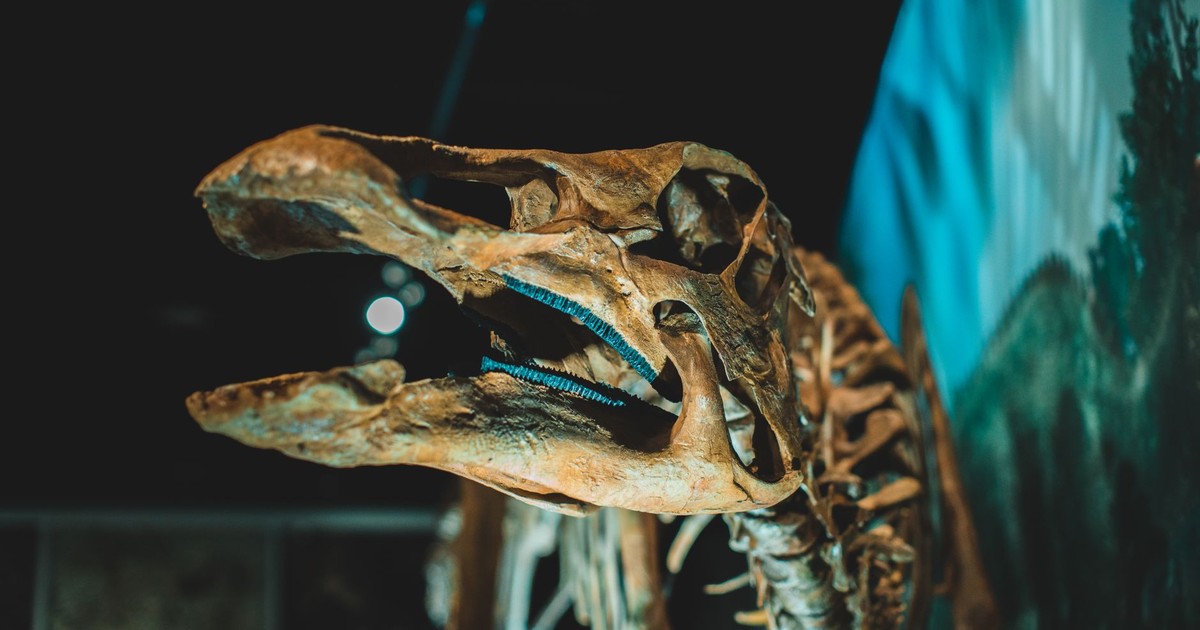
In the early 19th century, a working-class woman from Lyme Regis on the Dorset coast was doing something that would shape the entire field of paleontology. Mary Anning, who had received almost no formal education, was excavating fossils from the cliffs near her home, fossils that would rewrite the scientific understanding of prehistoric life.
Anning discovered the first correctly identified ichthyosaur skeleton in 1811, the first two plesiosaur skeletons ever found, and a pterosaur, among many other significant finds. She did not know how to read Latin, which meant she couldn’t access most of the scientific literature about her own discoveries. The specimens she found were purchased by wealthy collectors and exhibited in London museums; the papers written about them were authored by men who had bought or studied her finds. She was not a fellow of the Geological Society of London, women weren’t admitted, and she was not invited to the meetings where her fossils were discussed. Charles Dickens wrote about her in 1865, noting that she had “contributed more to science than the world is aware.” She had contributed more than the scientific establishment was willing to say out loud.
8. Vasili Arkhipov

On October 27, 1962, at the height of the Cuban Missile Crisis, an American aircraft carrier and its destroyer escorts began dropping practice depth charges on a Soviet submarine called B-59. The submarine had been underwater for days, had lost contact with Moscow, and its crew had no idea whether nuclear war had already started above the surface. Cut off from the outside world in conditions where temperatures inside the sub reached up to 50°C, the crew feared they were under attack and that nuclear war had broken out. The captain, Valentin Savitsky, gave the order to arm the submarine’s nuclear torpedo.
On each submarine, the eventual decision to launch the nuclear torpedo required the consent of the commander and the political officer, but on the B-59, the consent of the commander of the entire squadron, Arkhipov, was also required. Two of the three agreed. Arkhipov refused. He eventually persuaded Captain Savitsky to surface amid U.S. Navy vessels and await orders from Moscow. No one on the U.S. side knew at the time that the Soviet submarines were nuclear-armed.
The phrase most associated with Arkhipov, attributed to Thomas Blanton, director of the National Security Archive at George Washington University, is that he was “the man who saved the world.” He died in 1998. Russia gave him a small posthumous recognition in 2020. History, in its typical way, nearly moved on without him.
9. Chien-Shiung Wu

Theoretical physicists Tsung-Dao Lee and Chen-Ning Yang received the 1957 Nobel Prize in Physics for proposing that the law of parity, the assumption that physical processes behave identically when their spatial coordinates are mirrored, might not always hold. The experiment that actually proved their theory was designed and conducted by a Chinese American physicist named Chien-Shiung Wu at Columbia University. She received no prize.
Wu led a team of scientists from Columbia and the National Bureau of Standards in Washington, DC, working at temperatures close to absolute zero to study the beta decay of cobalt-60. Her experiments, which utilized radioactive cobalt at near absolute zero temperatures, proved that identical nuclear particles do not always act alike, but Wu’s work was not acknowledged when Lee and Yang received the Nobel.
Wu had done the experimental heavy lifting that transformed a theoretical proposal into a verified scientific result. As Physics Today has documented, many in the physics community say Wu deserved more accolades in her lifetime. She later received the Wolf Prize in Physics in 1978, the first woman to do so, and was the first living scientist to have an asteroid named after her. Her omission from the Nobel has been noted by colleagues and historians for decades, and her story has become one of the defining examples of how experimental physics work, especially by women, has been systematically undervalued.
10. Harriet Tubman’s Scout Work
Most people know Harriet Tubman as the conductor of the Underground Railroad, the woman who made 13 missions into slave territory and guided roughly 70 people to freedom. That story is true and extraordinary. The less-told chapter of her life is the one during the Civil War, when the Union Army recruited her to lead one of the first large-scale military raids conducted by American forces, a raid she planned herself using intelligence she had gathered from enslaved people and her own network of scouts.
On the night of June 2, 1863, Tubman guided Colonel James Montgomery and around 150 Black Union soldiers up the Combahee River in South Carolina, navigating by her intelligence of Confederate troop positions and torpedo placements. The raid liberated more than 700 enslaved people in a single night. Tubman was the first woman to lead an armed military assault in American history, that specific fact is historically documented and widely noted by military historians, and it appears in almost no textbook written before the 1990s. She applied for a pension for her military service for decades. She received it in 1899, 36 years after the raid, and only as the widow of a veteran, not as a veteran herself.
11. James Harrison
The vast majority of people who know the name James Harrison know it in connection with a single fact: he donated blood plasma 1,173 times over the course of 60 years, from 1954 until 2018, when he retired at age 81. The reason that number matters is that Harrison had a rare antibody in his blood, anti-D immunoglobulin, that became the core ingredient in a treatment called Rh immunoglobulin, used to prevent a condition called hemolytic disease of the fetus and newborn. Without treatment, this condition can destroy the red blood cells of a fetus whose blood type is incompatible with its mother’s, causing miscarriage or severe illness.
Harrison’s plasma, which had a unique and exceptionally high concentration of the needed antibody, was used to manufacture the treatment that became standard in Australia for Rh-negative pregnant women. The Australian Red Cross estimated that his donations helped save more than 2.4 million babies, including Harrison’s own granddaughter. He is well-known in Australia, where he was named a National Living Treasure, but outside of occasional viral news stories he has received almost none of the international recognition that the scale of his contribution would seem to warrant.
12. Wang Zhenyi

Wang Zhenyi was a Chinese scientist and poet who lived from 1768 to 1797, dying at 29. In those 29 years, she produced mathematical and astronomical work that would have been remarkable in any era. She wrote accessible explanations of the movements of the planets, of equinoxes, of the apparent size changes of the moon, and provided one of the clearest early Chinese accounts of lunar eclipses, explaining the phenomenon through observation rather than mythology at a time when most explanations were still rooted in folklore.
She taught herself mathematics from books she found in her grandfather’s library. She built a model to demonstrate how lunar eclipses work, using a lamp as the sun, a mirror as the moon, and a round table as the earth, specifically to make the concept accessible to people who lacked a formal education. She believed knowledge should not be confined to men or to the wealthy, a position she made explicit in her writing. She published work on algebra, geometry, and trigonometry, and wrote essays arguing directly for the equal intellectual capacity of women. Wang Zhenyi gets cited in histories of women in science, but she deserves a place in world history, full stop.
Read More: 12 African American Civil War Heroes Who Changed History
The Names We Keep Forgetting
History doesn’t erase people randomly. It erases people along very predictable lines. Women’s work goes to men. Experimental work goes to theorists. Black scientists’ work goes to white colleagues. Working-class discoverers can’t fund the publications. The inconvenient activists get sidelined in favor of more palatable ones. And then the tidied-up story calcifies, gets into the textbooks, gets repeated enough times that the erasure starts to look like accuracy.
Every person on this list is real, documented, and verifiable. Claudette Colvin’s name started appearing in textbooks only in recent decades. Alice Ball’s plaque went up in 2000, 84 years after her death. Vasili Arkhipov remains almost entirely unknown outside of arms-control circles and Cold War historians. The pattern isn’t accidental. It’s the predictable result of who had power over the record and who didn’t. Some of these corrections are still happening. Others haven’t started yet. And in the meantime, the wrong names stay on the statues.
AI Disclaimer: This article was created with the assistance of AI tools and reviewed by a human editor..