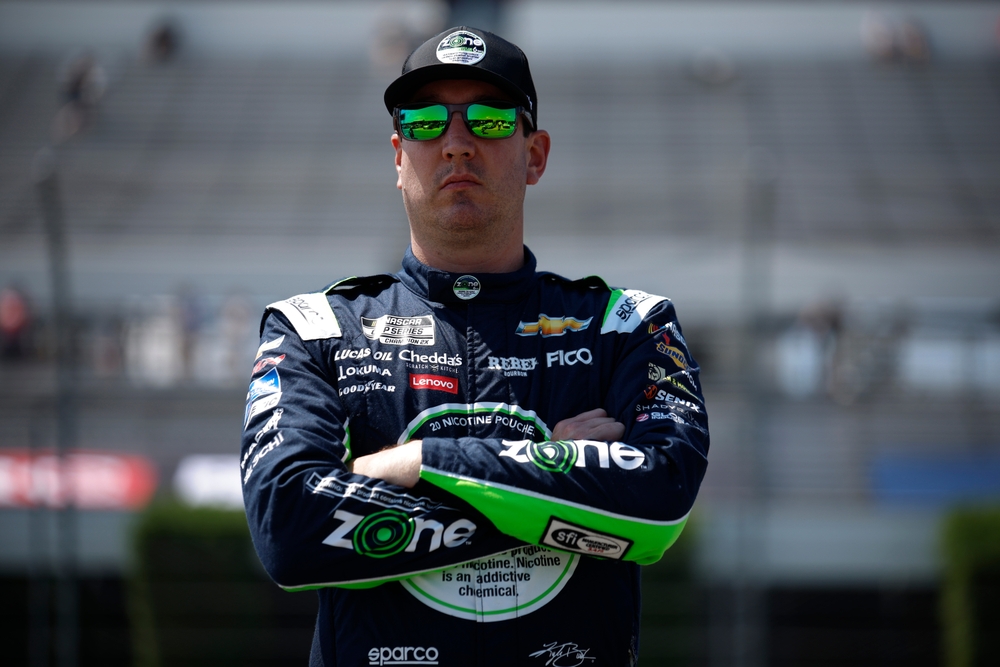

Kyle Busch was six days away from the Coca-Cola 600 at Charlotte Motor Speedway. He had just won a NASCAR Craftsman Truck Series race at Dover on May 15 – his 69th career Truck Series victory, a record that belongs to no one else – and by any visible measure, he was still competing at a level that made you forget he was 41. Then, on the afternoon of May 20, someone at the General Motors Charlotte Technical Center in Concord, North Carolina, called 911.
In that call, a man told the dispatcher that the person he was calling about was on the bathroom floor, awake but in distress, coughing, short of breath, and very hot. The caller also asked that medics arrive without their sirens, and directed them to a discreet entrance, with someone waiting outside to meet them. The following afternoon, Kyle Busch, two-time NASCAR Cup Series champion and one of the sport’s greatest drivers, died. He was 41.
The Busch family later released a statement saying that the medical evaluation concluded severe pneumonia had progressed into sepsis, resulting in rapid and overwhelming associated complications. For millions of people who had watched Busch race competitively just days earlier, the announcement was almost impossible to process. But for at least one doctor who followed the story closely, what happened wasn’t just tragic. It was, in his assessment, entirely avoidable.
A Sinus Cold That Nobody Took Seriously Enough
Word of Busch’s death came 11 days after he had radioed into his crew near the end of a Cup Series race at Watkins Glen, New York, asking a doctor to give him a “shot” after he finished. According to the TV broadcast, he had been struggling with a sinus cold that was worsened by the intense G-forces and elevation changes at the road course.
He was in the middle of his 22nd Cup season, and at Watkins Glen he finished eighth – his best result of the season. In the middle of that race, Busch complained over his radio of a sinus issue and even requested a doctor be brought to his team bus after the race. He then went on to race again the following weekend, winning at Dover. From the outside, he seemed to be managing whatever he was dealing with. In reality, the infection was moving.
Sports injuries specialist Dr. Jesse Morse, speaking in a video posted to X on May 24, said: “It sounds like he suffered a sinus infection, about two-ish weeks ago, that he was dealing with in that initial race when he called in. But that sinus infection somehow evolved to become pneumonia, and that pneumonia eventually progressed to what is called sepsis, and that is what killed him.”
Dr. Morse suggested that Busch’s condition was likely a case of “walking pneumonia” – the kind that can linger for weeks without the person fully appreciating how sick they are. It’s the kind of illness that lets you push through. You feel rough, not destroyed. You keep going because you can still go. And in Busch’s case, he could still go well enough to win a race.
Why Kyle Busch’s Death Was ‘Totally Preventable’
The correct protocol at the point when Busch was requesting medical help at Watkins Glen, according to a Heavy.com report on Dr. Morse’s analysis, was hospital admission with intravenous antibiotics and proper monitoring. Had that happened, it would have been “a nothing story in 10 days.” Instead, Busch’s medical team allowed him to continue his full racing schedule despite the active infection.
Morse called it “a totally preventable situation,” pointing to alarming symptoms described in the newly released 911 call details. His comments quickly ignited debate online because they suggested several warning signs may have been overlooked in the hours before Busch collapsed. Morse said it was “extraordinary” that Busch was able to compete and win while dealing with such a severe illness, but argued that because he was able to power through it, he didn’t get the medical treatment he needed. That’s the double edge of athletic resilience. The same capacity to tolerate discomfort that makes a world-class athlete exceptional in competition can mask the signals that would send anyone else straight to the ER.
Morse argued that “unfortunately, his powerful mind ended up being a double-edged sword, preventing him from getting the proper care he deserved, which unfortunately led to his shocking passing.”
It’s a deeply uncomfortable idea to sit with, because it means the qualities we most admire in elite competitors – the refusal to quit, the ability to override pain, the mental control over physical reality – can, in the wrong circumstances, work directly against survival.
What Sepsis Actually Does to the Body
Understanding why this progressed so fast requires understanding what sepsis is, because it’s frequently misunderstood. Most people hear “sepsis” and picture an infection that got very bad. But that’s not quite right.
Sepsis is not the infection itself. It’s the body’s overwhelming response to the infection – the immune system kicks into overdrive and starts affecting the organs and other parts of the body, and that’s what ends up being deadly. Any infection can turn into sepsis.
Think of it like a fire alarm system that, instead of just ringing, starts releasing water into every room in the building simultaneously – including rooms that aren’t on fire. The response becomes the problem.
According to the Association of American Medical Colleges, sepsis is the third most common cause of death in U.S. hospitals and affects 1.7 million people nationwide each year. For every hour of delayed treatment, the risk of death increases by between 4% and 9%. Experts estimate that 80% of sepsis deaths could be prevented if treated in time. That last number is the one worth pausing on.
While pneumonia often presents with a cough, once sepsis begins to take hold it can cause confusion or changes in mental status, and people may feel lightheaded. Pneumonia can sometimes lead to sepsis, but most people with pneumonia do not develop sepsis. The risk rises sharply when the infection isn’t treated early and aggressively – which is precisely what makes the Watkins Glen moment so critical in Busch’s story.
The Warning Signs That Aren’t Always Obvious
What makes this so frightening is how ordinary the early stages can look. Early signs can mimic a severe flu: fevers, chills, a productive cough, and chest or back pain if the lung is infected. By the time the clearer red flags arrive, the window for straightforward treatment may already be closing.
The two conditions – pneumonia and sepsis – can share warning signs like fever and shortness of breath. But there are specific escalation signals that medical professionals say require immediate emergency care rather than a wait-and-see approach. Confusion or a sudden change in mental clarity. Breathing that becomes rapid or labored. A fever that spikes or, strangely, a temperature that drops very low. Feeling like something is deeply wrong in a way that goes beyond ordinary illness. Hemoptysis – the detail that prompted the 911 call for Busch – is unambiguous. It is not a symptom to manage at home.
Speed of treatment is everything. If someone with a known infection suddenly worsens, becomes confused, or has trouble breathing, that is a 911 call.
The insidious reality of walking pneumonia is that it allows people to stay functional while the infection deepens. You go to work. You drive to practice. You finish the race in eighth. You win at Dover. And the whole time, your lungs are losing ground.
The Role of Athletic Culture in What Happened
It would be unfair to make this only about a medical decision. The culture surrounding elite athletics, and specifically the culture of NASCAR, is one that treats pushing through pain as a mark of character. Competitors who stop are weak; competitors who keep going are admirable. That value system isn’t incidental – it’s structural, and it runs deep.
When a two-time Cup Series champion at the peak of his competitive relevance radios in for a shot and then finishes the race in eighth, the dominant frame isn’t “this man is dangerously ill.” It’s “this man is tough.” The Go Bowling at The Glen race on May 10 marked what would become Busch’s final Cup race. Less than two weeks later, he was gone.
According to a report by Today.com citing Busch’s death certificate, he had bacterial pneumonia for “days to weeks” before his death, and then went into sepsis as a result of the pneumonia. Both illnesses were listed among the “chain of events” that led to his death. The sepsis itself lasted approximately one day before triggering a cascade of complications – disseminated intravascular coagulation, a rare hemoglobin-clotting disorder, followed by hemorrhagic shock. Days to weeks. He was racing with this in his lungs, then the body failed in a matter of hours once the process started.
That timeline is the piece that deserves the most attention. The long, slow degradation of an infection that a determined person can partially ignore. And then the cliff.
What This Actually Means
Kyle Busch’s death is being discussed primarily as a sports tragedy, and it is. At the time of his death, Busch ranked ninth on the all-time NASCAR Cup Series wins list and first in overall wins between the top three NASCAR divisions – 234 total, more than any other driver in history. His family – his wife Samantha, his children Brexton and Lennix – lost someone who was, by every account from those who knew him, fiercely devoted to them.
But running alongside that grief is a medical story that has direct relevance for anyone who has ever pushed through an illness because stopping felt weak, or because the schedule didn’t allow for it, or because they genuinely didn’t realize how sick they were.
According to the 2025 Sepsis Alliance Awareness Survey, 75% of Americans now report familiarity with the term “sepsis” – a record high, and a dramatic increase from just 19% when the survey was first conducted in 2003. That’s real progress. But knowing the word and knowing when to act on the symptoms are two different things. Busch, by most accounts, knew he was unwell. He asked for medical help. What he did not do – or what the people around him did not do – was treat the severity of that illness with the urgency it required.
Read More: 5 Viral TikTok Health Trends That Could Seriously Harm You
The medical advice that follows cases like this always sounds simple in retrospect: hospital admission, IV antibiotics, monitoring. Unglamorous interventions, but effective ones when they arrive in time. An infection caught at the “I need a shot” stage is a completely different medical problem from one that reaches the bathroom floor at the GM Charlotte Technical Center.
None of this is an indictment of the people around Busch. The culture that shaped his response to illness – the one that allowed him to win a race while carrying pneumonia in his lungs – is the same culture that made him one of the most decorated drivers in NASCAR history. It is also the culture that made it harder for anyone to say, clearly and firmly, that the race needed to wait.
The body’s capacity to compensate is remarkable, and it can look, from the outside, like resilience. Sometimes it is. And sometimes it’s just the clock running before the alarm goes off. If you’re managing a respiratory illness that isn’t improving, or that is worsening despite rest, the benchmark isn’t whether you can still function. It’s whether the infection is being properly treated. Those are not the same question.
Disclaimer: This information is not intended to be a substitute for professional medical advice, diagnosis, or treatment and is for information only. Always seek the advice of your physician or another qualified health provider with any questions about your medical condition and/or current medication. Do not disregard professional medical advice or delay seeking advice or treatment because of something you have read here.
AI Disclaimer: This article was created with the assistance of AI tools and reviewed by a human editor.