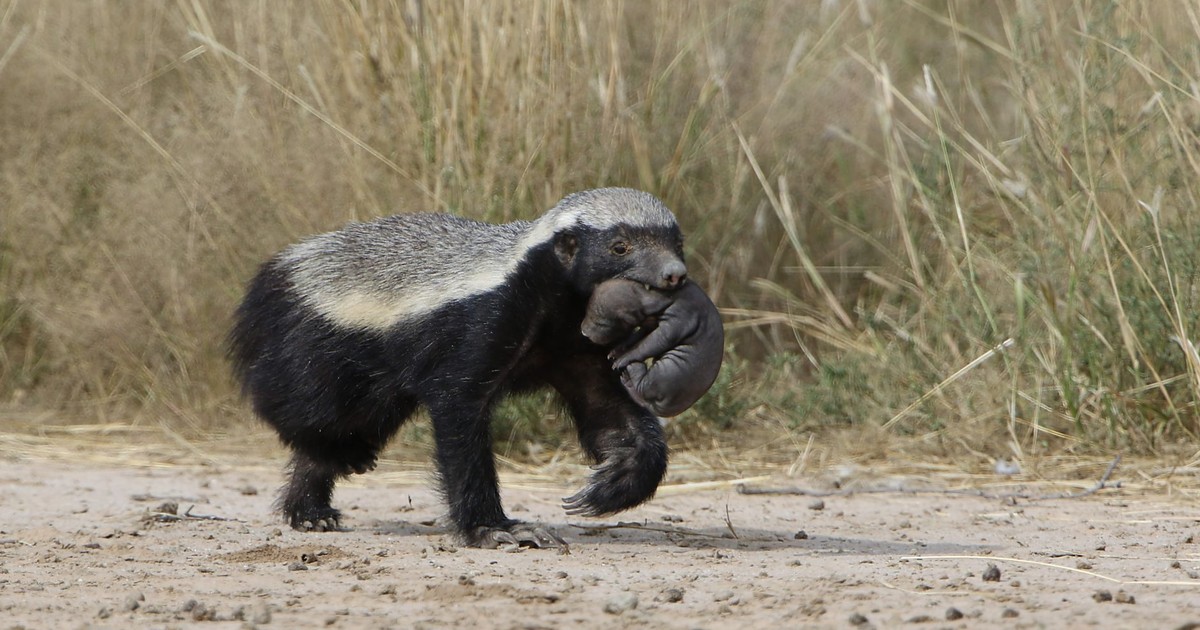

Honey badgers hold the Guinness World Record for the most fearless animal on the planet. That distinction doesn’t go to a lion, a great white shark, or a saltwater crocodile. It goes to a stocky, roughly 30-pound member of the weasel family that roams African savannas and Asian scrublands and has been documented staring down lions, wrestling venomous cobras out of trees, and shrugging off bee stings by the hundreds. Guinness World Records gave it the official title of “World’s Most Fearless Creature.”
The honey badger’s reputation is backed by documented field observations, molecular biology, and decades of wildlife footage. Its armor, biochemistry, behavior, and cognition all reinforce each other in ways that evolution has spent millions of years refining.
The honey badger’s scientific name is Mellivora capensis. It is also widely known as the ratel, a name common across southern Africa. This mustelid, native to Africa, Southwest Asia, and the Indian subcontinent, regularly confronts threats that much larger predators avoid.
Taxonomy, Range, and Habitat
The honey badger belongs to the Mustelidae family, the same group that includes otters, ferrets, and weasels. It is low-slung and powerfully built, with a wide, flat back, short bowed legs, and a blunt wedge-shaped head designed for digging and biting through almost anything.
It lives in arid deserts, open grasslands, thorny scrublands, and tropical forests across sub-Saharan Africa, North Africa, and much of the Middle East. Its range continues east through Iran, Iraq, and the Arabian Peninsula into Pakistan, India, and Nepal. They can be found at sea level and at elevations of up to 4,000 meters (13,120 feet).
On average, honey badgers are around 55 to 77 centimeters (22 to 30 inches) in length, with the tail adding another 17 to 30 centimeters. They weigh between 5 and 16 kilograms (11 to 35 pounds), with males weighing considerably more than females. Males have no external ears, a broad muscular back, bowlegged front legs, and formidable fore claws that may reach 40mm.
Males roam huge territories, covering up to 310 square miles. Most of their foraging happens at night, which makes studying them difficult. Even researchers with years of experience rarely get more than a fleeting glimpse.
Skin Unlike Anything Else in Mammal Biology
The honey badger’s first defense is its hide. Its skin is remarkably thick and loose, acting as a natural suit of armor against bites and stings. This hide can measure up to 6 millimeters (0.24 inches) thick around the neck and torso, an impressive dimension for an animal that typically weighs between 9 and 16 kilograms.
Thickness alone doesn’t tell the full story. The skin is so tough it has been shown to be nearly impervious to traditionally made arrows and spears, and can take a full blow from a sharp machete without necessarily cutting through. The looseness is the critical feature. When a predator clamps down, the badger can rotate inside its own skin, twist around to face its attacker, and launch a counterattack from within the grip.
The honey badger’s hair is thick and coarse, mostly black, with a wide gray-white stripe that stretches across its back from the top of the head to the tip of the tail. This stark two-tone coloring is a form of aposematism, a biological signal warning predators that this animal is not worth the trouble.
Venom Resistance: An Evolutionary Arms Race Won at the Molecular Level
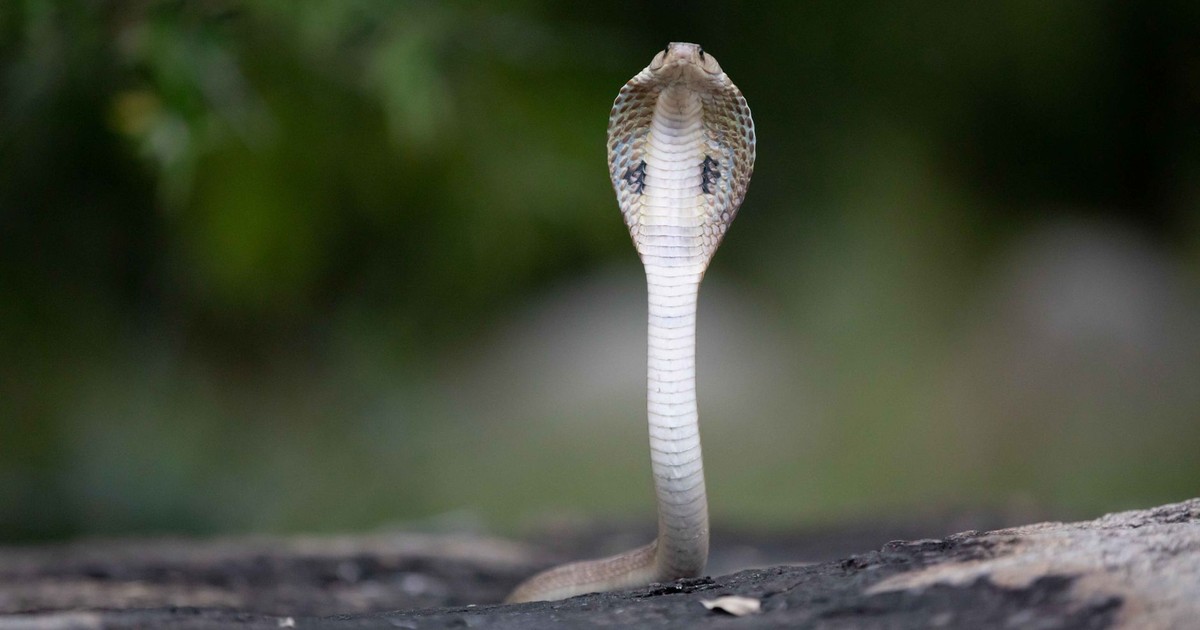
Perhaps the most scientifically extraordinary aspect of the honey badger’s biology is its resistance to venom. It regularly confronts lions, leopards, and venomous snakes, backed by thick skin resistant to bites and stings, and meaningful resistance to snake neurotoxins.
The honey badger’s resistance boils down to specific genetic mutations in its nicotinic acetylcholine receptors (nAChRs), the molecular docking sites that snake neurotoxins are designed to hijack. The “lock” that snake venom’s “key” was evolved to fit has been changed. The key no longer works.
A 2015 study confirmed this through phylogenetic analysis of mammalian nAChR sequences, showing that honey badgers, hedgehogs, and pigs have independently acquired functionally equivalent amino acid replacements in the toxin-binding site of this receptor. These convergent amino acid changes impede toxin binding by introducing a positively charged amino acid in place of an uncharged aromatic residue. That single substitution, replicated independently across at least four mammalian lineages, is enough to render the most potent cobra neurotoxins significantly less effective.
Their resistance is powerful but still only partial. A sufficiently large venom dose, or venom with different action, could still be lethal. A honey badger bitten by a cobra will typically lose consciousness briefly, then recover and continue hunting. Field observers have documented exactly this: the badger takes the bite, slumps, and twenty minutes to two hours later, it gets back up and resumes eating the snake.
Researchers have noted that figuring out these molecular tweaks in the honey badger’s resistant receptor could suggest new ways to create better antivenoms. The WHO reports that between 81,000 and 137,880 people die from snakebites globally each year, with several million more suffering permanent disability. The honey badger’s genetics may eventually help address that toll.
Behavioral Fearlessness: Strategy, Not Recklessness
The honey badger’s biological advantages are maximized by a behavioral profile defined by unwavering tenacity. As a solitary predator, it is highly territorial and rarely retreats from a confrontation, instead opting to stand its ground against opponents of any size. Lions and hyenas will often disengage because the risk of injury in a fight with a honey badger simply isn’t worth a meal that size.
This is not mindless aggression. Honey badgers prefer avoiding conflict when possible but respond with overwhelming force when provoked. The animal does not go looking for trouble, but when trouble finds it, the response is total and sustained. When engaging a larger threat, the animal’s aggression is often directed toward sensitive areas, such as aiming for the testicles of male predators. That targeting strategy quickly transforms a potential hunt into a high-risk scenario, encouraging rapid disengagement.
When cornered, the honey badger’s last resort is an aggressive display that involves standing up, making loud rattling grunts, and releasing a terrible-smelling scent, much like a skunk. This standoff is often observed between honey badgers and lions. A sustained, noisy, odorous standoff is usually enough for the lion to decide the meal isn’t worth pursuing. The honey badger wins not by defeating the lion but by making itself the worst possible meal option in the vicinity.
They use a mix of strategies to survive: retreating into burrows, releasing odoriferous secretions, and twisting out of grips using their loose hide. They’ve even been seen playing dead when severely injured, tricking predators before making a surprise counterattack.
Diet and Foraging: A True Omnivore
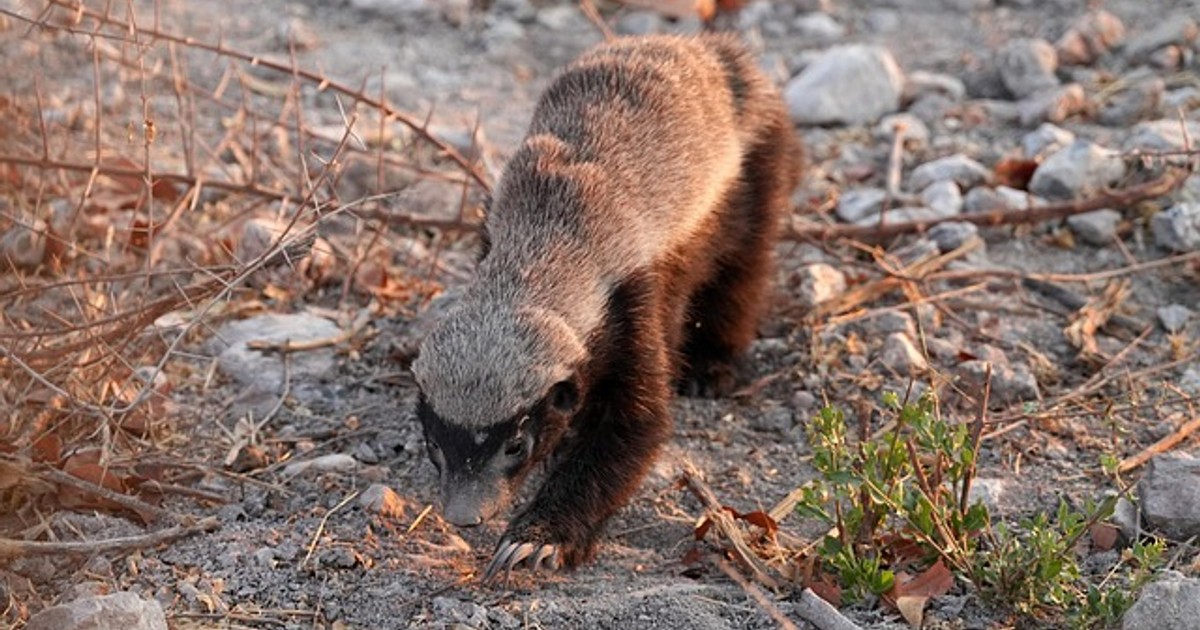
Despite their nickname, honey is only a small part of their diet. They eat almost anything: rodents, snakes, scorpions, frogs, insects, eggs, roots, and honey. This dietary flexibility is a major reason the species has maintained a stable range across three continents.
The honey connection is real, though. Honey badgers actively search for and raid beehives, both wild ones in trees and rocks and domestic ones kept by beekeepers. They use their powerful claws to tear the hive apart and go straight for the honey and the larvae inside. Their thick skin protects them from most stings. This habit has put them in direct conflict with beekeepers across Africa and parts of Asia.
The honeyguide bird relationship is one of the more famous mutualistic partnerships in African wildlife. Honeyguide birds lead honey badgers to beehives in exchange for access to the wax and grubs left behind after the badger tears the hive open. It is a well-documented interspecies collaboration, studied extensively by naturalists in sub-Saharan Africa.
Male badgers are nomadic, making daily foraging trips and covering up to 27 km (16.7 miles) daily, whereas females tend to make shorter trips of about 10 km (3.2 miles) per day. Home ranges for males can reach up to 500 square kilometers, which explains why population density remains low across their range.
Intelligence and Problem-Solving
The honey badger’s fearlessness would be far less effective without the cognitive capacity to deploy it strategically. Beyond toughness and aggression, honey badgers possess a considerable level of intelligence, demonstrating problem-solving skills, adaptability, and a capacity for learning that puts them in rare company among non-primate mammals.
Captive honey badgers have been known to work together to unlock gates and use rocks, a rake, mud, and sticks to escape from their enclosures, as documented in a BBC production. The most famous case involves a honey badger named Stoffel, held at a South African wildlife sanctuary, who repeatedly escaped by stacking rocks and branches into improvised ladders to climb over enclosure walls. When keepers removed the branches, he piled up rocks instead.
Honey badgers have also been seen opening doors, sliding bolts, and manipulating simple locks with their paws and teeth, adjusting their approach until they find the right movement to free themselves. That persistence, combined with the ability to remember and repeat successful solutions, points to strong working memory and flexible problem-solving.
A note on scientific caution is warranted here. As Earth Touch News reported, no formal scientific studies of honey badger cognition exist anywhere in the peer-reviewed literature. The tool-use reports and enclosure-escape stories come from zookeepers, documentary filmmakers, and field observers. The formal science lags well behind the reputation, and researchers have called for controlled experiments to properly measure what the animal can actually do.
Reproduction and Lifespan
Honey badger reproduction involves a notably flexible biology. Females possess the ability to control the timing of pregnancy through delayed implantation, where the fertilized egg can remain dormant for several months before developing. This strategy allows them to give birth when conditions are most favorable for the young’s survival, typically when food is abundant. Mating can occur at any time of the year, and females usually give birth to one or two cubs.
These cubs are born blind and completely dependent on their mother, who is fiercely protective, nurturing them in underground burrows until they are ready to face the world outside. Honey badgers typically live for 7 to 8 years in the wild and can live up to 24 years in captivity.
Conservation Status and Human Conflict
The honey badger is currently listed as Least Concern by the IUCN, meaning it is not considered at risk of extinction. Populations are declining in several parts of Africa and Asia, however, driven primarily by conflict with farmers who keep chickens or beehives, habitat loss due to agriculture, and accidental poisoning.
Honey badgers feel just as free to help themselves to farmers’ beehives as they do to wild ones, which causes significant tension. They are also sometimes hunted for bushmeat and for use in traditional medicine. Community-based programs in Kenya and South Africa are testing non-lethal livestock protection approaches to reduce retaliatory killings.
Genetic studies in 2024 found distinct lineages in West and East Africa, suggesting the need for separate conservation units rather than managing the species as a single uniform population. This has implications for how regional conservation programs are designed going forward.
What the Honey Badger Actually Teaches Us
The honey badger is not fearless in the way that phrase is commonly used, as a synonym for recklessness or bravado. It is fearless in the more precise sense: it has been shaped by millions of years of natural selection into an animal for which fear is often the less adaptive response. Its skin resists teeth, claws, arrows, and machetes. Its nervous system receptors have been genetically remodeled to blunt the effect of cobra neurotoxins. Its loose hide lets it turn inside a predator’s grip. Its scent glands deploy a chemical deterrent potent enough to scatter larger animals. When all of that fails, it fights with a targeted ferocity that makes even lions reconsider.
That combination is rare in nature. Most animals are specialized for one kind of defense. The honey badger has several, and they compound each other. Thick skin reduces the damage from a bite. Venom resistance means that bite from a cobra doesn’t end the fight. The loose skin means being held in a predator’s jaw doesn’t end it either. And the behavioral tenacity means the animal will keep fighting long after most creatures would have fled or succumbed. Remove any one of those layers and the honey badger is just another medium-sized carnivore. Together, they produce something that a 400-pound lion finds genuinely not worth the trouble.
The venom resistance finding has consequences beyond the African bush. Snakebite kills between 81,000 and 137,880 people every year, concentrated in South Asia and Sub-Saharan Africa, and producing several million more cases of permanent disability. The specific nAChR mutations the honey badger evolved independently alongside hedgehogs and pigs represent a blueprint for how mammalian biology can neutralize one of the deadliest toxin delivery systems in nature. Researchers have suggested that understanding those mutations in detail could lead to better antivenom treatments. A 30-pound animal that lions walk away from may, eventually, help keep humans alive too.
Disclaimer: This information is not intended to be a substitute for professional medical advice, diagnosis, or treatment and is for information only. Always seek the advice of your physician or another qualified health provider with any questions about your medical condition and/or current medication. Do not disregard professional medical advice or delay seeking advice or treatment because of something you have read here.
AI Disclaimer: This article was created with the assistance of AI tools and reviewed by a human editor.