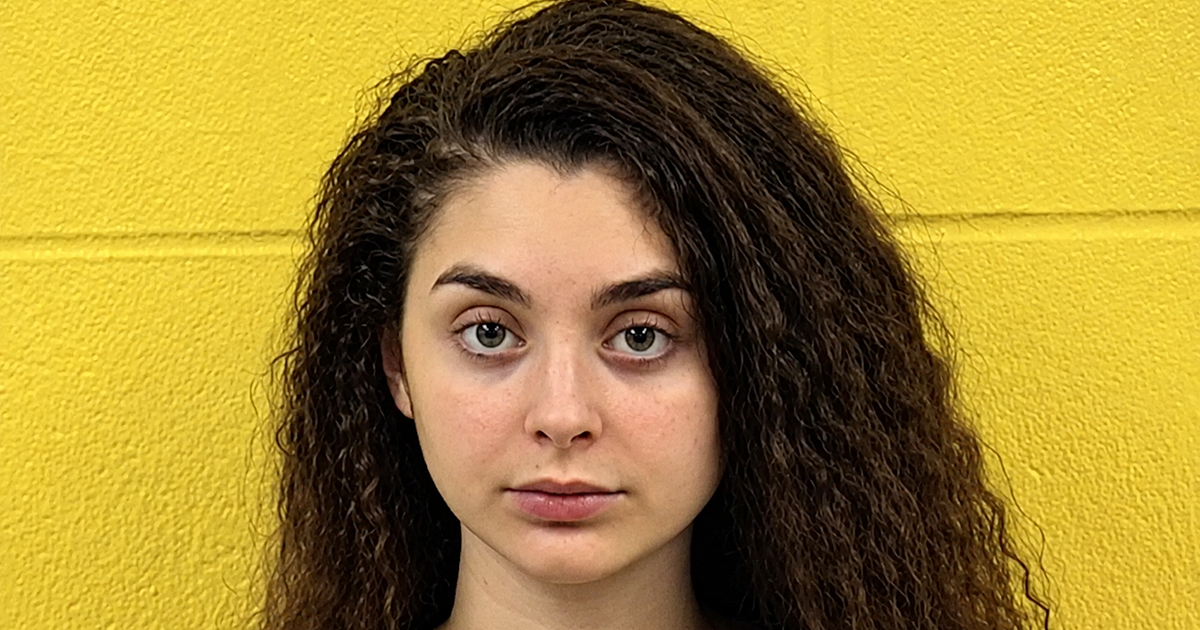

Mackenzie Shirilla is serving a 15-years-to-life prison sentence for the murder of her boyfriend and a friend in a car crash in Strongsville, Ohio in 2022. She was 17 at the time. By the summer of 2026, she had lost every legal fight she’d brought since her conviction. Then, on July 28, she tried again, this time with new lawyers, a new court, and a new theory: that the system itself had failed her.
Now serving a life sentence for the 2022 murders of Dominic Russo and Davion Flanagan, Shirilla is continuing to fight for a new trial with new attorneys, arguing her trial and imprisonment violated her constitutional rights. Her new petition, filed in Ohio’s Northern District federal court, argues her trial attorneys were ineffective and withheld important evidence, and that her case was improperly transferred from juvenile court to adult court.
Whether the courts will listen this time is a different question. Legal experts have been skeptical. But the petition itself, dense with constitutional claims, suppressed evidence, and a medical diagnosis her original lawyers barely mentioned, is the most aggressive challenge Shirilla’s team has mounted yet. To understand why, it helps to go back to the morning that started all of it.
The Crash That Changed Everything

The crash happened around 5:30 a.m. on July 31, 2022, when Shirilla accelerated her Toyota Camry into the Plidco Building, a large brick building at the intersection of Progress and Alameda drives in the Cleveland suburb of Strongsville. Officers arriving at the scene found the Toyota Camry with severe damage and full airbag deployments. Russo and Flanagan were both pronounced dead at the scene. Shirilla survived.
Further investigation of the Toyota’s Event Data Recorder, also known as the black box, revealed that Shirilla had her right foot pressed down on the acceleration pedal to its full extent, and the service brake pedal was never applied before impact. Shirilla’s vehicle had no defects that contributed to the crash. Psilocybin mushrooms and a digital scale were also found on Shirilla.
Prosecutors built their case around the relationship. At the time of the crash, Shirilla had been in an on-again, off-again relationship with Dominic Russo for four years. Russo’s mother Christine testified that the couple had started fighting more in the months leading up to the crash. Just two weeks before, Shirilla threatened to “crash this car right now” while Russo was in the passenger seat.
On August 14, 2023, Shirilla, then 19, was found guilty in a bench trial of four counts of murder, four counts of felonious assault, two counts of aggravated vehicular homicide, one count of drug possession, and one count of possessing criminal tools. Judge Nancy Margaret Russo, delivering the verdict, said: “This was not reckless driving. This was murder.” She said of the crash video: “She morphs from a responsible driver to literal hell on wheels as she makes her way down the street. She had a mission and she executed it with precision.”
Shirilla was convicted of murder, four counts of felonious assault, and two counts of aggravated vehicular homicide, and sentenced to an aggregate term of 15 years to life in prison.
A String of Failed Appeals

The conviction did not stand unopposed for long. The Eighth District Court of Appeals affirmed her conviction on direct appeal in 2024. On appeal, Shirilla claimed a lack of evidence and errors made by the court, but the Eighth District Court of Appeals found no merit and upheld her conviction in September 2024.
A separate route, a petition for postconviction relief, ran into a different kind of wall. In October 2024, Shirilla filed her petition, which included claims of ineffective counsel at her original trial and new medical evidence suggesting she could have blacked out during the crash. The courts never weighed those arguments on the merits. In May 2025, the trial court dismissed the petition as time-barred because it was filed one day late. The trial court found Shirilla’s deadline was October 23, 2023, and that her attorneys filed on October 24, 2024. Her attorneys attributed the miscalculation to 2024 being a leap year.
Shirilla appealed that dismissal, and in March 2026, the Eighth District Court of Appeals affirmed the lower court’s ruling. Then in June 2026, the Ohio Supreme Court declined to review Shirilla’s appeal case. One day late. One extra day in a leap year. The argument that could have put her POTS diagnosis and claims of ineffective counsel before a judge never got a hearing.
The Federal Petition: A New Court, New Claims
Shirilla’s new attorney Steven L. Bradley, of Cleveland criminal defense firm Marein & Bradley LLC, filed a writ of habeas corpus petition on July 28 in Ohio’s Northern District federal court, challenging multiple aspects of the 21-year-old’s high-profile case and requesting her conviction be tossed out. A writ of habeas corpus is generally a judicial order forcing law enforcement authorities to produce a prisoner they are holding and to justify the prisoner’s continued confinement. Federal judges receive these petitions from state prison inmates who say their state prosecutions violated federally protected rights in some way.
Shirilla’s new attorneys argue her 2023 trial and conviction violated her constitutional rights to due process of law, to confrontation of witnesses in her criminal case, and to effective counsel.
The petition raises several specific claims. Shirilla’s legal team asked the judge to overturn the conviction on several grounds, including ineffective counsel at trial, insufficient evidence to establish probable cause, and improper admission of evidence at trial. Among the arguments is that prosecutors did not show she was acting “purposely or knowingly” before causing the crash, that evidence didn’t prove she was acting recklessly, that the coroner’s report was changed to show the deaths were homicides, and that the dismissal of her late petition for post-conviction relief was erroneous.
The Evidence Her Lawyers Say Was Buried

According to the petition, text messages showing Shirilla’s boyfriend had grabbed the steering wheel during a separate driving incident weeks before the crash were never introduced at trial. Her new attorneys also argue there are text messages suggesting Russo was “actually the instigator” of an altercation between the couple less than two weeks before the crash.
Then there’s the medical question. The petition also states that Shirilla had a documented medical condition, postural orthostatic tachycardia syndrome, known as POTS, which can cause sudden loss of consciousness, and that her original attorneys did not disclose it to the court. The defense argues that her trial counsel was “ineffective” because they failed to provide sufficient information to the judge about Shirilla’s POTS diagnosis, a condition that can lead to dizziness and fainting. Her new lawyers point out that “the defense presented no expert testimony in this regard at trial.”
The prosecution’s entire theory depended on the crash being deliberate. A medical condition that could cause a driver to lose consciousness and lose control of a car without warning is exactly the kind of explanation that could, in theory, create reasonable doubt. Whether a federal court agrees that failing to present it rises to the constitutional standard for ineffective assistance of counsel is an entirely separate question.
The new petition also argues that Shirilla’s case was improperly transferred from juvenile court to adult court. Shirilla was defended unsuccessfully at trial in 2023 by attorneys from Friedman, Nemecek, Long & Grant of Cleveland.
What the State Has Said, and What Experts Think

The Cuyahoga County Prosecutor’s Office has consistently defended the conviction. After the Ohio Supreme Court declined to review Shirilla’s earlier appeal, prosecutors released a statement saying they were “pleased with the Ohio Supreme Court’s decision to decline jurisdiction to hear Mackenzie Shirilla’s appeal.”
The original trial evidence was not subtle. Key to the case was security video of the crash played in court, which showed the car speed toward the building and ended with a roaring impact. The black box data confirmed the accelerator was floored and the brakes were never applied. Despite multiple appeals, legal experts believe it is unlikely that Shirilla will be granted any further opportunities to challenge her conviction.
The federal habeas route is also a narrow one by design. Federal courts reviewing state convictions are not supposed to relitigate the facts of the case. They look specifically at whether constitutional rights were violated during the state proceedings. To succeed, Shirilla’s team would need to demonstrate not just that her original lawyers made mistakes, but that those mistakes were so serious they deprived her of a constitutionally fair trial, a high bar by any measure.
Much of the federal court filing echoes arguments that an appeals court has already rejected, including that there was not enough evidence to prove Shirilla committed murder and that there was insufficient evidence for her to face trial as an adult. The steering wheel texts and the fuller medical evidence around POTS are newer, but some of those records existed at the time of trial.
The Timeline That Got Here

The full arc of Shirilla’s legal battles since conviction is worth keeping in mind. In May 2026, Netflix’s documentary The Crash premiered. In it, Shirilla insists she is “not a murderer” and has no memory of the crash, continuing to attribute it to POTS. The documentary brought renewed public attention to the case, and within weeks the new federal petition followed.
Shirilla has been serving two concurrent sentences of 15 years to life at the Ohio Reformatory for Women, with her first chance at parole scheduled for September 2037, when she will be 33 years old. That is the timeline she is trying to change. Every legal path through the Ohio state courts has now been closed. The federal petition is the door that’s still open, even if barely.
The families of Dominic Russo and Davion Flanagan have not had a public moment free of this case since July 2022. Each appeal, each documentary, each new filing restarts the clock on a grief that has never been permitted to settle. The crash killed Russo, then 20, and Flanagan, then 19. Shirilla was sentenced to life in prison with the eligibility of parole after serving 15 years. For those two families, the question of whether Shirilla’s rights were adequately protected at trial competes, every day, with the question of what their sons’ lives would have looked like.
Where This Leaves the Case
The federal petition filed on July 28, 2026, is not the end of this legal story, but it may be close to it. Shirilla filed her petition for a writ of habeas corpus in U.S. District Court for the Northern District of Ohio, asking a judge to overturn her conviction based on several alleged constitutional rights violations, including ineffective assistance of counsel and insufficient evidence. The federal court will now decide whether to take up the petition, request a response from the state, or dismiss it outright.
The claims about suppressed text messages and an unexplored medical condition are the petition’s best arguments. They are specific, they involve evidence that could in principle have changed the shape of the trial, and they go directly to the constitutional right to effective counsel. The argument that the juvenile-to-adult transfer was improper is one the courts have already heard and rejected.
Shirilla’s state-level appeals failed on the merits. Her postconviction petition failed on a calendar error. The Ohio Supreme Court declined to intervene twice. The legal system has, at every turn, found that her conviction stands. The federal petition now asks a court to look past all of that and find a constitutional flaw significant enough to undo the whole outcome. That is not impossible, but it is not easy, and the experts who have followed this case closely are not betting on it.
Shirilla remains incarcerated in the Ohio Reformatory for Women. The federal court has not yet indicated when it will respond to the petition. Until then, the case that began in the early-morning dark of a Strongsville business park in 2022 continues to grind forward, through court filings, through documentaries, through families on both sides who have no choice but to wait.
AI Disclaimer: This article was created with the assistance of AI tools and reviewed by a human editor.