
By the time the Gates Foundation’s own lawyers counted the meetings, the tally had reached thirty. Not three, not a handful, not the few dinners that have been the safe public answer for years. Thirty meetings over three years, with a convicted offender, after employees had raised the alarm repeatedly. In 2026, that figure is no longer a rumor or a tabloid estimate. It is the finding of an independent legal review that Gates himself helped commission.
An adviser to both Bill Gates and his foundation introduced the two men in 2011, by which point Epstein had already pleaded guilty to soliciting prostitution from a minor. Gates, the co-founder of Microsoft and one of the most powerful philanthropists on earth, knew this. As the independent review later put it, “Mr. Gates was aware of reputational concerns related to Epstein’s prior conviction and sentencing for serious offenses when he began conversations with him in 2011.” He met with Epstein anyway. Then again. Then again after that.
The full account of how the Gates Epstein meetings accumulated, what was discussed inside them, and what happened when the relationship finally ended is more detailed, and in some ways more unsettling, than the headline number suggests.
How the Relationship Started

Epstein’s pitch to Gates was straightforward: he proposed that Gates establish a charitable investment fund to pool wealthy donors’ gifts for global public health, and foundation staff followed up with Epstein at Gates’ request on the legal considerations and tax benefits to potential donors.
The review, commissioned by the Gates Foundation CEO Mark Suzman and conducted by law firm WilmerHale, included interviews with more than 50 current and former Gates Foundation employees and examined the nonprofit’s relationship with Epstein between 2011 and 2014. The Gates Epstein meetings were calendared, attended by foundation staff, and tied to specific philanthropic goals. Investigators found that staff raised concerns multiple times with Gates and other senior leaders about maintaining contact with Epstein after his 2008 conviction on child offense charges. Despite those concerns, the review identified about 30 meetings between Epstein and ten Gates Foundation leaders and staff, including Gates, taking place between 2011 and 2014. They included visits to Epstein’s Manhattan residence and one meeting at the Gates Foundation’s Seattle headquarters.
What Was Actually Discussed

According to the WilmerHale summary, “the foundation’s meetings with Epstein appear to have focused on the DAF concept, donor engagement, the foundation’s polio strategy, and introductions to IPI.” IPI refers to the International Peace Institute, an independent nonprofit working on multilateral solutions, that later received funding from the Gates Foundation under circumstances that trace directly back to Epstein.
In 2012, Epstein introduced Gates to Terje Rød-Larsen, then president of the International Peace Institute. The Gates Foundation reached a grant agreement the following year with the International Peace Institute related to polio eradication. Rød-Larsen resigned in 2020 over his own connections to Epstein.
The donor-advised fund concept, the original premise for the relationship, never materialized. Several of the meetings took place at Epstein’s mansion in New York City, where federal prosecutors later said Epstein abused underage women. The December 2014 breakfast at Epstein’s Manhattan home turned out to be the final chapter. After that meeting, attended by Gates, foundation staff, and potential donors, Gates and foundation staff concluded that Epstein had misrepresented the donors’ willingness to commit to the fund, and stopped working with him. The relationship ended not because of the ongoing staff warnings about Epstein’s character, but because the pitch turned out to be hollow.
The Warnings That Were Ignored

The independent review is specific on this point and does not leave much room for charitable interpretation. Gates “was aware of reputational concerns related to Epstein’s prior conviction and sentencing when he began conversations with him in 2011.” Foundation staffers had “raised on multiple occasions the risks of associating with Epstein because of his prior conviction, and those concerns were raised to senior leadership, including Mr. Gates.”
In congressional testimony, Gates said he decided it was still worth courting Epstein in a “limited role” despite knowing about his offense conviction, because he believed the financier could secure donations for his global health charities. That is his claimed reasoning, not a verified account of his intent. Still, that calculation, repeated over three years through roughly thirty meetings, is the core of what makes this story hard to set aside with a simple apology.
Gates also told Congress that he believed Epstein was plotting to blackmail him after Epstein learned of his extramarital affairs. In closed-door testimony in June 2026, Gates named three women he had affairs with and suggested that Epstein “contemplated blackmailing me.” The blackmail angle adds a dimension to the relationship that the foundation’s institutional review was not designed to address. That review covered the foundation’s engagement with Epstein, not Gates’ personal communications or private relationship with him.
The Epstein Files and Congressional Testimony

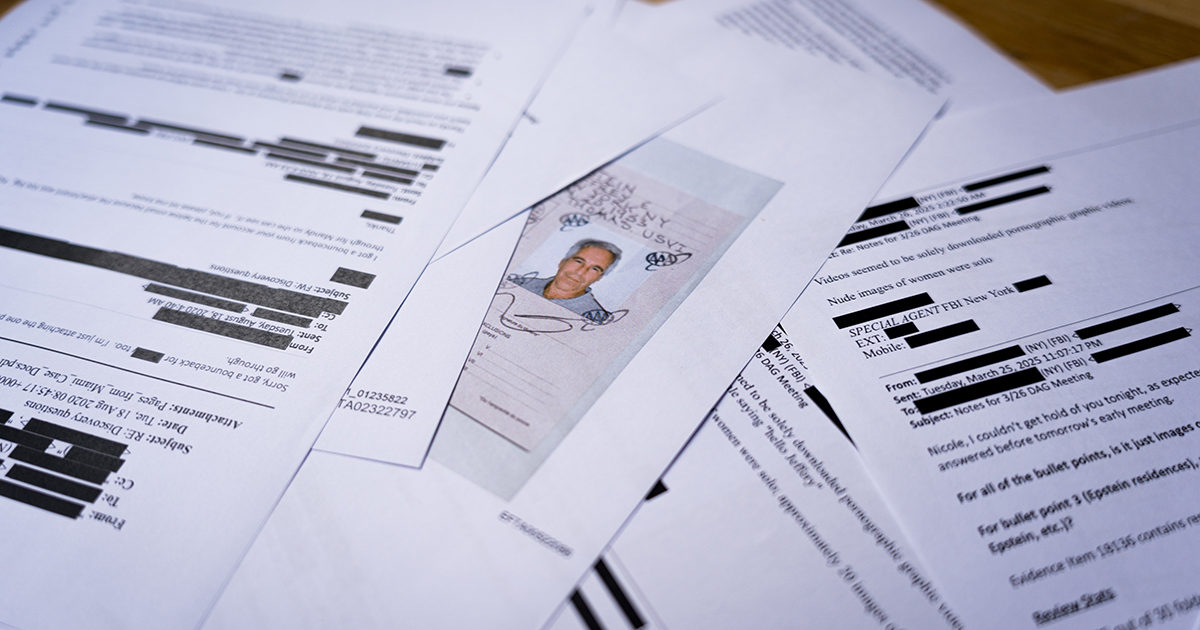
Congress passed the Epstein Files Transparency Act in November 2025, and it was signed into law on November 19, 2025. The Department of Justice published thousands of documents related to the Epstein investigations beginning December 19, 2025, the deadline set by the law.
The DOJ’s release of more than 3 million pages of Epstein’s communications included July 2013 emails in which Epstein claimed Gates had extramarital affairs resulting in a transmitted infection, and that Gates sought to secretly give antibiotics to his then-wife Melinda without her knowledge. A Gates spokesperson called those particular claims “absolutely absurd and completely false.”
In June 2026, Gates appeared before a House panel examining Epstein-related matters. He described meeting Epstein as a “grave error in judgment,” said he was drawn in by claims Epstein could help raise substantial funds for global health, and stated he ended the relationship in 2014 after concluding those promises would not materialize. Gates has repeatedly said he never visited Epstein’s private island or other properties associated with the criminal case, and no flight logs or other public records have established such visits.
In a memo to the Gates Foundation, the independent review found no evidence Epstein was paid by the foundation, or that the nonprofit participated in or knew of Epstein’s trafficking operation. Gates has not been accused of wrongdoing by any of Epstein’s victims. The review explicitly noted that it did not include access to Gates’ personal communications, and was never designed to cover his interactions with Epstein outside a foundation context – leaving open the question of why staff concerns were not enough to end thirty meetings before they became thirty meetings.
The Fallout for the Foundation

To cut costs, the Gates Foundation announced it would eliminate up to 500 jobs, or about 20% of its staff, by 2030. The timing of the announcement, coming alongside the Epstein review being commissioned, made the institutional turbulence impossible to separate from the reputational crisis swirling around the foundation’s founder.
The foundation launched the external review after Gates addressed employees during a February 2026 town hall, where he apologized for having affairs and for putting the foundation’s reputation at risk through his association with Epstein. The review took five months and reached the fifty-interview mark before its three-page public summary was released on July 21, 2026. The foundation has not committed to releasing the full version.
Based on the review’s findings, the Gates Foundation’s governing board approved a series of recommendations to change the vetting process for those who interact with the foundation. Those recommendations include creating a centralized process for reviewing brokers, donor advisors, and co-funders connected to the foundation through its chair, board, or executive leadership. The specifics of that reform are, in effect, a description of exactly what did not happen between 2011 and 2014.
Warren Buffett, the foundation’s most prominent outside donor, skipped his annual contribution to the Gates Foundation this year. Buffett explained that the decision was more about his belief that his three children are ready to manage his fortune than it was about Gates’ “distasteful” association with Epstein. The fact that he felt the need to explain at all says something on its own.
The Record That Remains

The independent review is, depending on how you read it, either reassuring or troubling. Reassuring because it found no criminal conduct, no payments to Epstein, no evidence the foundation’s work was used to shield his crimes. Troubling because it also documented, in black and white, that the people responsible for running one of the world’s most powerful philanthropic institutions heard the concerns of their own employees and kept scheduling meetings anyway.
The Gates Foundation review closes one chapter with institutional reforms and a finding of no direct criminal knowledge. It does not erase the documented decision to meet a convicted offender nearly thirty times after staff raised alarms, nor does it resolve the unanswered questions that still surround the broader network of influence, money, and protection that allowed Epstein to operate for so long.
Gates has said, in various interviews and settings, some version of the same thing: that he was trying to raise money for global health, that the relationship was a mistake, that he regrets every minute of it. Those statements are probably true, and they also describe exactly the kind of logic that Epstein apparently understood better than most. The promise of access to serious money for a serious cause is a powerful thing. It can make smart people decide that a staff warning is something they can manage around, and that thirty meetings are somehow still a limited role. The record now shows what that calculation cost, not in legal terms, but in the harder currency of institutional trust that took decades to build and a breakfast in Manhattan to start losing.
Disclaimer: This information is not intended to be a substitute for professional medical advice, diagnosis, or treatment and is for information only. Always seek the advice of your physician or another qualified health provider with any questions about your medical condition and/or current medication. Do not disregard professional medical advice or delay seeking advice or treatment because of something you have read here.
AI Disclaimer: This article was created with the assistance of AI tools and reviewed by a human editor.