

Selling everything you own takes about three months longer than you think it will. Not because the stuff is hard to get rid of, but because the decision fatigue sets in around week four – when the furniture is gone and you’re standing in an empty bedroom holding a box of things you can’t categorize as either “keep” or “throw out.” That’s the transition nobody photographs for Instagram.
Full-time RV living has attracted an enormous amount of content in the last several years, and almost none of it addresses the gap between the planning phase and the reality of month three. The sunsets are real. So is the slide-out that fails in New Mexico on a Tuesday with no service center within 80 miles.
Six months on the road rearranges what you thought you knew about your own needs – what space, what routine, what community. The answers that come back are usually not what you expected before you left, and they’re worth knowing before you sell the dining room table.
The Sell-Everything Decision Is Harder Than It Sounds

Getting rid of your stuff feels liberating right up until you’re standing in a storage unit at 11pm deciding whether to donate the wedding china. It isn’t the big items that stall you. The couch goes easily. The kitchen table, fine. It’s the accumulation of smaller things – the box of concert ticket stubs, the backup coffee maker you’ve had for nine years, the books you might re-read – that takes up surprising amounts of mental energy.
The decision to physically downsize to RV-ready storage (typically under 400 square feet of usable space, depending on your rig) forces a confrontation with how much you own purely out of inertia. Most people who do this report the purge eventually feeling freeing rather than painful. The hard part is the transition period, when you’re between lives and not yet in the new one.
What makes it manageable: giving yourself three to four months for the process rather than three to four weeks. Most people who attempt the transition too fast report decision fatigue setting in before they’ve even left the driveway.
Who Is Actually Doing This Now

The number of people living full-time in RVs is approximately half a million, and that figure has more than doubled since 2021, according to a 2025 industry update from Bish’s RV. Full-timers today include a wider range of ages and household types than the traditional retiree base, driven by housing affordability pressures and the rise of remote work drawing in younger singles, couples, and families using RV living as a practical housing strategy.
The full-time RV living trend accelerated as rental and home acquisition costs climbed. These full-timers – often singles or young couples in van-style rigs, or families embracing a nomadic stretch of time on the road – typically seek RVs with residential touches and durability for continuous use. Manufacturers noticed. The industry responded by marketing models as primary residences or “tiny homes on wheels,” adding features like solar panels, off-grid battery capacity, and work-friendly layouts.
The demographic shift matters because it changes what full-timing actually looks like in practice. A retired couple with a pension and a paid-off Class A motorhome is solving a different problem than a 34-year-old with a laptop job and a travel trailer. The costs, the stresses, and the rewards are not the same.
The Financial Reality Nobody Posts About

Full-time RV living costs vary widely depending on rig type, campsite strategy, and lifestyle, with monthly totals commonly ranging from under $2,000 to well over $4,000, according to this cost analysis from Boondock or Bust. The comparison against renting is real, but the margin is narrower than the lifestyle marketing tends to suggest. National one-bedroom apartment rent averages around $1,500 to $1,560 per month. A renter who buys a used travel trailer with a small loan and keeps campsite costs low can realistically land in a competitive total monthly budget – but achieving that requires deliberate choices at every step, as Rec Nation Storage’s cost comparison outlines.
Financing costs add up quickly. RV loans carry rates that vary widely depending on credit profile, loan term, and lender – well-qualified buyers may see rates in the mid-single digits, but rates can run significantly higher for others. A $60,000 RV financed at 7% over 15 years costs $539 monthly just in principal and interest, before insurance, maintenance, or operational expenses.
Then there’s maintenance, which is where optimistic budgets routinely collapse. One experienced full-timer tracked her actual 2024 repair and maintenance spend at $6,655 for the year – $555 a month, against a budgeted $250. The lesson: have an emergency fund or an untouched credit card before you leave, because unexpected situations will arrive. Annual RV maintenance costs vary widely by rig type and age, but experienced full-timers commonly budget $1,000 to $3,500 or more per year – and actual spend can exceed that when a slide-out fails in New Mexico on a Tuesday.
Health insurance deserves its own paragraph. It’s a major logistical and financial challenge for nomads. Standard HMO or PPO plans often have limited out-of-state coverage, so full-timers need to seek out plans with a national network or consider options like health-sharing ministries. Individual ACA marketplace plans averaged around $440 to $540 per month in 2025 for a 40-year-old on a Silver plan, depending on state and income. For a couple, that alone can add $900 or more monthly to costs that the lifestyle marketing never mentions.
Read More: Why Millennials Are Living Like Their Grandparents
Campground Costs Are Rising Faster Than Most People Expected
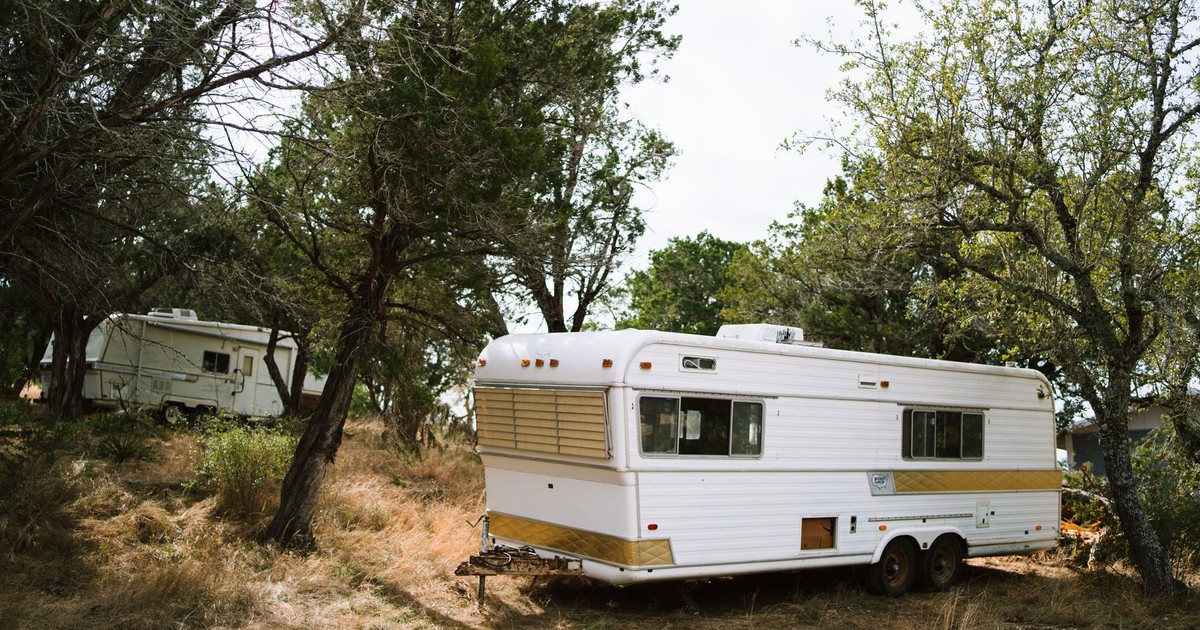
Campground pricing has shifted more dramatically over the past few years than almost any other part of the RV living experience. Utilities, insurance, labor, and repair expenses have risen sharply across the industry. Even public park systems are feeling it – state parks across multiple states raised camping fees in 2025, citing increased maintenance, staffing, and utility costs.
Campground pricing increasingly mirrors hotels and airlines. Many parks now price like hotels: peak-weekend premiums, destination markups, and added booking fees. The same site can cost dramatically different amounts depending on when you book. Near popular national parks, some RVers are reporting nightly rates of $150 to $300 – sites that cost under $50 before 2020. New RV prices have also climbed in recent years as material, tariff, and manufacturing costs have risen across the industry, according to RVPodcast.com.
The workaround that actually works is boondocking: camping on public land, often free, without hookups. The Bureau of Land Management manages approximately 245 million acres where dispersed camping is generally permitted for up to 14 days within a 28-day period. BLM Long-Term Visitor Areas in Arizona and California allow seven-month stays for $180 per season – roughly $26 per month. The catch is the upfront investment to make boondocking viable. Solar panels, a solid battery bank, a good water system – the setup runs $5,000 to $20,000, and you need to have that capital before you go.
For those relying on standard RV parks, a long-term monthly site runs roughly $30 to $100 per night at standard parks, with many long-term monthly sites landing in the $500 to $1,200-plus range depending on location and whether utilities are included. The lower end of that range is genuinely competitive with renting in most mid-size American cities. The higher end is not.
Internet, Connectivity, and the Myth of Working From Anywhere

For anyone planning to work remotely during their RV living experience, connectivity deserves more pre-trip research than it usually gets. Cell coverage across the US is patchy in ways that don’t show up on carrier maps. The gap between “has signal” and “has enough signal to run a Zoom call at 9am” is significant.
Reliable internet is a necessity for remote workers, not a luxury, and because coverage varies so widely across the country, many serious RVers subscribe to multiple carriers – such as Verizon and AT&T – for redundancy. A typical internet and connectivity budget runs $50 to $200 per month. Starlink satellite internet provides coverage almost anywhere in North America for $150 per month with unlimited data on the RV/roaming plan and has become almost standard equipment for anyone working full-time on the road. Add that to your monthly baseline.
The working-from-the-road reality also means being disciplined about when you move versus when you stay put. Driving two hours is not disruptive when you’re on vacation. It’s very disruptive when you had a 10am client call and realized you need better signal an hour before it starts. Most full-timers who work remotely settle into a rhythm of staying in one location for one to two weeks at a time, rather than moving daily.
The Part Nobody Talks About: What Happens to Your Sense of Home

Six months in, the question that surfaces most persistently isn’t “can I afford this?” Living without a fixed address rearranges something in your sense of self that’s hard to name until it happens. There’s no neighborhood. No third place. No coffee shop where they know your order. Every social connection requires active effort in a way that home-base life never demands – you have to rebuild your local context from scratch every few weeks.
That adjustment is real, and it accumulates. The RV community is genuinely warm and tends to form fast connections at campgrounds and through clubs like the Escapees RV Club. Many full-timers report that these traveling communities fill some of the gap. But for people who are deeply rooted in long-term friendships and extended family proximity, the sustained absence from that network accumulates in ways that a few weeks’ trip simply doesn’t prepare you for.
What the Instagram posts actually get right, though, is the quality of present-tense attention. When your physical environment changes every week or two, you notice things. The way the light hits a canyon at 6pm in southern Utah. The moment when a storm rolls across open flat desert while you’re entirely stationary and the only shelter in sight. These aren’t aesthetic observations – they’re recalibrations of what “ordinary” looks like.
The Honest Ledger After Six Months

Stripped of both the romanticization and the scare stories: the RV living experience is financially viable if you go in with your eyes open and a cash buffer that most lifestyle content conveniently skips. The break-even point against renting in a mid-to-high-cost city is achievable, but it requires the right rig, the right campsite strategy, and a maintenance fund that doesn’t get raided in month two.
The non-financial question is harder to answer in advance. Six months on the road surfaces a clear picture of what you actually need – what space, what routine, what community – and often the answer is not what you expected before you went. Some people come back and understand for the first time why they want roots. Others come back and start planning to extend the experiment into a second year.
Both outcomes are legitimate. Some of what gets clarified goes back further than the trip does – patterns around belonging, around stability, around what home has always meant to you. Naming that isn’t a verdict on whether the decision was right or wrong. It’s usually just where the real conversation starts.
Disclaimer: This information is not intended to be a substitute for professional medical advice, diagnosis, or treatment and is for information only. Always seek the advice of your physician or another qualified health provider with any questions about your medical condition and/or current medication. Do not disregard professional medical advice or delay seeking advice or treatment because of something you have read here.
AI Disclaimer: This article was created with the assistance of AI tools and reviewed by a human editor.