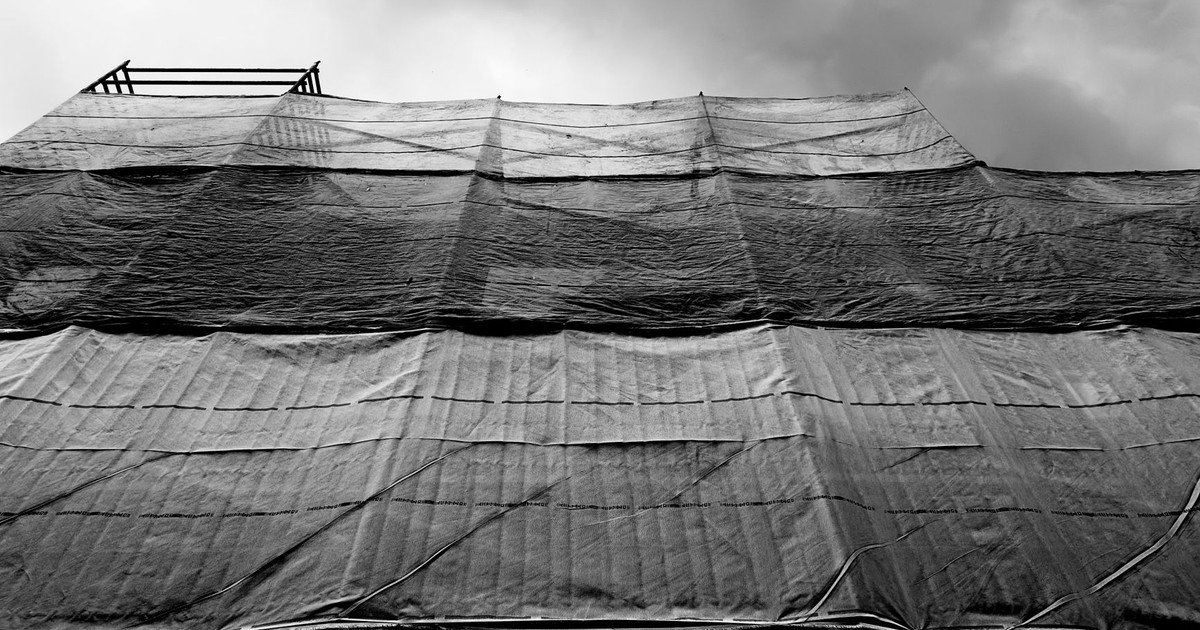

On a Monday morning in October 2025, workers with heavy equipment arrived at the White House’s East Wing and started tearing it down. No public announcement preceded it. No architectural review board signed off in public view. One week later, where a historic wing of the most recognized building in the world had stood for decades, there was rubble.
That moment set the tone for what has since become one of the most expensive physical makeovers of the American capital in modern history. The scale of it is still coming into focus, and the numbers keep growing.
What started as a $200 million ballroom has swelled into a project whose total price tag, across multiple sites and initiatives, is now estimated to exceed $1.2 billion. Gold lettering has gone up on West Wing doorways. The Lincoln Memorial Reflecting Pool was painted a color officials described as “American flag blue.” A 250-foot triumphal arch is on the drawing board. And throughout it all, the question of who is actually paying for this has gotten murkier by the month.
The Ballroom That Ate the East Wing
The East Wing of the White House was demolished in October 2025, with plans to replace it with a massive new ballroom, office spaces, and an underground military complex, though the design of the new building remains in flux as of mid-2026. Trump framed the demolition as a long-overdue upgrade, arguing the White House had been left without an adequate space for large-scale events.
The original estimate for the East Wing project was $200 million back in July 2025. Trump said in December that the number had climbed to $400 million, while simultaneously claiming the project was under budget. His explanation for the increase was straightforward: the president said the price went up because the ballroom’s size had grown from one that could seat 650 people to one capable of accommodating approximately 999. “So, I started off with a building, half of the seats, then it just kept growing and growing, and the money kept pouring in and pouring in,” Trump told The New York Times.
According to a Financial Times investigation, the ballroom is set to be about three times the volume of the White House residence, with the work hoped to be completed by the time the next presidential inauguration takes place in January 2029. The same investigation puts the total cost of the president’s various projects across the capital, combining private donations and public funds, on track to exceed $1 billion. White House Staff Secretary Will Scharf, who serves as chair of the National Capital Planning Commission, told the Financial Times that Trump is “intensely involved” in the plans to reshape the DC area and looks at the ballroom as part of his “legacy.” Scharf described long conversations with the president about “the virtues of Corinthian versus Ionic columns.”
The construction cost is only part of the ledger. Taxpayers will also be funding the ballroom’s security, potentially to the tune of $397 million, routed through the Secret Service budget. When you add that to the construction estimate, the new East Wing ballroom and its security costs alone account for nearly $800 million of the total project figure.
Trump has consistently maintained that private donors are covering the construction tab. He said the construction cost would be picked up entirely by private donors and himself, with the White House releasing a partial list of 37 contributors but not disclosing how much any of them donated. Donors are permitted to remain anonymous. Among those named are Amazon, Apple, Google, Meta, and Comcast. Critics have pointed out that a list of donors who can stay anonymous, combined with costs simultaneously routed through the Secret Service budget, makes “private financing” a difficult claim to verify.
The No-Bid Contract Nobody Voted On

White House officials secretly awarded a no-bid contract worth up to $500 million for the construction of the East Wing ballroom in an unusual arrangement that sidestepped typical contracting procedures designed to control costs, according to a copy of the agreement obtained by The Washington Post.
The contract was routed through the Executive Residence, an office exempt from rules requiring federal agencies to seek competitive bids and publicly disclose contract details. The confidential contract went to Maryland-based Clark Construction, the same company Trump also awarded a no-bid contract to for the Lafayette Park project. Trump was directly involved in negotiating some costs for the ballroom, the Post reported.
Clark charged a 3 percent profit for the early work done on the East Wing, which is typical for large government construction projects, but the firm still stands to make tens of millions of dollars from the project overall. The White House did not deny any of the Post’s reporting. A spokesperson said the contract was issued through the Executive Residence because that office “will be the primary support of the facility.”
The president had previously said he and wealthy donors would fund the ballroom project, but later asked Congress for $1 billion in taxpayer money for security upgrades. Senate Republicans, with an eye on November midterm elections, said no. The security costs are now expected to run through the Secret Service’s existing budget lines instead.
Gold Fixtures and a Walk of Fame
The ballroom project is the centerpiece, but the physical reimagining of the White House extends well beyond it. Inside the residence, the changes have been relentless and distinctly personal in aesthetic.
Trump has made a number of cosmetic changes to the White House, including remodeling the Lincoln bathroom, last redone in 1945, and adding gold fixtures and trim to the Oval Office. The White House has not said who paid for the cosmetic changes or how much they cost.
Gold pieces from the White House collection now adorn the fireplace mantle, which has also been decorated with gold appliqués. Trump has added numerous gold furnishings, some taken from his Mar-a-Lago estate. Outside the Oval Office, a gold-letter “The Oval Office” sign appeared outside the president’s office on the Rose Garden side of the West Wing in 2025. A “Presidential Walk of Fame” installation along the West Colonnade added portraits of former presidents as part of a broader redesign of that area. A gold “West Wing” sign was unveiled in July 2026, the latest in a consistent series of branding additions.
Trump has also paved over the Rose Garden lawn, redecorated the Colonnade, and knocked down the East Wing, changes the president has described as necessary to update the White House and make it better suited to events and guests.
The Reflecting Pool That Wouldn’t Stay Blue
The Lincoln Memorial Reflecting Pool was renovated and repainted “American flag blue,” but ran into problems almost immediately after refilling began in early June 2026. The coating, supplied by Atlantic Industrial Coatings under a no-bid contract, began peeling after the pool was refilled, while bright green algae appeared across the surface. The president claimed without evidence that it had been vandalized. Administration officials blamed the damage on vandals, while critics questioned the management of the renovation and its cost.
Costs for the Reflecting Pool have surpassed $14.7 million, more than nine times the roughly $1.5 million Trump estimated the project would cost. The pattern of costs ballooning past early projections runs through virtually every initiative in this broader DC renovation effort.
The Kennedy Center Closure
Trump announced that the Kennedy Center for the Performing Arts would close for two years, beginning July 4, for renovations. He initially said the project would cost around $200 million and was fully financed, without detailing where the money was coming from. The actual approved figure is considerably higher.
Allocations for the Kennedy Center project, set aside in Trump’s Big Beautiful Bill, are set to cost $257 million. Plans to close the Trump Kennedy Center were made official through a board of trustees vote, setting up the two-year renovation process. The board voted unanimously to approve the changes. The overhaul will include fixes to the building’s heating, ventilating, air-conditioning systems and elevators, among other structural renovations, according to plans submitted to Congress.
Sen. Mark Warner, D-Va., an ex officio member of the board, blasted the vote, arguing the renovations were made unilaterally. “Unfortunately, recent actions by the president and certain board members have treated the center like a personal vanity project, including firing career management staff, removing trustees, and sidelining ex officio members who are meant to provide congressional oversight,” Warner said.
From the released renderings, the building’s exterior looks similar to the current layout. Cherry blossom trees replace the willow trees that long adorned the terrace, while the change to white columns, completed last year, is reflected in the new design.
The Arch, the Garden, the Golf Course
Beyond the headline projects, the broader list of planned additions to the DC area reads like a wish list assembled over a long weekend at Mar-a-Lago.
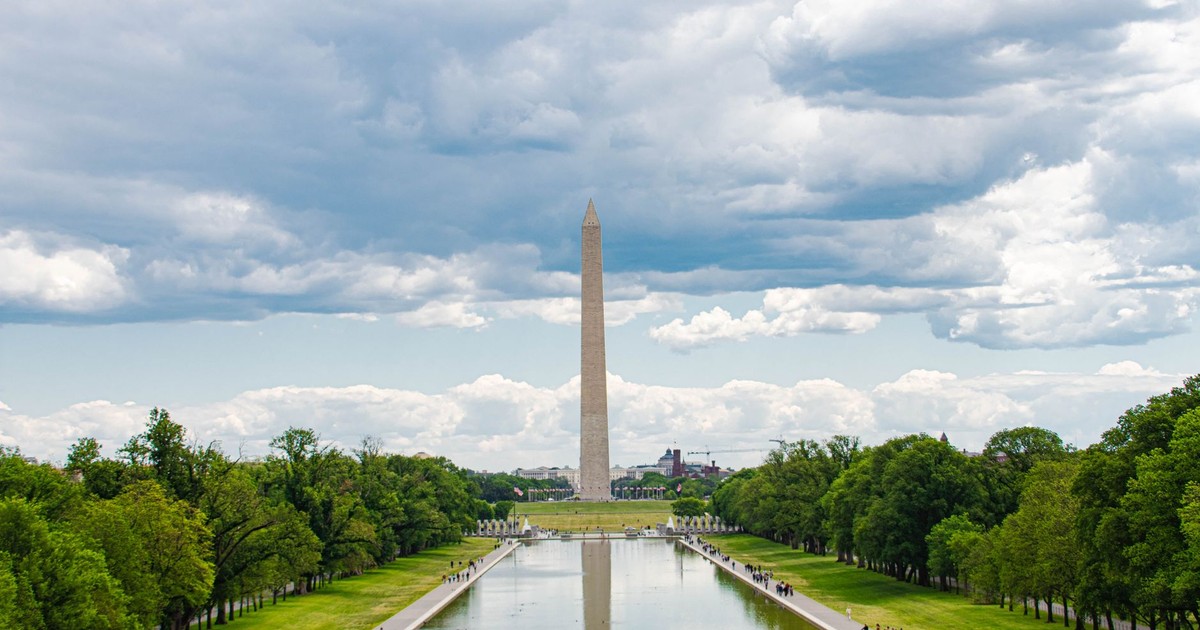
A 250-foot Triumphal Arch is planned for the stretch between the Lincoln Memorial and Arlington Cemetery. A National Garden of American Heroes would feature 250 statues of historical figures ranging from Thomas Jefferson to game show host Alex Trebek. Reuters reported that the arch is among the most culturally charged elements of Trump’s building spree, alongside plans that could reach $100 million for the monument alone, funded through a mix of public and private sources.
The iconic Eisenhower Executive Office Building is also slated to be painted white to match the White House beside it, while Trump is planning upgrades to a public golf course, which will be turned into a championship-level course.
A Washington Post analysis found Trump mentioned his Washington renovation plans almost every day in June 2026, up sharply from roughly one in three days in January, and one in eight days a year ago. For three straight months, he has invoked his building plans more often than healthcare or wages. Republican pollster Frank Luntz summed it up plainly: “It’s where he is the most comfortable.”
The White House, for its part, is unapologetic. Spokesman Davis Ingle said the president is “making the White House and our Nation’s Capital beautiful and giving it the glory it deserves.”
Read More: Trump’s new election claims don’t match the information in declassified docs
The Ledger Nobody Can Quite Close

The arithmetic on Trump DC renovation costs keeps shifting in a way that makes a final number elusive by design. Private donations cover the construction, until they don’t. The security bill goes to the Secret Service, not the project. The contract is confidential, routed through an office exempt from the standard procurement rules. The Reflecting Pool costs nine times the estimate, but administration officials say that’s vandalism.
Every single project covered here has exceeded its original price tag before completion. The ballroom doubled from $200 million to $400 million before an internal contractor estimate put it at $600 million. The Reflecting Pool ran nine times over its stated budget. The Kennedy Center’s approved allocation landed $57 million above Trump’s opening figure. The pattern is consistent enough that the $1.2 billion total almost certainly understates where this ends.
The deeper issue isn’t just the money. It’s the precedent. When a president can demolish a historic wing of the White House without public review, award a half-billion-dollar contract through an office exempt from competitive bidding requirements, and route security costs through a federal agency’s budget rather than the project line item, the accounting becomes nearly impossible for the public to follow. That’s not an accident. Costs that can’t be tracked in full can’t be contested in full, either. The gold lettering on the West Wing door goes up. The tab runs somewhere else. And the Reflecting Pool peels.
Disclaimer: This information is not intended to be a substitute for professional medical advice, diagnosis, or treatment and is for information only. Always seek the advice of your physician or another qualified health provider with any questions about your medical condition and/or current medication. Do not disregard professional medical advice or delay seeking advice or treatment because of something you have read here.
AI Disclaimer: This article was created with the assistance of AI tools and reviewed by a human editor.