The last time the United States marked a major anniversary of its founding, Gerald Ford was president, the country was still processing Vietnam and Watergate, and the bicentennial was considered a complicated but broadly unifying moment. Fifty years later, the country is trying to do it again. This time, the party came with a 110-foot Ferris wheel, a plywood triumphal arch, melted ice cream, and a crowd that started heading for the exits before the president finished speaking.
Trump’s Great American State Fair opened on the National Mall on June 25, 2026, and within 72 hours it had generated a Confederate flag controversy, a power outage, thin crowds, and a presidential Truth Social post insisting that 45,000 people had shown up and loved every minute of it. Both things can be striking for reasons that have nothing to do with politics: one is a fact about an event, and the other is a fact about the man running it.
What actually happened, and why, is worth following closely. Not because state fairs are inherently political. But because this one was designed to be, right from the beginning.
What the Fair Was Supposed to Be
President Trump first teased the project, framing it as a modern World’s Fair, on the campaign trail in 2023. The idea that finally landed on the National Mall was ambitious on paper: a 16-day-long exposition offering visitors the chance to visit pavilions showcasing every US state and territory. The schedule included military flyovers, movie screenings, and a giant 110-foot Ferris wheel.
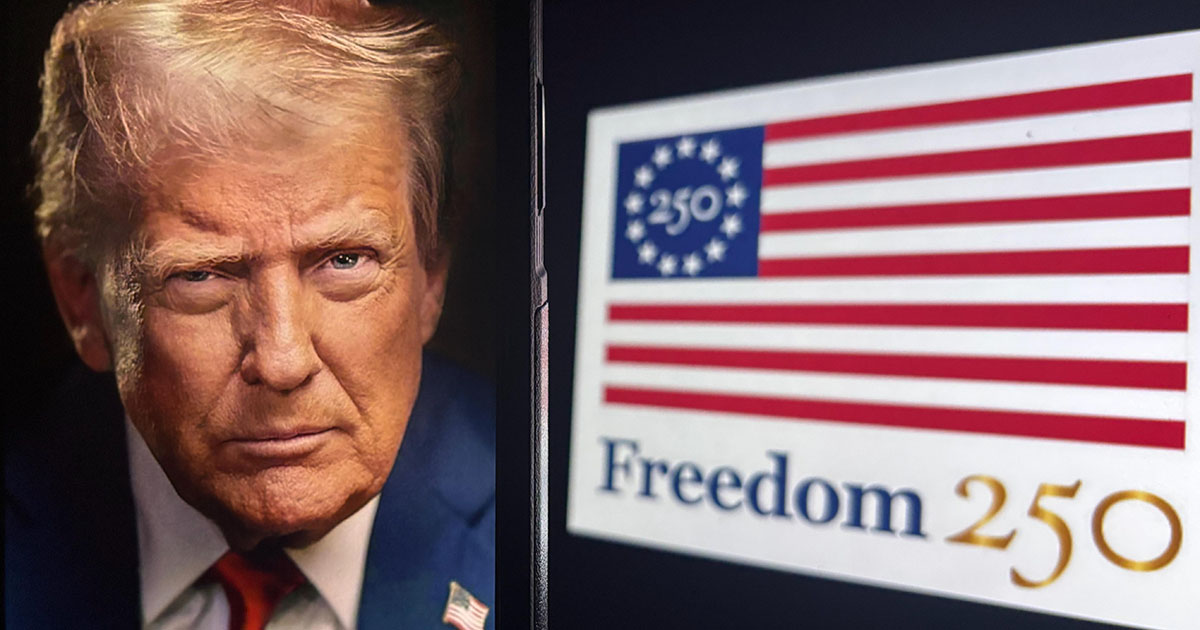
The event was organized by Freedom 250, a public-private partnership created by Trump that labels itself as a nonpartisan nonprofit organization, and was envisioned as a modern-day world’s fair to celebrate America’s 250th birthday. Freedom 250 is a nonprofit established by Trump through an executive order in December 2025. The stated pitch was simple: a grand, feel-good showcase of what makes America distinctive, state by state, from sea to shining sea.
Critics pointed to Trump’s directive that national park sites remove signs casting America in a “negative light,” and to the six “Freedom Trucks” touring the country with mobile museums produced by conservative media organization PragerU and Hillsdale College, a conservative, Christian institution. The content produced by those organizations says “the foundational principles of America are rooted in the Western and Judeo-Christian traditions.”
Freedom 250 was created through an executive order in what critics see as Trump’s attempt to bypass a decade-old nonpartisan commission that Congress had created for that same purpose. That group, America 250, is planning a July 4th concert in Los Angeles as well as community-level events across the country, with a smaller reach and less access to federal funding than the White House-backed group.
The Musicians Who Said No
Before a single corn dog was served, the fair was already in trouble. Several musical artists booked to perform, including rapper Young MC and country singer Martina McBride, backed out, citing concerns about the political nature of an event backed by the Trump White House. In a statement, McBride said the musicians were misled about the event. “What we were told is, in fact, not what is happening,” she said. Poison frontman Bret Michaels and the Commodores were also among the artists who dropped out.
Trump seized on the development as an opportunity to write himself into the lineup as the headliner. What was originally billed as a concert became a rally. And rather than soften the political tone in response to the blowout, he leaned harder into it. In a heavily partisan warmup speech, Transportation Secretary Sean Duffy pronounced the military bands “way better than those libtards that canceled on us,” using a pejorative for progressives.
Trump, who chairs the task force his administration created to oversee Freedom 250 festivities, spoke from behind bulletproof glass on a stage decked out in Freedom 250 and Great American State Fair signage, with the Washington Monument looming in the background. A pre-speech spectacle included fighter jet flyovers and military bands. The president’s remarks were also preceded by B-2 bombers and F-35 stealth fighter jets.
It was an unusually short rally-style speech from a president who often goes longer than an hour. He wrapped up his remarks in about 30 minutes. Dozens of attendees, according to reporting by The New Republic, were seen leaving toward the exits while Trump was still speaking.
Opening Day: Empty Booths and Melted Ice Cream
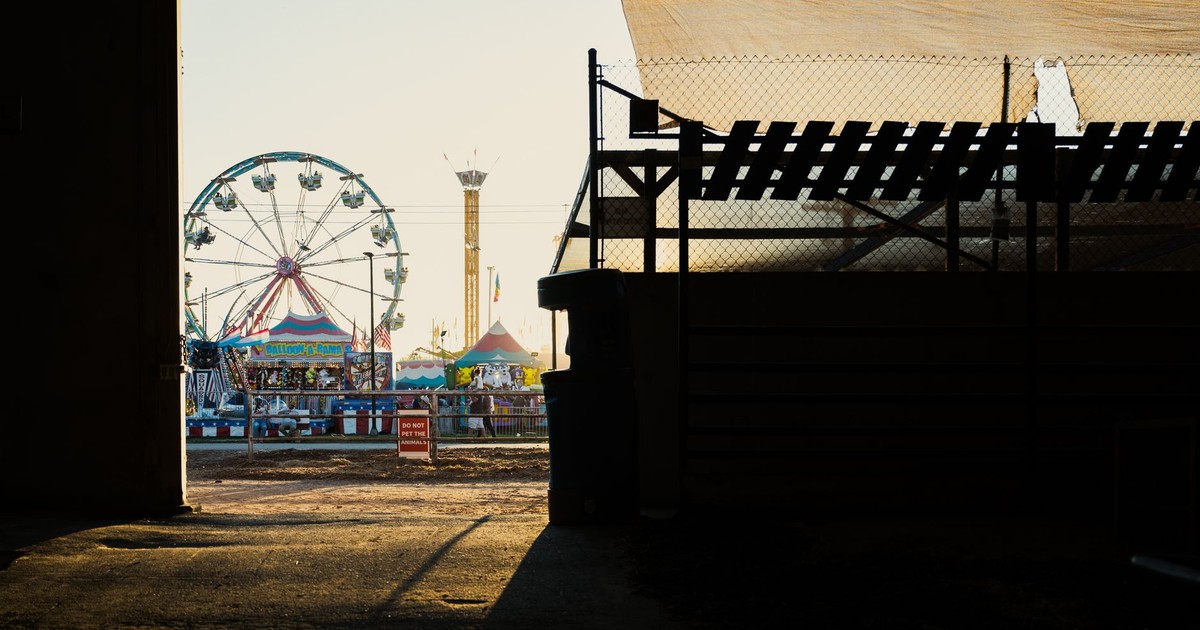
When the gates opened on Thursday morning, June 25, reality set in fast. The crowd beyond the gates was meager. Upon entry, the Ferris wheel was the single attraction with the highest concentration of people anywhere on the Mall. Elsewhere, a jazz band played to an audience of about 10 people.
As temperatures topped 80 degrees, the festival’s food hall lost power, causing all the ice cream to melt. The food hall wasn’t the only attraction affected: the much-hyped Ferris Wheel temporarily stopped running Thursday due to generator issues.
The plan was to have all 50 states represented at the fair, but several opted not to participate for various reasons, including high costs, difficulty securing sponsors, and aversion to politicization. Officials from Oregon, Washington, Massachusetts, Illinois, North Carolina, and Connecticut declined to organize booths for their state, citing limited finances. By Friday morning, Pennsylvania became the latest of several Democratic states to declare it was not taking part.
The results showed. The Maine pavilion featured a drab room with facts about the state and its trademark lobster on the walls. Oregon, for its part, got a wall that simply said “the beaver state” and one wooden chair. The New York Times reported the fair was missing key traditional elements often present at similar events, like butter sculptures, but included displays promoting Turning Point USA and a portrait of Donald Trump.
Attendees who came from all over the country were met with installations, empty booths, melted ice cream, and, for some reason, a cow named after first lady Melania Trump.
What Was Actually on Display
For those who did show up, the fair’s contents offered a window into what Freedom 250 thinks America’s 250th birthday should look like. There was a booth where parents could sign their children up for “Trump accounts,” a mobile museum accused of sanitizing history, two “MAHA Mondays” on the calendar, and a heavy emphasis on Christian values, from a “faith and family” pavilion to an unnamed evangelical preacher speaking over the loudspeaker at one point.
Both Mondays of the 16-day event featured programming related to the “Make America Healthy Again” movement backed by Health and Human Services Secretary Robert F. Kennedy Jr. These “MAHA Mondays” were focused on promoting well-being and innovation in the health sector, according to Freedom 250.
One of the Freedom Trucks was parked on the National Mall for the fair, featuring an AI-generated George Washington, written and digital displays about the country’s founding, a video message from Trump, and a “wall of American Heroes” ranging from Harriet Tubman to Elvis Presley to Billy Graham. Critics characterized the presentation as telling “a very kind of 1950s, white, Christian version of U.S. history.”
The “American Heartland Arena” on the National Mall hosted daily events like trick roping, Wild West performances, and cattle drives. Freedom 250 described the attraction as a “living historical experience,” rather than a traditional rodeo competition.
Then came the Confederate flag. Attendees walking into the North Carolina pavilion were surprised to find images of a Confederate flag projected on multiple screens. A spokesperson for the booth confirmed the incident: “On Friday, we became aware of an unapproved image in a video displayed inside the North Carolina Pavilion. As soon as we were made aware, we immediately removed the video.” The fair also ended early Friday due to rain.
The Crowd Question
After the opening night speech, Trump took to Truth Social. “The Crowd was incredible last night, packed to the brim – At least 45,000 people were there, with a huge Television and online audience. I wish we were able to have an even larger area, which we will be able to do on July 4th when I’ll be speaking again,” he wrote. He added, “Everybody stayed right until the end of my Speech because they loved hearing about a truly successful America.” Five hours later, he published a follow-up post that read, in part, “Last night’s Rally was packed – 45,000 people.”
The event let down even the president’s own supporters. Charles DeJesus, a three-time Trump voter from Pennsylvania, told The New York Times that he had been planning to attend the fair since first hearing about it six months ago. “It wasn’t what I thought it was going to be,” one longtime Trump supporter said.
NPR’s coverage of the opening days found a more divided reaction. Many visitors NPR spoke with had positive feedback and no political concerns. One attendee from Las Vegas said the opening night was “definitely” partisan, but hoped people would focus on what he believed was the underlying patriotism. “Whether you agree with the president or not, I thought the message centrally is that we’re all Americans, and it was unifying,” he said. A high school history teacher visiting from Vermont saw it differently. “I feel like this is kind of more of a reflection of how divided we are,” he said.
The Bigger Picture: America’s Birthday, Whose Party?
The tension running through Trump’s Great American State Fair isn’t just about crowd sizes or melted ice cream. It goes back further. Historians note that state and local planners were more focused on what was going on in their own communities than in Washington. The 1976 bicentennial was described as a complicated yet “unifying” moment where national healing felt possible.
Trump’s decision to inject himself as the centerpiece of the celebrations played directly into the criticism of opponents who have long warned the president wants to turn America’s 250th birthday into a celebration of himself. Rather than introduce leaders across the political spectrum, Trump introduced members of his Cabinet. He ended his speech not with the words of Washington, Jefferson, or Adams, but with the refrain familiar from hundreds of his own campaign rallies.
The coming drumbeat of Freedom 250 celebrations keeps Trump front and center. On July 3, he will headline an event at Mount Rushmore in South Dakota, delivering a keynote speech against the backdrop of the iconic granite faces. Then on July 4, Trump is scheduled to hold a Freedom 250 rally at the Washington Monument. He has billed the event as both a “tribute to America” and a “Trump rally.” While past presidents have historically delivered remarks commemorating the country’s founding, this year’s July 4 event positions Trump as the star of the night.
The state fair runs through July 10. Organizers say it still has something for everyone. Whether that’s true probably depends on which America you came to celebrate.
Read More: Trump Promised No Taxes on Social Security. But Here’s What’s Actually Happening
What the Opening Week Actually Tells Us
Fifty years from now, historians will decide how to tell the story of America’s 250th birthday. Right now, what’s happened at the Great American State Fair is a fairly precise snapshot of the country as it actually exists in June 2026: loud, divided, and genuinely uncertain about what it wants to be commemorating.
The fair’s logistical problems – the power cuts, the empty booths, the musicians who walked, the states that declined – might be easily dismissed as opening-week chaos. What’s harder to dismiss is the structural decision to run a national celebration through a partisan political lens from the start. The booths representing states whose governors didn’t show up. The history presented through a single cultural filter. A president who compared his own political movement to the patriots of 1776, at a party meant for everyone.
A national birthday is one of the few occasions where a country can, briefly, agree on something without resolving everything. The Great American State Fair reached for that, then stepped in its own way. The fair continues through July 10 with more programming and Trump’s return on the 4th. Whether those events draw the crowds and the sense of shared occasion that the opening failed to generate is, at this point, an open question.
AI Disclaimer: This article was created with the assistance of AI tools and reviewed by a human editor.