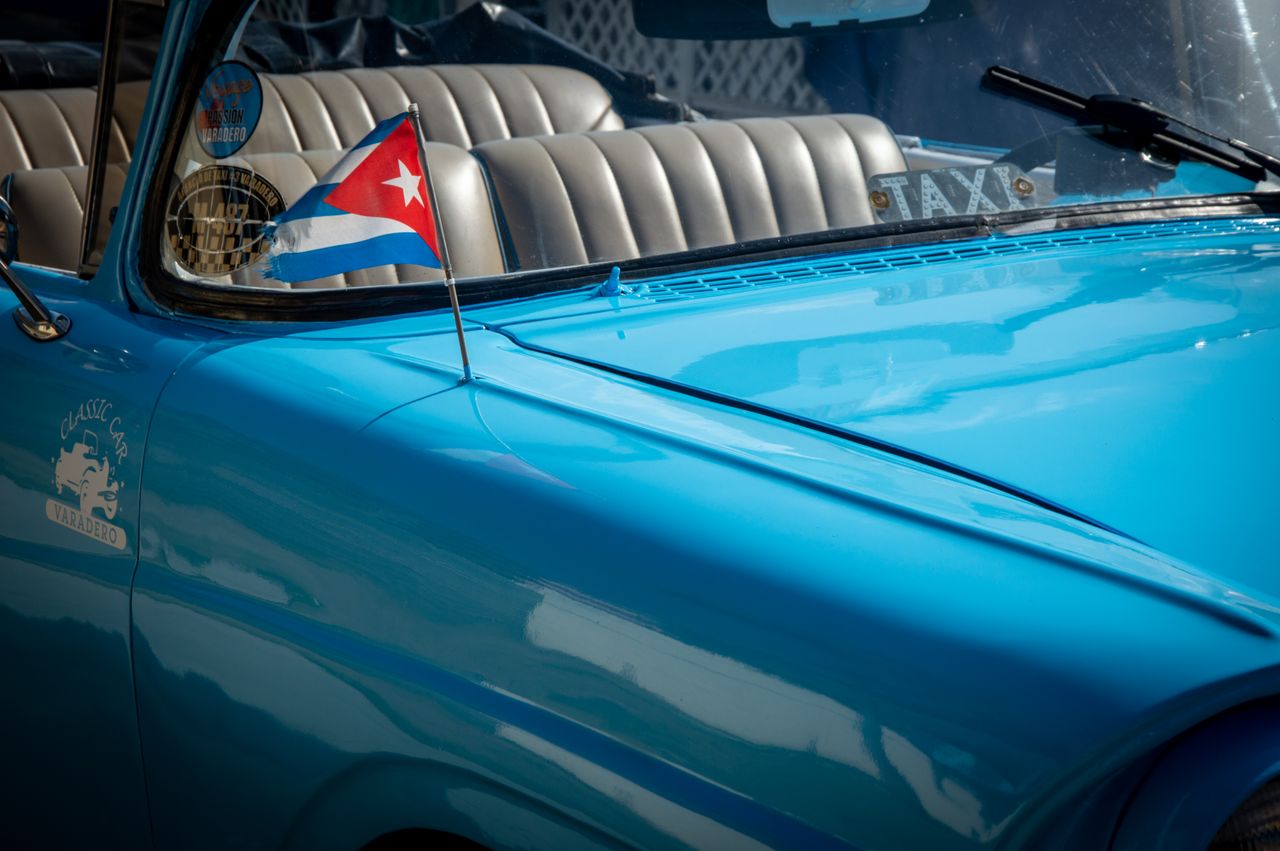

The agreement that ended the most dangerous standoff in human history was never signed, never stamped, never ratified by any legislature on earth. It was simply an oral agreement. No time limit. No enforcement. Just two superpowers stepping back from the edge of nuclear war and making a promise that was supposed to last forever. That promise is now being tested in a way it hasn’t been since October 1962.
The deal Kennedy struck with Khrushchev was the one he considered his greatest achievement in office. After several days of escalation that seemed to bring the world to the brink of nuclear war, Khrushchev agreed to withdraw the offensive missiles from Cuba, and Kennedy promised not to invade the island. Kennedy also secretly agreed to withdraw American ballistic nuclear missiles based in Turkey that were targeting the Soviet Union. Now, 64 years on, Donald Trump is pursuing a pressure campaign against Cuba so aggressive that serious foreign policy analysts are asking whether the non-invasion pledge at the heart of that deal still stands.
Trump has openly floated the idea of a “friendly takeover” of Cuba, sanctioned its national oil company, cut off its fuel supply, and proposed the removal of Cuba’s sitting president as part of any deal. The gap between a maximal pressure campaign and an invasion has never looked narrower.
What JFK Actually Promised
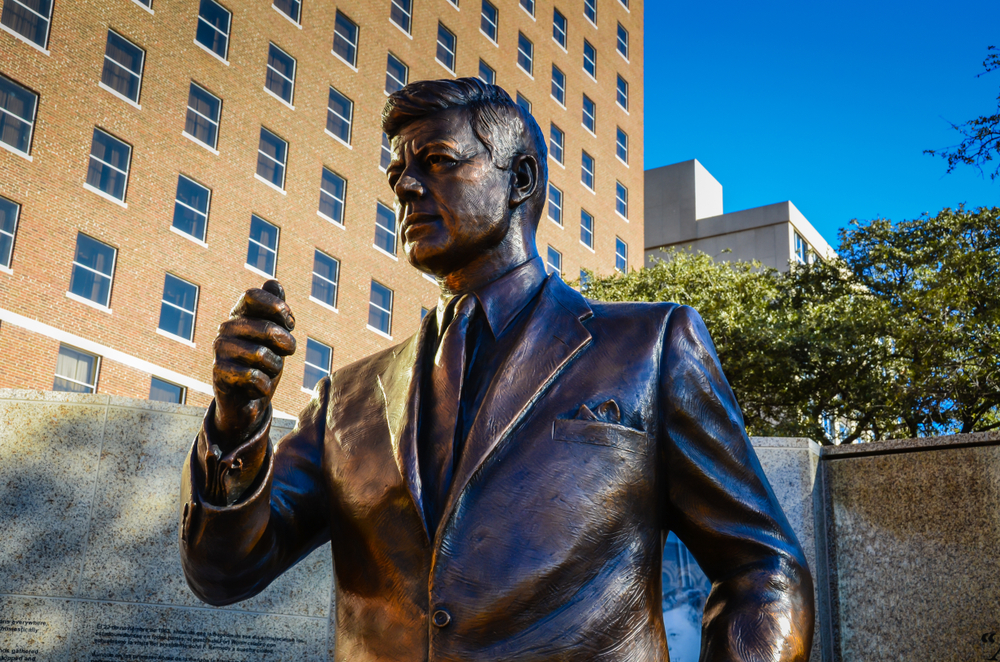
The Cuban Missile Crisis of October 1962 didn’t begin with missiles. After the failed U.S. attempt to overthrow the Castro regime with the Bay of Pigs invasion, Soviet Premier Nikita Khrushchev secretly agreed with Fidel Castro to place Soviet nuclear missiles in Cuba to deter any future invasion attempt. The plan backfired spectacularly when American reconnaissance flights spotted the construction sites, triggering thirteen days that brought the world closer to nuclear annihilation than at any point before or since.
The leaders of both superpowers recognized the devastating possibility of nuclear war and publicly agreed to a deal in which the Soviets would dismantle the weapon sites in exchange for a pledge from the United States not to invade Cuba. Officially, the USSR withdrew the missiles in return for a vague U.S. non-invasion-of-Cuba guarantee. Secretly, the crisis was also resolved when President Kennedy dispatched his brother Robert to meet with Soviet Ambassador Anatoly Dobrynin and agree to a top-secret deal: U.S. missiles in Turkey for Soviet missiles in Cuba.
The public half of that bargain, the non-invasion pledge, was what Cuba clung to as a guarantee of its sovereignty. It was never formalized as a treaty, which means Congress never ratified it and no international body ever enforced it. Nonetheless, an agreement is an agreement. There was no time limit on the deal, which meant that it would exist in perpetuity. The Russians would not reinstall their nuclear missiles, and the United States would not invade Cuba again. That was the understanding as both sides walked back from the cliff.
Trump’s Maximum Pressure Campaign
The architecture of Trump’s Cuba policy took shape in the earliest days of his second term and escalated sharply through 2025 and into 2026. On his first day back in office, Trump reinstated Cuba as a “State Sponsor of Terrorism.” Biden had removed Cuba from the State Department’s list less than a week before, a long-awaited move he had committed to in his final days in office. It was the second time Trump had reversed his predecessor’s rescission of Cuba’s terrorism designation.
The designation matters practically, not just symbolically. The label piles unilateral sanctions on an already blockaded island and leads to multiple humanitarian crises, as it has the unofficial effect of ostracizing Cuba from global trade, resulting in shortages of key goods such as fuel. For a country that already imported most of its energy, being cut off from international financial systems was an accelerant on an existing fire.
Several Trump administration policies since January 2025 have targeted the Cuban government’s economic lifelines. These include maintaining Cuba’s designation as a State Sponsor of Terrorism and subjecting it to related financial restrictions, imposing visa restrictions on Cuban and foreign officials involved in Cuba’s labor export program, and issuing directives for agency heads to tighten travel and remittance restrictions.
Then came the event that turned a pressure campaign into something closer to a siege. Following the January 2026 U.S. capture of former Venezuelan leader Nicolás Maduro, the Trump administration halted Cuban oil imports from Venezuela, Cuba’s primary oil supplier since the early 2000s. Venezuela had been sending around 35,000 barrels of oil a day to Cuba, providing about half the island’s oil needs. That lifeline was severed overnight.
On January 29, 2026, Trump issued a new executive order titled “Addressing Threats to the United States by the Government of Cuba,” declaring a national emergency effective January 30 and establishing a process to impose additional tariffs on imports from countries that supply oil to Cuba. The message to any country thinking about helping Cuba keep its lights on was unambiguous: trade with us, or trade with them.
In a January 11 social media post, Trump had already declared “NO MORE OIL OR MONEY GOING TO CUBA.” Cuba’s grid began to collapse. When the island’s oil supply was cut off following Maduro’s capture, the Cuban government was forced to enact emergency measures to address widespread fuel shortages. By early March, Díaz-Canel said Cuba had not received any oil shipments in three months.
“A Friendly Takeover”
That phrase became the defining line of Trump’s Cuba posture in early 2026. On February 27, Trump told reporters outside the White House that the U.S. was in talks with Havana and raised the possibility of a “friendly takeover of Cuba” without offering any details on what he meant. He said Secretary of State Marco Rubio was in discussions with Cuban leaders “at a very high level.”
Trump painted a picture of total Cuban desperation, saying: “They have no money, they have no oil, they have no food. And it’s really right now a nation in deep trouble, and they want our help.” When pressed on what exactly a “friendly takeover” would look like, Trump provided no specifics. The ambiguity was almost certainly intentional. While Trump didn’t call for a military intervention, he referred to the island as a “failing nation” and repeatedly raised the possibility of a “friendly takeover.”
By March, the language had hardened further. Trump told reporters: “It may be a friendly takeover, it may not be a friendly takeover. Wouldn’t really matter because they’re really down to, as they say, fumes. They have no energy, they have no money.” He added: “They are going to make either a deal or we’ll do it just as easy, anyway.”
A March 2026 report from the Council on Foreign Relations confirmed that senior U.S. officials had indicated the end goal of these policies was to bring about political and economic liberalization in Cuba, including the potential removal of President Miguel Díaz-Canel from power. Trump charged Rubio, the son of Cuban immigrants and someone who has actively championed regime change, with leading the negotiations with Cuba. That choice of negotiator told you exactly what kind of deal Washington had in mind.
Cuba at the Table
The picture from the Cuban side is one of a government trying to resist regime change while keeping the lights on. In a 90-minute news conference broadcast by state media, Díaz-Canel said talks with Washington were aimed at finding solutions to the political differences that divide the two countries. However, Cuba’s Vice Foreign Minister Carlos Fernandez de Cossio stated publicly that changes to Cuba’s political system were off limits: “The political system of Cuba is not up for negotiation, and of course neither the president nor the position of any official in Cuba is subject to negotiation with the United States.”
Former Cuban President Raúl Castro, still considered the most powerful person in the nation at 94, became personally involved in the talks between Cuba and the United States as nationwide blackouts continued. The optics of the 94-year-old revolutionary leader being pulled back in to manage an existential threat to the system he built alongside his brother were striking.
By April 2026, a senior Cuban diplomat confirmed recent talks in Havana with U.S. officials. “I can confirm that a meeting between delegations from Cuba and the United States was recently held here in Cuba,” said Alejandro Garcia, the foreign ministry’s under-director of Cuba-U.S. affairs. Garcia confirmed the negotiators included assistant secretaries from the U.S. State Department and Cuba’s deputy foreign minister.
The fuel blockade aggravated Cuba’s economic and energy crisis, leading to warnings of a humanitarian disaster. Cubans also braced for a possible attack, following Trump’s repeated warnings that the country would be “next” after his military’s capture of Venezuela’s Maduro and the U.S.-Israeli strikes in Iran. Cuban President Díaz-Canel said his country was prepared to fight if the U.S. carried through on its threats. The leaders of Mexico, Spain, and Brazil voiced concern over the “dramatic situation” in Cuba and urged “sincere and respectful dialogue.” German Chancellor Friedrich Merz said there was no evident justification for the U.S. to attack Cuba.
Cuba’s foreign minister rejected the terrorism designation as “a tool of political coercion.” Havana simultaneously called for dialogue, with Cuba’s ministry of foreign affairs rejecting U.S. accusations of wrongdoing and proposing to “renew technical cooperation with the United States” in areas including counterterrorism and money laundering.
The Handshake That Was Never Written Down
Any administration that wanted to walk away from the 1962 agreement could simply argue it never constituted a binding commitment in international law. That’s technically true. It was simply an oral agreement, never ratified by the Senate, with no document bearing a presidential seal. Nothing to put before a court.
But the question of whether the agreement is legally binding is separate from the question of what breaking it would mean. According to Wikipedia’s documented sourcing of the New York Times, the 2026 U.S. blockade of Cuba is the country’s first effective blockade of the island since the Cuban Missile Crisis. An effective naval and economic blockade designed to strangle a government into capitulation, combined with open talk of “takeover,” sits on a very short continuum with the kind of forced regime change that Kennedy explicitly promised would not happen.
The U.S.-Cuba relationship since 1962 has never been warm. The United States has maintained a sweeping trade embargo against Cuba since 1962, following Fidel Castro’s communist revolution and the failed CIA-backed Bay of Pigs invasion the previous year. While previous administrations have eased or tightened restrictions at different times, the embargo has remained largely intact. But the embargo and the non-invasion pledge always existed as separate things. You could strangle Cuba economically without technically breaking the promise not to invade it. Open, stated forced regime change, whether “friendly” or otherwise, combined with a military blockade as the instrument, is a different kind of move altogether.
Read More: America Has Lost Its War With Iran
Where This Actually Leaves Things
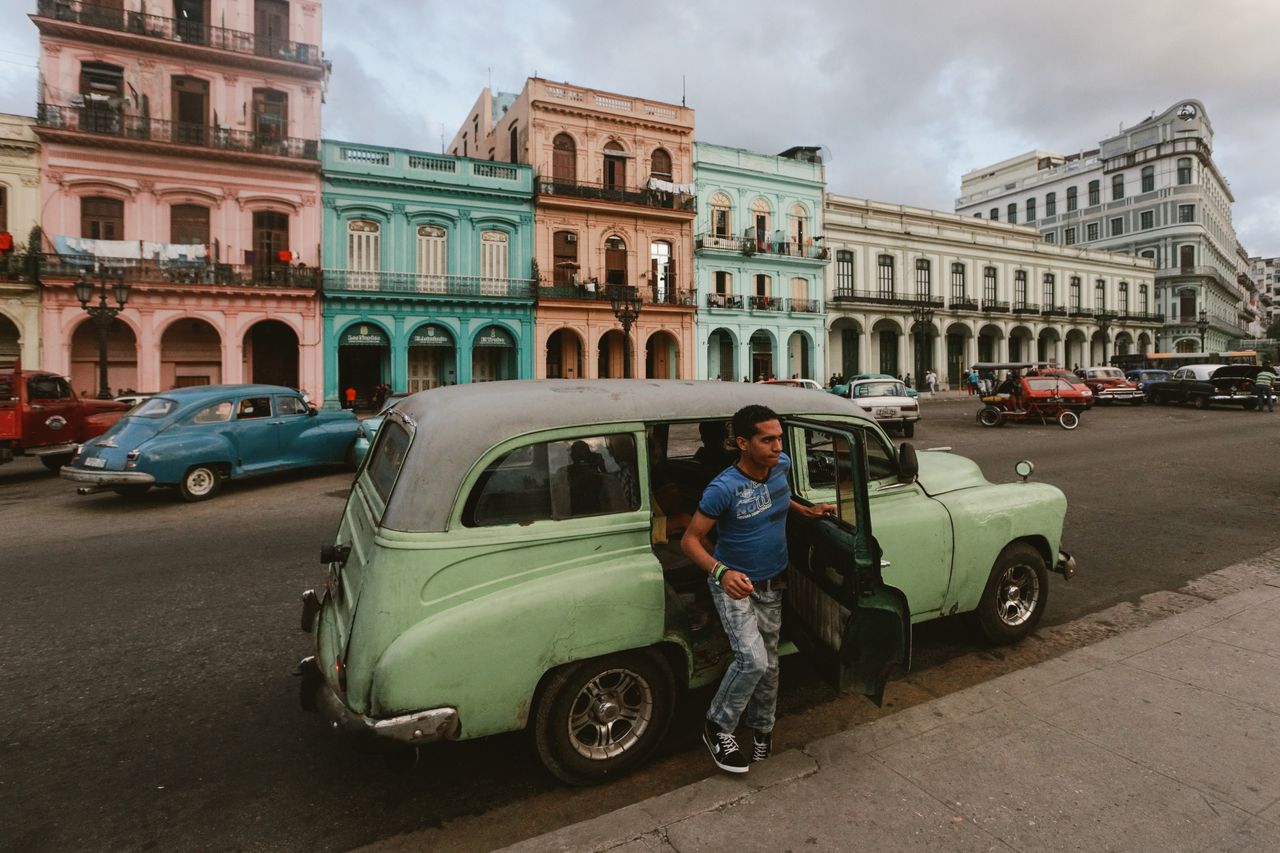
It remains unclear how far the U.S. will go to trigger change in Cuba. Officials on both sides have been involved in ongoing talks, as Cuba seeks relief from the oil blockade. As of June 2026, those talks remain unresolved. Both governments have acknowledged that negotiations are continuing at the highest level, but no details of any agreement have been disclosed.
What is known is that the Trump administration wants regime change. It chose as its lead negotiator a secretary of state who has spent decades advocating for exactly that outcome in Cuba. It has used the capture of Venezuela’s president as a template. In March, Trump compared his intentions for Cuba to the January 3 military operation against Venezuela, which culminated in the capture of that country’s president. And the oil blockade has been structured so that Cuba’s civilian population bears the brunt of the pressure.
Whether any of that constitutes “breaking” JFK’s agreement depends on what you think that agreement actually guaranteed. If it was purely a promise not to land troops on Cuban beaches, then technically everything Trump has done so far remains outside its scope. But if it was a broader pledge not to use American power to force Cuba into submission, the spirit in which Kennedy made it, and certainly the spirit in which Cuba understood it, then the answer looks very different. Kennedy’s promise was made precisely because the alternative was nuclear war. What it was really saying was: we will not make Cuba an existential fight.
That is exactly what Cuba has become again. The handshake is more than six decades old, and the man who made it has been dead for over sixty years. But the island is still there, still waiting to find out what that promise was actually worth.
AI Disclaimer: This article was created with the assistance of AI tools and reviewed by a human editor.