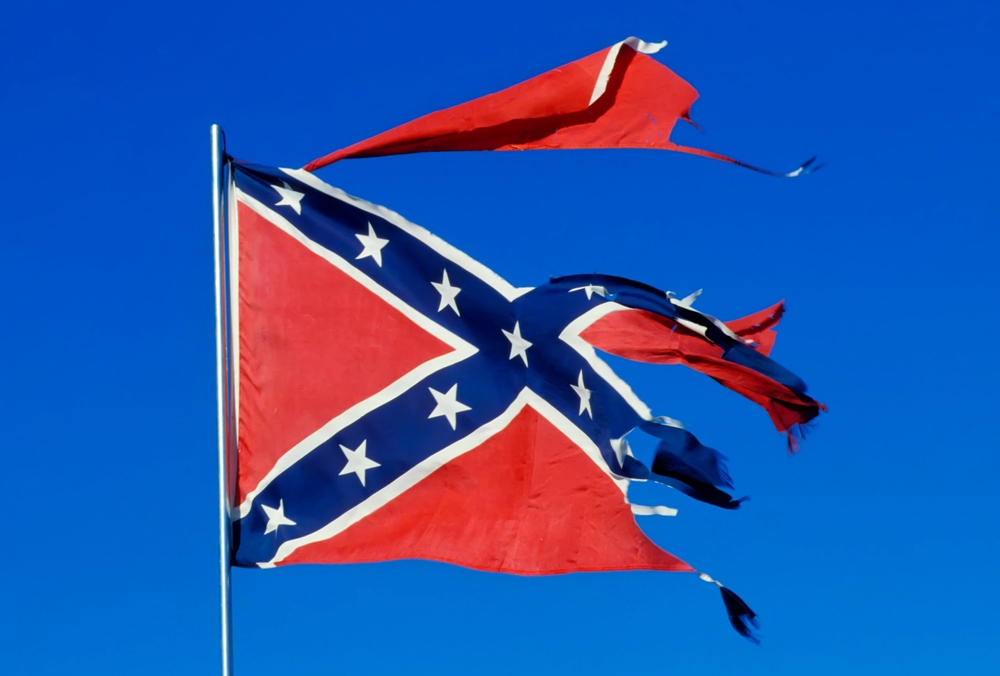

The history of slavery in America is one of the most documented, studied, and also most misunderstood subjects in the American story. Most of us absorbed some version of it in school, maybe reinforced it through films, and rarely questioned what we thought we knew. But the actual numbers, the raw census tallies from 1860 that recorded how many human beings were held in bondage in each state, have a weight to them that textbooks rarely let sit long enough to feel.
In 1790, the first US Census counted 697,624 enslaved people. By 1860, the eighth census counted 3,953,760. That sevenfold increase over seventy years happened because slavery wasn’t a relic slowly fading at the edges of American life. It was an aggressively expanding economic system, pushed westward by the demand for cotton, tobacco, and sugar, and sustained by a political structure that protected it at every turn. By the time the 1860 census takers finished their rounds, the country was months away from collapse.
While earlier political disagreements had included tariffs and economic policy, by the mid-19th century the central issue was whether slavery would be allowed to expand into newly acquired western territories. Southern leaders feared that if those territories entered the Union as free states, abolitionist states would gain a permanent majority in Congress and eventually move to restrict or abolish slavery nationwide. The census numbers below don’t just tell you where enslaved people were. They tell you what the country was willing to become, and what it cost a war to undo.
1. Virginia – 490,865 Enslaved People
In 1860, Virginia had a population of almost 500,000 enslaved people, the highest of any state in the nation. The vast majority of that population lived east of the Blue Ridge Mountains, concentrated in the counties that drove the state’s agricultural and commercial economy. Many of the counties in the tobacco-growing region, such as Nottoway and Amelia, had more enslaved people than white residents.
Virginia planters developed tobacco as their chief export. It was a labor-intensive crop, and demand for it in England and Europe led to an increase in the importation of enslaved Africans into the colony. European servants were gradually replaced by enslaved Black people during the seventeenth century, as they were considered a more profitable source of labor. By 1860, the system had been running for over two centuries, and it had reshaped everything: land values, political power, family structures, and the architecture of daily life.
Virginia also occupied a particular position in the domestic slave trade. With the ending of the international trans-Atlantic slave trade in 1808 and the rise of sugar and cotton as staple crops in the Deep South, a growing demand for enslaved labor encouraged planters in the Upper South to sell their surplus. As Virginia transitioned from a tobacco to a wheat economy and the enslaved population continued to grow through natural increase, many planters owned more people than they could profitably use in the fields. Richmond rose to become the largest slave trading center in the Upper South, second only to New Orleans in the South overall for the number of enslaved people sold and trafficked.
Between 1790 and 1860, more than 1 million enslaved men, women, and children were sold from the Upper South, mostly Virginia, to the Lower South. Two-thirds of those were the result of sales taking place in hubs such as Richmond and Alexandria. Virginia’s dominance as a slave state stretches from the very origins of the American colonies through the eve of the Civil War.
2. Georgia – 462,198 Enslaved People
Georgia came second in total enslaved population in 1860, with 462,198 people held in bondage. Slavery in Georgia was concentrated along the coastal regions, with the highest densities forming a crescent of lands stretching across Georgia, Alabama, and Mississippi. These were the cotton counties, the ones where fertile land and long growing seasons made plantation agriculture wildly profitable, and where the demand for enslaved labor was effectively bottomless.
The 1860 census recorded an enslaved population representing 32 percent of the population in the 15 slaveholding states. In Alabama, Florida, Georgia, Louisiana, Mississippi, and South Carolina, enslaved people represented between 44 percent and 57 percent of the population. Georgia was among the states that reopened its slave trade to meet demand from upland planters who were developing new cotton plantations. The state’s cotton economy then drew a steady stream of enslaved people from the Upper South throughout the antebellum period. Among the seven states of the lower South that seceded first, Georgia had approximately 38 percent of its white families owning enslaved people. That concentration of slaveholding meant that the institution wasn’t a peripheral matter for a wealthy few. It was woven into the financial and social fabric of Georgia society at nearly every level of the propertied class.
3. Mississippi – 436,631 Enslaved People
From the time of its gaining statehood in 1817 to 1860, Mississippi became the most dynamic and largest cotton-producing state in America. The trajectory of its enslaved population tells the story plainly. The enslaved population expanded from 3,489 in 1800 to 436,631 in 1860. In the three years before the Civil War, the United States produced 13,719,000 bales of cotton, and the 1859 total of 5,387,000 bales represented a single year’s all-time high. Mississippi’s share of that output was extraordinary.
Mississippi’s cotton boom was fueled almost entirely by forced migration. The historian Ira Berlin called this forced migration of slaves the “Second Middle Passage” because it reproduced many of the same horrors as the Middle Passage, the name given to the transportation of slaves from Africa to North America. These were not people moving by choice. They were separated from families, loaded into coffles, and marched or shipped to new plantations to grow a crop that made other people rich.
Nearly half the families in Mississippi owned at least one slave, while only one in eight Maryland families did. In those river counties along the Mississippi, more than seven out of every ten people were legally classified as property. Only in antebellum South Carolina and Mississippi did enslaved people actually outnumber free persons statewide. Mississippi was, in that sense, a society built almost entirely on the labor of people who had no legal standing within it.
4. Alabama – 435,080 Enslaved People
Alabama’s enslaved population in 1860 stood at 435,080, just 1,551 fewer than Mississippi’s, and the two states were twin engines of the cotton economy in the Deep South. The highest concentrations of enslaved people in Alabama were found in the “Black Belt,” a crescent of rich agricultural land running through the center of the state. The name referred originally to the dark, fertile soil. Over time, it came to describe the region where cotton-driven slavery was most intense.
Alabama banned free Black people from the state beginning in 1834; free people of color who crossed the state line were subject to enslavement. This gives you a sense of the legal architecture surrounding slavery in Alabama: not just the ownership of enslaved people but the active suppression of any alternative reality for Black Americans within its borders.
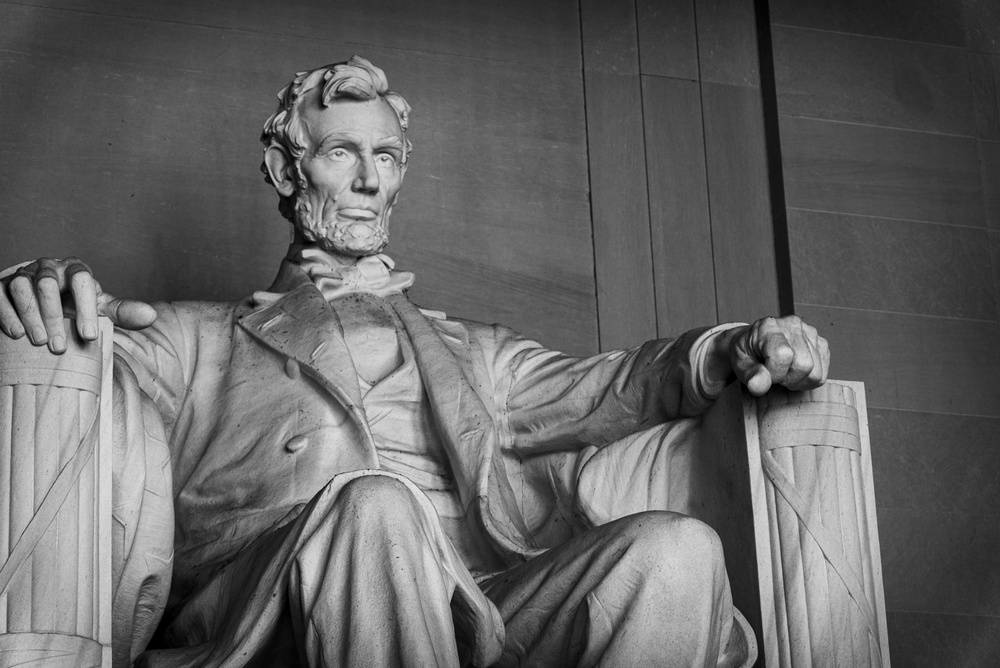
Within three months of Lincoln’s election, seven southern states had seceded to form the Confederate States of America; four more would follow after the Civil War began. Alabama was among the first wave, seceding in January 1861, just weeks after South Carolina, driven by the fear that Lincoln’s presidency threatened an economic system that those families had built their entire material lives around. Alabama had approximately 35 percent of its white families owning enslaved people, placing it squarely in the same tier as Georgia and Mississippi.
5. South Carolina – 402,406 Enslaved People
South Carolina was the fifth-largest enslaved population in the country and the first state to secede from the Union, doing so on December 20, 1860. Among the lower South states, South Carolina had the highest proportion of slaveholding white families, approximately 48.7 percent. Nearly half of all white families in the state directly owned enslaved people. The economic and social stakes of abolition were, from their perspective, total.
South Carolina’s history with slavery was older and in some ways more deeply rooted than any other state. The port city of Charleston was one of the largest slave markets on the continent, and the rice and indigo plantations along the state’s coast had operated on enslaved labor since the seventeenth century. Even before the war, in the rice regions of Georgia and South Carolina and in parts of the Mississippi Delta there were ten or even twenty enslaved Black people for every white person.
In their formal declarations of secession, several states explicitly cited the perceived threat to slavery as the primary reason for leaving the Union. South Carolina’s declaration was the most explicit of all. It named the election of a president who opposed slavery’s expansion as the direct cause. On March 21, 1861, Vice President of the Confederacy Alexander Stephens gave his Cornerstone Speech, in which he laid out the cause for the American Civil War as he saw it and defended slavery, citing it as the foundation of the new Confederate government.
6. North Carolina – 331,059 Enslaved People
Several states relied on enslaved labor at large scales even if their totals fell below the 400,000 mark. Louisiana and North Carolina each held more than 330,000 enslaved people. North Carolina’s total sat just above 331,000, and the state occupies a complicated position in the history of the Civil War. It was part of the Upper South, where slavery was significant but somewhat less economically total than in the Deep South cotton states.
North Carolina’s enslaved population was spread across tobacco, corn, and naval stores industries rather than concentrated in a single cash crop the way Mississippi’s or Alabama’s was. The state did not secede at the first wave, leaving the Union only in May 1861, after Fort Sumter had been fired upon. But its enslaved population was large enough that the institution had shaped the state’s economy, political structure, and society for generations. North Carolina had approximately 28 percent of its white families owning enslaved people.
As many as two-thirds of a million enslaved people were sold or forcibly relocated from the Upper South, including Maryland, Virginia, and North Carolina, to the Lower South, especially Alabama, Mississippi, and Louisiana. North Carolina was both a slaveholding state in its own right and a supplier to the even more ravenous labor demands further south.
7. Louisiana – 331,726 Enslaved People
Louisiana’s enslaved population was just above North Carolina’s at approximately 331,726, and the nature of slavery in Louisiana was distinct in ways that set it apart from the tobacco or cotton states. Cash crops such as cotton, tobacco, sugarcane, and rice required large labor forces, and enslaved labor was central to sustaining plantation agriculture and generating profit. Louisiana’s sugar parishes were particularly brutal. Sugarcane harvesting was physically punishing in a way that even cotton picking was not, with no off-season and extreme heat as constants.
New Orleans was the hub of commerce and boasted the largest slave market in the United States, growing to become the nation’s fourth-largest city as a result. The domestic slave trade flowed through New Orleans the way the Mississippi River itself did, with enslaved people arriving from Virginia, Maryland, and the Carolinas and being sold to planters across the region. Slaveholders brought their enslaved people there from the East and the West to be sold for work in the Mississippi Valley.
The enormous southern investment in slavery exceeded the nation’s combined investments in railroads, manufacturing, and banks. Louisiana’s planters were among the wealthiest in the country in 1860, with the sugar economy generating enormous returns on the labor of hundreds of thousands of people who saw none of it.
8. Tennessee – 275,719 Enslaved People
Tennessee held 275,719 enslaved people in 1860, placing it eighth in the nation. Like North Carolina, Tennessee was part of the Upper South, where slavery was economically significant but less uniformly intensive than in the Deep South. The state’s geography mattered: West Tennessee, with its fertile river bottomlands, was cotton country and had an enslaved population concentration much closer to that of Alabama or Mississippi. Middle and East Tennessee, with hillier terrain and more diversified farming, had significantly fewer.
Before 1810, the primary destinations for enslaved people being sold from the Upper South were Kentucky and Tennessee. After 1810, the Deep South states of Georgia, Alabama, Mississippi, Louisiana, and Texas received the most. Tennessee thus shifted over the antebellum period from being a destination state for enslaved people to being part of the supply chain, with planters selling their surplus workers southward as cotton land opened up. Tennessee had approximately 25 percent of its white families owning enslaved people.
Tennessee’s secession in June 1861 came after a contentious state referendum, and the eastern part of the state remained strongly Unionist throughout the war. The state’s internal divisions reflected its geography: slavery was concentrated and dominant in the west, contested in the center, and marginal in the east. Andrew Johnson, who would become Lincoln’s vice president and then president after his assassination, was a Tennessee man who opposed both secession and, in complicated ways, slavery itself.
9. Kentucky – 225,483 Enslaved People
Kentucky is one of the most historically unusual entries on this list. It was a slave state, with 225,483 enslaved people in 1860, a substantial number, but it never seceded from the Union. It declared itself neutral at the start of the war, then tilted toward the Union as Confederate forces violated that neutrality. Both Abraham Lincoln and Confederate President Jefferson Davis were born in Kentucky, a fact that captures the state’s profound internal contradictions better than almost any other.
The invention of the cotton gin brought about a robust internal slave trade. As the lower South became more established in cotton production the region required more slave labor, which they received from upper South slaveowners looking to offload their surplus of slaves. Kentucky’s hemp and tobacco farms used enslaved labor extensively, but the state was also, in economic terms, partly in the business of producing enslaved workers for sale to the Deep South. Already active in the domestic slave trade, slave states in the Upper South became the primary source of enslaved labor for the agricultural economies of the Lower South, with cities such as Richmond and Alexandria acting as key hubs in this trade.
Among slave states that did not secede, Kentucky had approximately 23 percent of its free white families owning enslaved people. That is a smaller proportion than the seceding states, but it represents tens of thousands of families whose economic interests were bound up in the continuation of slavery even as the state nominally fought on the Union side.
10. Texas – 182,566 Enslaved People
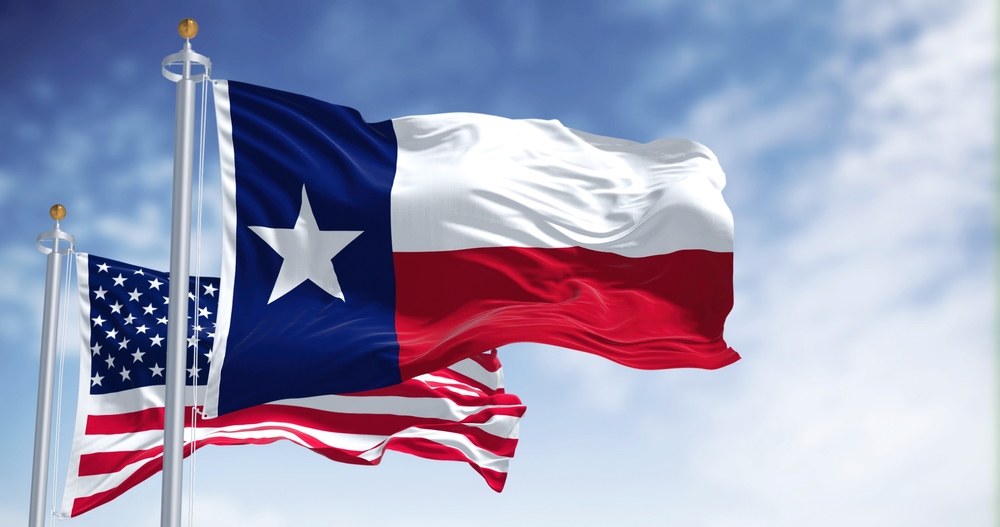
Texas, still a relatively young state in 1860, had 182,566 enslaved people, reflecting the rapid expansion of cotton agriculture into the western frontier. Texas had only been admitted to the Union in 1845, and its enslaved population had grown with remarkable speed in the years since, driven by cotton planters who saw the state’s vast river bottomlands as an extension of the Deep South economy.
As the US expanded, the Southern states attempted to extend slavery into the new Western territories to allow pro-slavery forces to maintain power in Congress. Texas became, in the 1850s, the western edge of the cotton-and-slavery economy pushing further and further into the continent. Among the lower South states, Texas had approximately 28.5 percent of its white families owning enslaved people. Given how recently the state had been settled, that penetration was rapid and deliberate.
When Abraham Lincoln won the 1860 election on a platform of halting the expansion of slavery, slave states seceded to form the Confederacy. Shortly afterward, the Civil War began when Confederate forces attacked the US Army’s Fort Sumter in Charleston, South Carolina. Texas seceded in February 1861. It was in Texas that some of the last enslaved people learned of their freedom, when Union troops arrived in Galveston on June 19, 1865, the date now commemorated as Juneteenth.
Read More: Woman Who Bought The First Ford Mustang Still Owns It 60 Years Later
The Numbers Behind the Nation
The total US population in 1860 included 3,953,760 enslaved people, as recorded by the 1860 United States Census. The ten states on this list account for the overwhelming majority of them, and the geography is not random. Enslaved people were overwhelmingly concentrated in the Southern states, where the economy depended heavily on agricultural production. The United States produced 13,719,000 bales of cotton in the three years before the Civil War, and the economic importance of cotton raised the stakes in the ongoing political battle over the extension of slavery.
What the numbers also show, and what tends to get lost, is the scale of ownership. While nearly one-third of Southern families owned enslaved people, the number of slave owners named in the slave schedules is 1.7 percent of the total population in 1860. Most Southerners owned no enslaved people, and most enslaved people lived in small groups rather than on large plantations. The myth of the South as uniformly composed of large plantations with hundreds of enslaved workers is just that. The reality was a more dispersed system, but one that still shaped every corner of Southern life through its legal, political, and social infrastructure.
When Abraham Lincoln won the 1860 election on a platform of halting the expansion of slavery, slave states seceded to form the Confederacy. Shortly afterward, the Civil War began when Confederate forces attacked the US Army’s Fort Sumter in Charleston, South Carolina. On December 6, 1865, eight months after the end of the Civil War, the United States adopted the 13th Amendment to the Constitution, which outlawed the practice of slavery.
The people captured in the 1860 census numbers were not abstractions. They were men, women, and children whose lives, families, and labor built a significant portion of the American economy. The figures are a record of a wrong on a staggering scale, and understanding them, state by state, is part of understanding how the country got to where it is. If you want to explore more of America’s history through a human lens, the Library of Congress’s mapping slavery project offers an extraordinary visual record of how enslavement spread across the country from 1790 to 1860.
What These Numbers Actually Mean
It’s tempting to look at a ranked list like this and treat it as a kind of historical scoreboard, ten states, ten sets of figures, neat and contained. But the numbers resist that. Each one represents not just a count but a life, or hundreds of thousands of lives, most of them never recorded by name in any document that survived. These sales of enslaved people broke up many families and caused immense hardship. Historian Ira Berlin characterized the forced internal migration as “the central event” in the life of a slave between the American Revolution and the Civil War, writing that whether enslaved people were directly uprooted or lived in fear that their families would be involuntarily moved, the massive deportation traumatized Black people, both slave and free.
The geography in this list matters, too. Virginia at the top is not just a fact about tobacco and land. It’s a fact about two centuries of institutional machinery, a system so thoroughly embedded in the law, the economy, and the daily rhythms of life that even the people who later fought against it had grown up inside it. The states in the middle of this list, Tennessee, Kentucky, North Carolina, were not peripheral to slavery. They were the engine of the domestic trade that kept the Deep South supplied with labor. And Texas, youngest and furthest west, shows you where it was all headed before the war stopped it.
As a result of the Union victory in the Civil War and the ratification of the Thirteenth Amendment to the Constitution in 1865, nearly four million enslaved people were freed. That is not a tidy ending. Freedom came without land, without legal protection in most of the South, and without any real reckoning with the scale of what had been done. Understanding the numbers is one part of understanding what came after. For anyone who wants to go deeper, the Equal Justice Initiative maintains one of the most thorough records of American slavery and its aftermath currently available.
AI Disclaimer: This article was created with the assistance of AI tools and reviewed by a human editor.