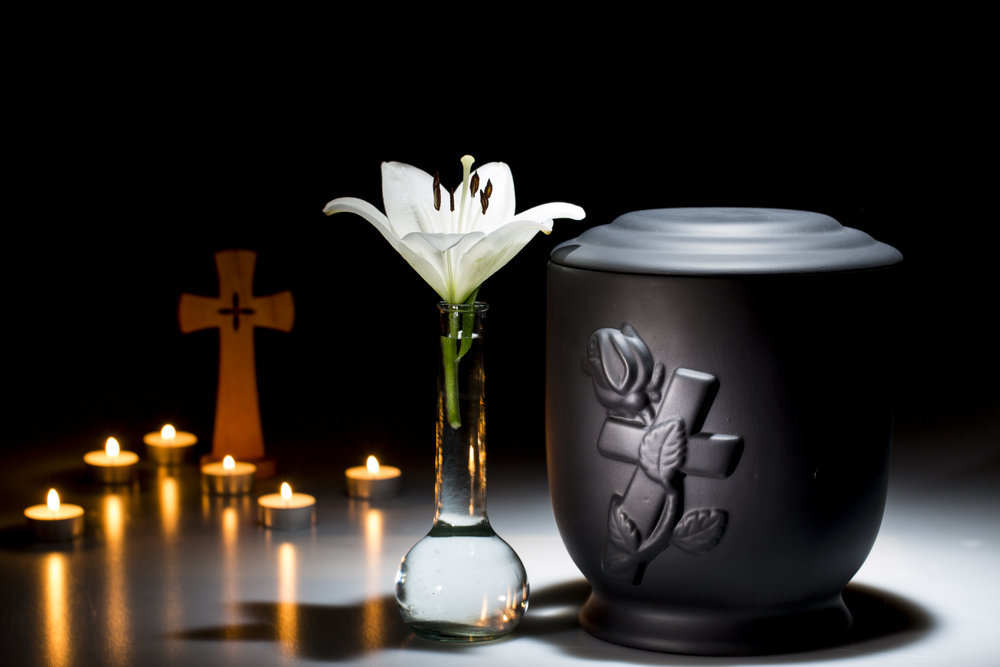

A tough question often arises at the worst moments. After losing someone you love or while quietly planning ahead to ease your family’s burden, you wonder: what does my faith say about cremation? Is it acceptable? Does it really matter? Will it impact what comes next?
For many American Christians, this is not just a theoretical issue. Cremation has shifted from a rarely chosen option to the most common way Americans say goodbye. Yet for Christian families, the decision is not merely logistical; it intersects with beliefs about resurrection, the sanctity of the body, family traditions, denominational loyalty, and the teachings of the pastor leading the service.
This topic deserves careful consideration because different Christian traditions have distinct views on cremation. The differences are not vague; they are sharp and specific. What your Catholic neighbor believes may differ significantly from what an Orthodox parishioner has been taught. Understanding what each tradition teaches and why can be far more helpful than a simple reassurance that “it’s fine.”
Navigating these beliefs requires sensitivity and thoughtfulness, as they resonate deeply with personal convictions and family values. Ultimately, reflecting on these questions can help you find peace and clarity during a challenging time.
1. The Bible Doesn’t Forbid It – But It Doesn’t Endorse It Either
Start here, because this is where most of the confusion lives. Many Christians assume cremation must be prohibited somewhere in Scripture, or they’ve heard it claimed so often that they’ve stopped questioning it. No passage in the Bible explicitly condemns cremation as a practice, and the early prohibition on cremation came from church tradition, not Scripture. During the first few centuries of Christianity, church leaders discouraged cremation largely because it was associated with Roman pagan practices, not because the Bible commanded burial.
Burial is the dominant practice described throughout the Old and New Testaments, but no passage explicitly forbids cremation or labels it a sin. Passages often cited in this discussion include Genesis 3:19 (“for dust thou art, and unto dust shalt thou return”), which some interpret as mandating burial, and 1 Corinthians 15:42-44, which speaks of the resurrection of the body in spiritual, not physical, terms. Scholars who study these verses note that they describe the natural fate of all human bodies, not a divine prohibition against any particular method of disposition.
Sin in the biblical framework requires a clear violation of God’s commands, and no such command exists regarding cremation. The silence of Scripture on this point is significant – it means cremation falls into what theologians describe as a matter of Christian freedom, where believers are free to follow personal conviction rather than a fixed rule. The practical takeaway: if someone tells you the Bible outright bans cremation, ask them to show you the verse. They won’t find one.
2. The Catholic Church Permits It – With Clear Conditions
For a long time, the answer from Rome was an unambiguous no. For most of its history, the Roman Catholic Church had a ban against cremation. It was seen as a sacrilegious act, physically declaring a disbelief in the resurrection of the body. The 1917 Code of Canon Law prohibited the burial within Catholic cemeteries of those who had ordered their body be cremated.
That changed in 1963. On May 8, 1963, Pope John XXIII lifted the ban on cremation, and in 1966 Pope Paul VI allowed Catholic priests to officiate at cremation ceremonies. The Church still officially prefers the traditional interment of the deceased, and despite this preference, cremation is now permitted as long as it is not done to express a refusal to believe in the resurrection of the body.
Permission, though, is not the same as neutrality. Catholic teaching does not forbid cremation outright, but it does not place cremation and burial on the same level of symbolic value. The United States Conference of Catholic Bishops explains that while cremation has become part of Catholic practice in the United States and around the world, the Church continues to hold a preference for corporeal burial, and the reverence and care for the body grows out of a reverence and concern for the person whom the Church commends to the care of God. The Church also has specific rules about what happens afterward. The cremated remains should be buried in a grave or entombed in a mausoleum or columbarium, and the practice of scattering cremated remains is not permitted. If you’re Catholic and you’re planning ahead, the conversation with your priest matters – not because you’ll be refused, but because there are conditions attached to the permission that families sometimes don’t know about until it’s too late.
3. Protestant Traditions Generally Leave It to You
Most Protestant denominations have taken a notably less restrictive position. Most Protestant traditions, including many mainline and Evangelical churches, now treat cremation in Christianity as a matter of personal conscience rather than strict doctrine.
Protestant churches, including Lutheran, Methodist, Presbyterian, and Baptist traditions, generally permit cremation. They stress personal conviction, stewardship, and family decision-making. Cremation is not seen as against the Bible, provided it occurs respectfully. The Anglican tradition is also firmly in this camp. The Anglican Communion allows cremation, and the Book of Common Prayer makes provisions for both burial and cremation services. All Evangelical and most Baptist churches also allow cremation.
What this means practically is that if you attend most Protestant churches, your pastor is unlikely to advise against cremation. The theological logic follows the scriptural argument: if the Bible doesn’t prohibit it, then it belongs in the category of personal decision-making. Unlike the Catholic Church, Protestant beliefs do not maintain strict guidelines on interment for cremated remains. Ashes can be kept in an urn at home or scattered, and Protestant churches also host funerals for those who have already been cremated. For many Protestant families, this is the least complicated answer in an otherwise complicated conversation.
4. The Eastern Orthodox Church Says No – and Means It
Here is where the conversation shifts significantly. If you or a family member practices Eastern Orthodox Christianity, you’re operating under a completely different set of rules, and the stakes attached to those rules are higher than most people outside the tradition realize.
Byzantine Canon Law, which the Orthodox Church firmly upholds, forbids cremation. This is not a soft preference or a cultural leaning. The Eastern Orthodox Church forbids cremation. While in Orthodoxy there is no direct connection between cremation and the dogma of the general resurrection, it is seen as a violent treatment of the body after death and as such is viewed harshly.
The consequences are concrete. Should an Orthodox Christian willingly choose cremation, that person would not receive an Orthodox funeral service. In some cases, the Church may even permanently exclude them from liturgical prayers for the departed, because the Orthodox Church’s rejection of cremation ties in so intimately with its understanding of salvation and the sanctity of the body. There are pastoral exceptions for situations where cremation happens against someone’s wishes, but the default expectation is burial, full stop. For Orthodox believers facing end-of-life planning, this is one of those conversations to have with your priest before any decisions are made, not after.
5. Resurrection Is Not Threatened – Whatever You Decide
Perhaps the most emotionally loaded question behind all of this is the one people sometimes feel embarrassed to ask out loud: if someone is cremated, can God still raise them? It’s a question that carries real fear, especially for families who chose cremation for a loved one and are only now wondering whether they made a theological mistake.
The mainstream Christian answer, across almost every tradition, is unequivocal. The bodies of Christians who died a thousand years ago have, by now, completely turned into dust. This will in no way prevent God from being able to resurrect their bodies. He created them in the first place; He will have no difficulty re-creating them. Cremation does nothing but “expedite” the process of turning a body into dust. God is equally able to raise a person’s remains that have been cremated as He is the remains of a person who was not cremated.
In 1 Corinthians 15:44, Paul writes about being “raised a spiritual body.” This shows that resurrection transforms us rather than simply restoring our earthly bodies. The same passage explains that our earthly bodies are perishable but our resurrected bodies will be imperishable. This means God gives us something entirely new at resurrection. The body that is raised is not the reassembled original – it is something altogether different. The physical condition of the remains doesn’t enter into it.
The idea that cremation might be sinful often comes from three sources: the association of fire with divine judgment in certain Old Testament passages, the historical preference for burial among early Christians, and denominational traditions that discouraged cremation for centuries. Each of these deserves examination, but none of them amount to a biblical prohibition.
The Cost Reality Nobody Wants to Ignore
It would be incomplete to discuss cremation in 2026 without acknowledging the financial dimension, because for many families it is the deciding factor regardless of theological preference. According to NFDA data, the average cost of a traditional burial funeral was $7,848, not including vault or cemetery plot fees, which can add several thousand dollars more. On the other side of the ledger, according to Funeralocity, the average cost of a direct cremation is $2,202, compared to $5,138 for a direct burial.
That gap is real, and it’s the reason families increasingly favor cremation for its affordability, environmental benefits, fewer religious barriers, and the desire for simpler ceremonies. None of this automatically overrides theological conviction, but it does mean that what looks like a purely spiritual question is, for millions of families, also a financial one. Understanding what your tradition permits gives you the room to make a genuinely informed decision rather than one driven purely by the quote the funeral home hands you in the worst week of your life.
What to Do With All of This
The honest summary is that Christianity doesn’t speak with one voice on cremation. It never really has. What you’re permitted, encouraged, or forbidden to do depends substantially on which tradition you belong to, and in some cases – especially Orthodoxy – the stakes are higher than the broader cultural conversation tends to acknowledge.
The most useful thing you can take from all of this is not a universal answer but a specific one. If you’re Catholic, ask your priest about timing and where the ashes must go. If you’re Protestant, know that you are largely free to follow your conscience, your family’s wishes, and your financial situation. If you’re Orthodox, have that conversation early, clearly, and without assuming that cultural trends around you have softened a position your church has not moved on.
And if you’re processing a decision that’s already been made – for yourself or for someone you lost – the theological consensus is clear: a God who is capable of resurrection is not defeated by the condition of what was left behind. The question of whether cremation is “okay” turns out to be mostly a question of which tradition you’re asking, and in most cases, the answer is yes, with varying degrees of instruction on what comes next. Whatever road your family took, or is about to take, the faith you’re drawing on almost certainly has more room in it than the worry suggests.
AI Disclaimer: This article was created with the assistance of AI tools and reviewed by a human editor.