

To understand heart valve disease (HVD), you need to know what your valves do. There are four of them located in between the four chambers. “Valves are like gates or doors,” says Smadar Kort, M.D., director of the Valve Center at Stony Brook University Heart Institute in Stony Brook, NY. “They open to allow the blood to go in one direction and close to prevent the blood from going in the opposite direction.” That way your heart can take in blood from the body and send it out again. Keep reading for a quick breakdown of HVD, plus the clues that signal you might have it.
What Is Heart Valve Disease?
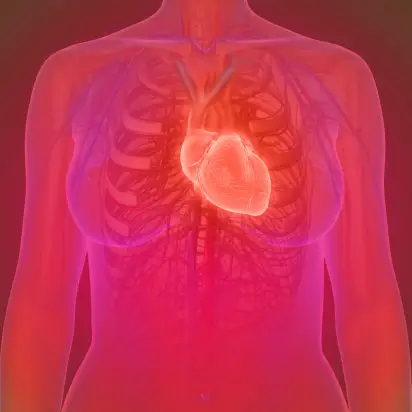
“The way we explain heart valve disease is that there is an abnormal flow of blood, whether it’s increased pressure with the narrowing of a heart valve or blood that’s leaking backwards with regurgitation of a heart valve,” says Sarah Capano, PA-C, the coordinator for the Structural Heart Valve Clinic at Brigham and Women’s Hospital in Boston. A small or narrow opening causes stenosis. When the valve doesn’t shut properly and leaks blood, it causes regurgitation. The two most common forms of each are aortic stenosis and mitral regurgitation.
What HVD Does to Your Heart

“In either case it’s putting extra pressure and extra work on your heart muscle,” says Capano, which causes the heart to enlarge and thicken to compensate for its inability to pump enough blood to the body. Most of the time, people have one type of valve condition or the other, though you can have both, Capano notes. But even one faulty valve can cause symptoms that appear unrelated to your heart. Here are eight of the most surprising ones.
You Feel Fine (Most of the Time)
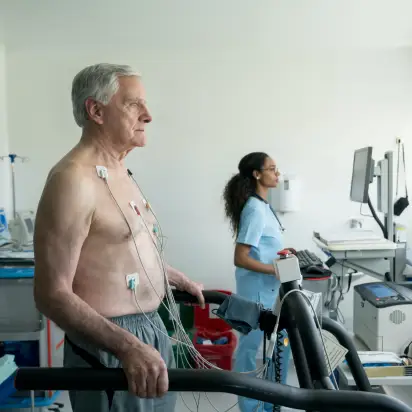
People with mild or even moderate heart valve disease might not have any outward signs at all, say experts. Or they might be brushing them off, says Dr. Kort: “Especially women—they minimize their symptoms.” Sometimes the first clue is when your doctor picks up a heart murmur or some other abnormal rhythm. Of course, an echocardiogram, an ultrasound of the heart, will really provide a diagnosis. But Dr. Kort will also put patients on a treadmill to see if they’re short of breath after exercising—a signal that they might have symptoms after all.
You Can’t Sleep On Your Back

“Some patients feel the need to get out of bed and open the window, because it’s difficult for them to breathe at night when they’re lying flat,” says Dr. Kort. If you feel short of breath unless you’re propped up in bed or sitting upright, that could be a sign of mitral regurgitation. Because the valve is leaking fluid back into the chamber, there’s backflow into the lungs, too. “That’s the reason why it’s difficult to breathe,” she says.
You Get Winded at the Top of the Stairs

“People feel like shortness of breath is more of a lung problem,” says Capano. But it’s also a sign your heart is working harder to compensate for the narrowing or leaky valves. “It usually starts with some shortness of breath at the top of the stairs when you’re carrying something. And then over a few months, you’re saying, ‘Oh, even if I’m not carrying something, now I feel short of breath, or even if I just walk on a flat surface at a faster pace, I feel short of breath,’” says Capano.
You Have to Take Breaks When Out and About

Valves, like everything, are prone to wear and tear as you age. So you might think you’re more tired because you’re older—not because your heart isn’t pumping efficiently. “Often people modify their activities to avoid symptoms,” says Dr. Kort. “I ask patients if they’ve noticed any change to activities that they did in the past. And people say they can still go shopping, for instance, but they need to rest after a couple of aisles when before they were able to finish without any rest.” If you can’t walk as far as you used to without stopping, see a doctor.
Your Socks Leave Lines

Or your shoes feel a little tighter. Either way, it’s a sign that regurgitation is getting worse. When you have a leaky valve, the backflow of blood goes into the lungs, causing congestion. All that extra fluid then builds up in other parts of your body, especially your legs. “We see see fluid retention, swelling of the ankles, in patients who have congestive heart failure. And valvular heart disease is one of the reasons for congestive heart failure,” says Dr. Kort.
You Get Dizzy or Light-headed Easily

Blood contains trace amounts of calcium, and over the years, it builds up in the valves, turning them stiff and hard. As they get more calcified, the openings becomes narrower, making it harder for the blood to flow through them and into other parts of your body, including your brain. When your brain isn’t getting blood, it’s not getting enough oxygen, says Capano, leading to the dizziness you’re experiencing.
Your Heart Flutters or Races

This can be a sign that you have a mitral valve prolapse, which is when the tissue is floppier than normal so the valve doesn’t close as well. “We see that more commonly in women and we can see that in young women as well,” says Dr. Kort. You’re usually born with this condition (it tends to run in families) and it doesn’t always cause mitral valve regurgitation. But when the valve does leak a lot, you may feel heart palpitations, Dr. Kort notes.
You Pass Out

If you faint, especially after doing some activity, you need to call a doctor ASAP. “If you had a fainting episode related to your valve disease, that’s a very significant symptom for aortic stenosis and we would treat you immediately,” says Capano. Of course, by this time, you may have noticed other symptoms that point to stenosis. One of them is a heavy feeling or pain in your chest, especially when you’re walking or doing some other type of exercise.
Check These Symptoms Out

Even if it’s not heart valve disease-related, you’ll want to know what’s making you so uncomfortable. If your doctor picks up a murmur or other abnormal heart sounds, you’ll get an echocardiogram, too. “It’s not painful and it’s a great method that allows us to look at the the function of the valves and the size of the chambers,” Dr. Kort explains. Doctors will use that information to diagnose heart valve disease (or something else), and decide how to treat it so that you’re well on your way to feeling better.
Written By: Linda Rodgers
This article was originally published on Health Central.